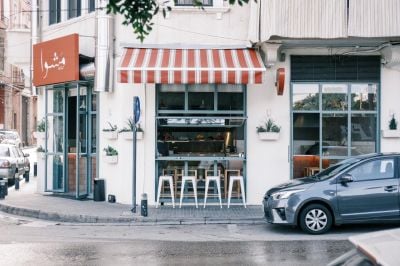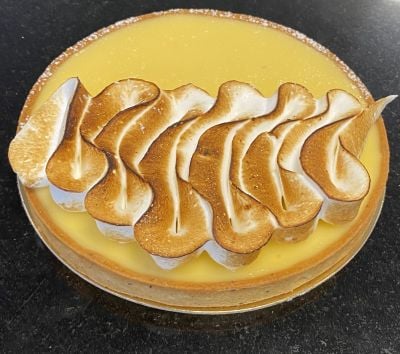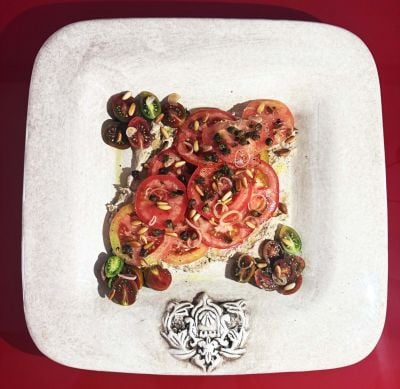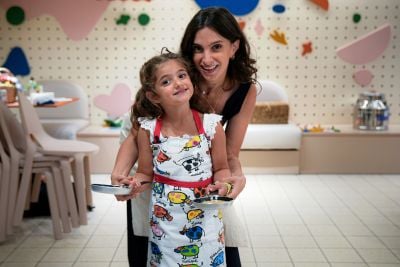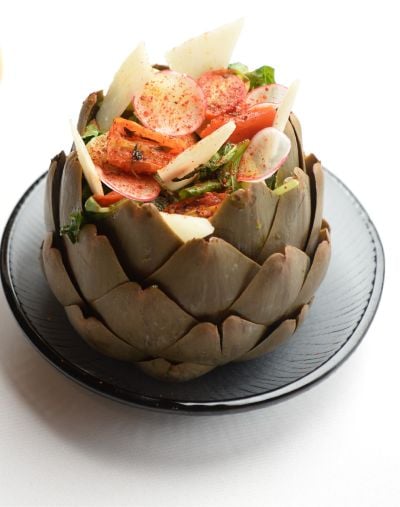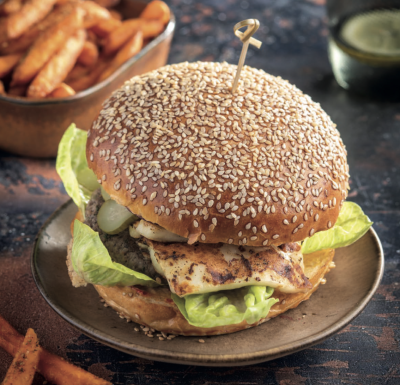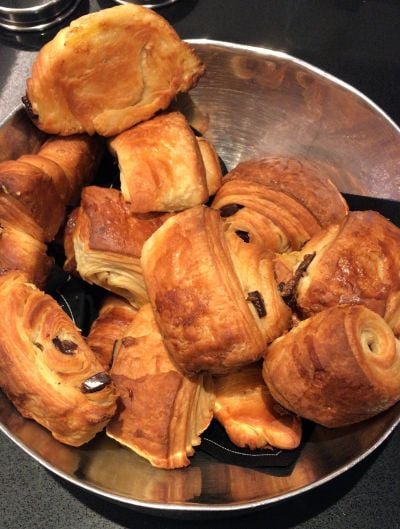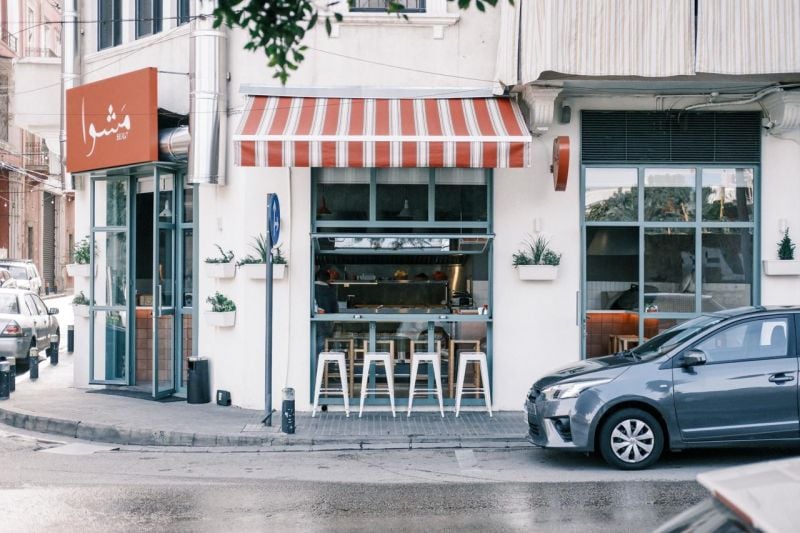
Photo of the Mashwa Beirut sandwich bar. (Credit: Mashwa Beirut)



In Medawar, a neighborhood that long remained on the sidelines, a new sandwich bar aims to restore the Lebanese sandwich’s former glory.
Mashwa Beirut, which opened on Dec. 5 last year at the end of Armenia Street, is the result of a long process of reflection by Makram Rabbath, Fadi al-Hout, and Najib Moussallem, three friends united by a shared passion for cuisine and a determined will to go back to basics.
“We created a project that suited us because we felt something was missing in the market,” sums up Rabbath.
The founders define this lack as the absence of an authentic Lebanese sandwich bar that offers food faithful to traditional products and methods while adapting to modern rhythms.
Their vision is to offer Lebanese food to those who want to eat well without having to sit down for hours.
A Lebanese sandwich bar designed for today’s rhythm
Envisioned as a sandwich bar for everyone, Mashwa Beirut's target clientele is both families and busy professionals.
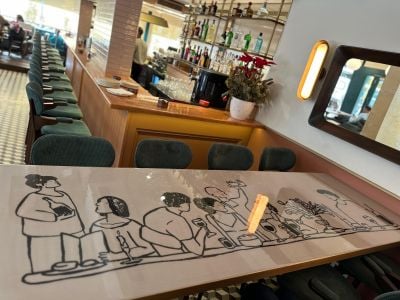
Here, the decor is neutral, and the menu is concise: The heart of the project lies in the quality of the ingredients and the precision of execution.
The difference starts with the ingredients: All products are Lebanese, from the meat and herbs to the flour used for the bread.
The latter is a tannour, baked on-site in a traditional oven. It is intended to be light, with no oil or added sugar, conceived as a true support for the sandwich, not just a container.
The sandwich itself is designed to balance bread, protein, and sauce. “Real product, real meat, in a modern sandwich,” emphasizes Hout.
This approach contrasts with an often standardized offering, and comes with particular attention to hygiene and precise technique, in a spirit of careful but unpretentious snacking.
The opening of Mashwa Beirut is the culmination of more than a year and a half of reflection and work, representing an investment of around $200,000.
The partners founded a SAL called Block 5. The war delayed the schedule, but did not alter the vision.
On the contrary, the founders wanted to create a timeless concept that could withstand the upheavals of the Lebanese context. “We believe in the future of this neighborhood,” says Moussallem, convinced that Medawar is transforming, driven by Mar Mikhael’s expansion eastward.
The intentionally compact space accommodates about 10 seats inside and four outside, reinforcing the idea of passing through and sharing.
Customers can sit at the sandwich bar, with a view of the kitchen or the street. The average bill is around $16, and the house even adds a playful touch: a glass of arak from Satyr or Ksara is offered to accompany customers' sandwiches.
The backgrounds of the three partners help explain the project's coherence. Moussallem has been active in hospitality since 2012, including in online food delivery. He previously worked for Addmind until 2020. Rabbath attended the Lausanne Hotel School and is especially known for Le Petit Gris, an iconic Saifi restaurant. Hout is one of the founders of Husk and the catering company BeyBQ.
With 14 employees and 60 square meters — 20 of which are an open kitchen — Mashwa Beirut offers a homey atmosphere and is open every day from 11 a.m. to 11 p.m.
On weekends, the menu expands with kibbeh nayyeh, a nod to tradition. “Raw meat is a bit heavier, so we preferred to keep this option for the weekend; it also helps avoid waste and keeps products very fresh.”
More than just another address, Mashwa Beirut stands out as a sincere attempt to reconcile speed and authenticity by focusing on one of the most iconic dishes of Lebanese cuisine: the sandwich.
“We have plans to expand in Lebanon, then we’ll think about franchising — but not for at least a year,” says Rabbath, aiming for a controlled development, planned for the long term.
This article was translated from L'Orient-Le Jour.