






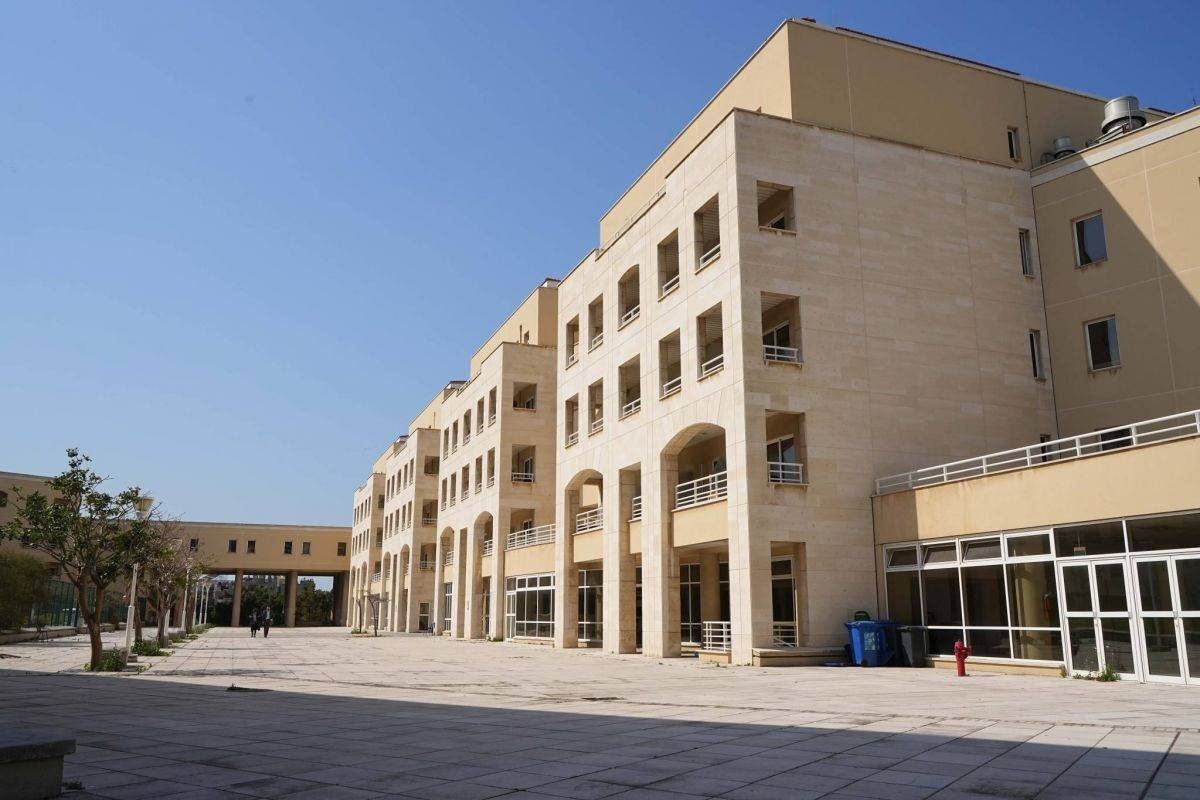
The Lebanese University (LU) campus in Hadath. (Credit: Mohammad Yassin/L'Orient-Le Jour archives)






Najat Aoun Saliba is an independent scholar activist, member of the Lebanese Parliament, and laureate of the L’Oréal-UNECO Award for Women in Science in 2019; Rachad Rafeh is a political analyst and executive director of the Socio-Economic Institute for Development (SEID)
On Oct. 12, Adnan al-Amin’s resignation as adviser on higher education to Minister Rima Karameh became public. He cited obstructed reforms, political interference, and legislation tailored to individuals, while praising the minister’s commitment and courage. He concluded that he could no longer fulfil his mission.
His resignation should not be read as an isolated personal decision, nor as a dispute inside one ministry. It is a political symptom. It reveals how Prime Minister Nawaf Salam’s government, presented as an opportunity for institutional recovery, is being encircled by the same traditional forces that brought Lebanon to collapse. These forces have not disappeared. They have repositioned themselves around the state, using Parliament, ministries, media pressure, sectarian mobilization, and legal engineering to prevent reform from becoming practice.
The problem is not simply that reform is slow. It is that reform is being contained. The state is asked to recover while those who hollowed it out continue to shape the conditions of recovery.
This is how the Lebanese state is hollowed out: not always through open confrontation, but through delay, exceptions, procedural confusion, and the transformation of public positions into negotiated entitlements.
A university cannot teach merit when its leadership is a bargaining chip
Al-Amin’s resignation also asks what universities owe society, and what we take away from young people when we reduce higher education to distributing positions.
Education carries a responsibility for the future. Universities develop the knowledge, judgment and imagination needed to understand emerging challenges and devise strategies to address them. They prepare those who will care for our health, design our infrastructure, interpret our laws, and govern our institutions.
This is why merit matters. A pilot whose competence has never been properly tested, or an engineer designing machinery without demonstrating the knowledge needed to make it safe, poses a danger to others. Qualifications must certify real ability. Students must demonstrate learning; academics must be assessed for teaching and research; university leaders must answer for institutional performance.
The presidency of the Lebanese University must meet that standard, through lawful appointment and credible assessment of competence. It cannot be bestowed as a political favor, nor absorbed into political bargaining.
When public appointments are detached from standards, institutions cease to be governed by competence and become governed by access to power. This is not an administrative detail. It is the logic of collapse reproduced inside higher education. A public university cannot teach merit while its own leadership is shaped by bargaining. It cannot prepare citizens for a modern economy while its governance remains trapped in the old economy of sectarian entitlement.
Universities are key to recovery
Universities matter because recovery is not built by political declarations alone. It is built by people and institutions capable of producing knowledge, testing solutions, and carrying them into public life. Lebanon knows this. At the American University of Beirut (AUB), Makhlouf Haddadin helped discover the Beirut Reaction and later the Davis-Beirut Reaction, both of which contributed to pharmaceutical chemistry. Charles Malik, who graduated from AUB and later taught there, was one of the leading contributors to drafting the Universal Declaration of Human Rights. The Lebanese University educated Ali Chamseddine, whose later work connected noncommutative geometry and theoretical physics. Researchers at Saint Joseph University helped identify a genetic mutation responsible for a rare inherited skeletal disorder, just to name a few examples.
These examples are not nostalgic references to a lost past. They show what becomes possible when talent is formed within serious institutions and connected to the wider world. Lebanon now faces a century defined by artificial intelligence, biotechnology, clean energy, climate adaptation, and new forms of infrastructure. To recover, it must do more than repair what collapsed. It must place its young people inside the technological and scientific transformations already reshaping the world.
Universities also cultivate independent judgment and ethical purpose. As Martin Luther King Jr. wrote in 1947: “Intelligence plus character — that is the goal of true education.” Knowledge gains its public value through responsible use.
This responsibility grows in crisis. Young Lebanese people endure repeated wars, displacement, and bereavement while trying to study and plan their lives. They also face technological change, climate disruption, pressures on water and energy, health challenges, and widening inequalities. They need universities that support them through suffering and equip them to confront the future, not institutions delayed by patronage and predetermined appointments.
At the Lebanese University, patronage has constrained reform and eroded autonomy. Invoking emergencies to bypass evaluation compounds that damage. Restoring academic strength takes years, while advances are already changing our students’ world. Those who have lost so much cannot afford politically imposed delays. Universities need professional autonomy and public accountability; crisis must never justify advancement without merit.
Changing systems, not managing appearances
The danger is larger than one university presidency. If the forces surrounding Salam’s government succeed in reducing reform to appointments, extensions, and negotiated shares, every serious reformer will face the same dilemma: whether to continue lending credibility to institutions whose decisions are being shaped elsewhere. In such a system, expertise is welcomed only when it does not disturb political arrangements.
This is why Amin will not be the last. Anyone who enters government intent on changing systems rather than managing appearances will confront the same wall unless the political conditions of reform change. Lebanon does not suffer from a lack of reform language. It suffers from a regime of obstruction capable of absorbing reformers, exhausting them, isolating them, or forcing them out while preserving the appearance of continuity.

A historic opportunity still lies before Lebanon’s universities: to understand our society’s suffering and work with people to overcome it. Listening to affected communities, studying why crises recur, and developing paths to recovery can rebuild lives, restore trust, and strengthen institutions. The knowledge gained could offer the world valuable lessons in recovering from conflict, displacement, and institutional failure.
This is how universities can help Lebanon rise from crisis: connecting laboratories with communities and translating understanding into more just and effective institutions. Fulfilling that promise requires placing knowledge, merit, and the next generation’s future above clientelism and giving young people room to lead.
This is the depth I recognize in Adnan Al Amin’s decision. His insistence that changing systems matters more than appointments affirms education’s enduring public responsibility.
His resignation is not an exit from public responsibility. It is a refusal to decorate a system that continues to empty the state while claiming to save it. We share the conviction that young people deserve institutions worthy of their abilities and aspirations: institutions that help Lebanon rise and share with the world the knowledge gained through that renewal.

 1 p.m. recap: Qatari PM expected in Beirut; missile intercepted in Medina; Hezbollah seeks to recover its explosives seized in Dahr al-Baidar