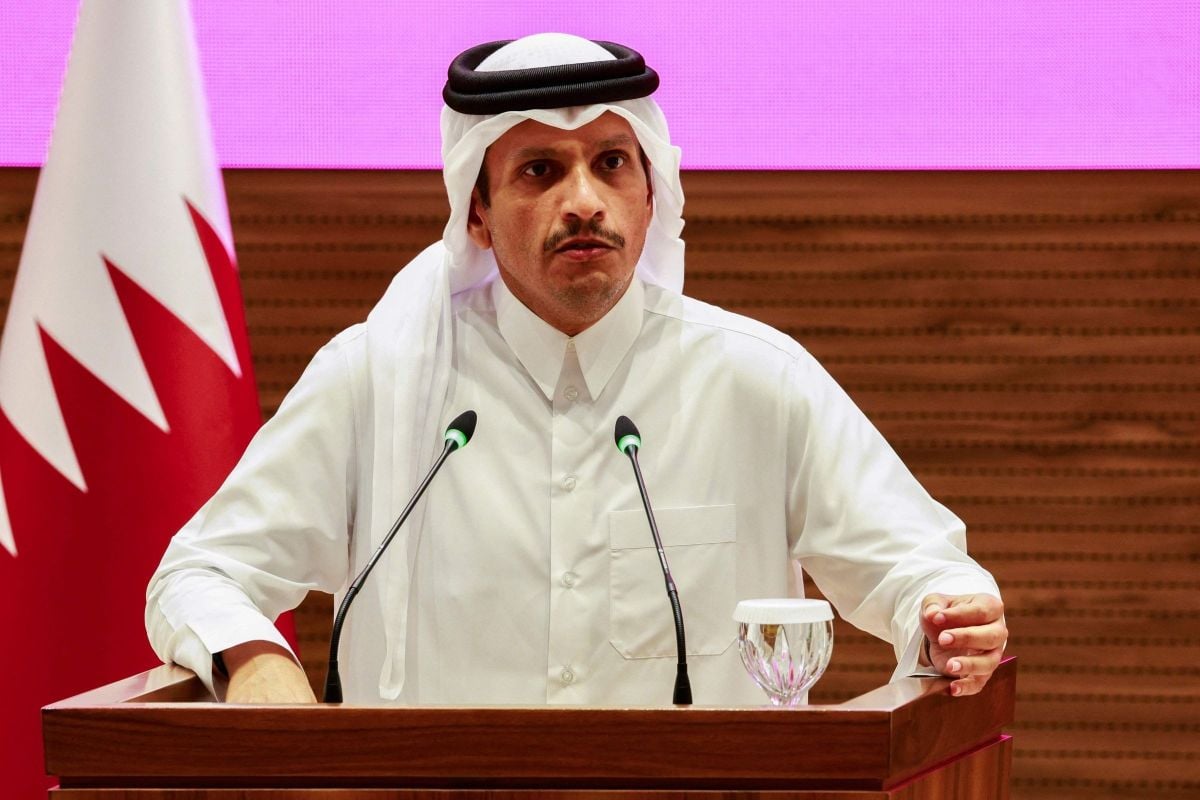
The Prime Minister and Minister of Foreign Affairs of Qatar, Sheikh Mohammed bin Abdulrahman Al Thani, speaks at a press conference in Doha on Sept. 9, 2025. (Credit: Karim Jaafar / AFP)







Qatari Prime Minister Mohammad bin Abdulrahman Al Thani is scheduled to arrive in Beirut today, where he is expected to meet with President Joseph Aoun, Prime Minister Nawaf Salam, and Parliament Speaker Nabih Berri. He may announce funding initiatives in several areas, particularly in energy and support for the Lebanese Army.
This visit coincides with that of Iranian Deputy Foreign Minister Saeed Khatibzadeh who arrived in Beirut yesterday and met with the Berri on Thursday. The Iranian official’s visit is more sensitive than that of the Qatari prime minister, and no meeting is thought to have been scheduled between Khatibzadeh and either President Joseph Aoun or Prime Minister Nawaf Salam.
Why it matters
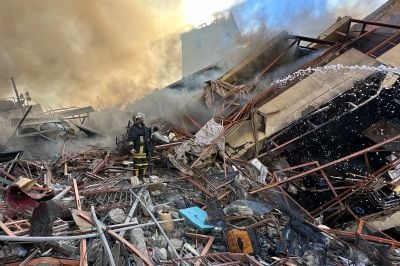
Qatar was one of the main funders of reconstruction in Lebanon after the 2006 war between Hezbollah and Israel. It also brokered the 2008 Doha Agreement, which ended a severe political crisis and violent clashes. In recent years, as Lebanon has faced an unprecedented economic and financial crisis, the emirate has provided tens of millions of dollars to help pay Lebanese Army salaries and support the energy sector. With entire regions of Lebanon devastated by two successive Israeli offensives — between 2023 and 2024 and since March 2026 — and after years of crises, all eyes will be on what announcements Al Thani may make.
Qatar is also one of the main mediators between Israel and Hamas and is among the countries involved in talks between Iran and the United States. Under the memorandum of understanding between Tehran and Washington, Hezbollah has not claimed responsibility for attacks against Israel since June, while negotiations between Lebanon and Israel remain at a standstill.

Hezbollah has acknowledged that the hundreds of kilos of explosives seized in Dahr al-Baidar belonged to the group. "We informed the Lebanese authorities that the truck of explosives seized belongs to the resistance," said Hassan Fadlallah, an MP from the group, calling on authorities to "quickly assess the risks and reconsider the proceedings."
Meanwhile, Israeli attacks continue in southern Lebanon and have repeatedly extended beyond the limits of the occupied “buffer zone” in recent days, particularly around the outskirts of Aita al-Jabal in the Bint Jbeil district. On Wednesday, an airstrike near the village wounded two people, including a child. In Kfar Shuba, several farmers were also prevented by the Israeli army from reaching their olive groves on Thursday, with the army saying they needed authorization to begin the harvest.

- With tensions running high in Israel less than two weeks before the Oct. 27 legislative elections, amid renewed tensions with Iran and fresh threats against Hezbollah and Beirut’s southern suburbs, Israeli army chief of staff Eyal Zamir said Israel had “reinforced its troops on all fronts” and “raised its level of readiness” due to “the multiplication of alerts.”
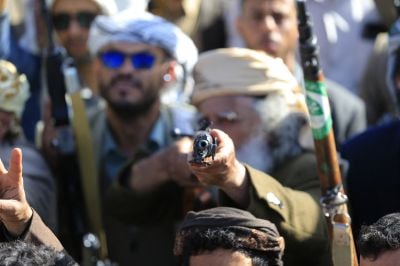
- The Saudi-led military coalition fighting the Houthis in Yemen announced this morning that it had intercepted a missile over the Medina region. The incident comes after a series of attacks attributed to pro-Iranian rebels against the kingdom, including one that killed at least 12 people Saturday at Riyadh airport, as well as a strike on the headquarters of oil giant Aramco in Dhahran. The Houthis, however, denied firing this missile at Medina, one of Islam’s holy cities.
- The U.S. military is considering using the GBU-43/B, known as the “mother of all bombs,” against Iranian nuclear and energy sites if Donald Trump resumes military operations, CNN reported, citing several U.S. officials. The bomb is the most powerful non-nuclear munition in the American arsenal, but its effectiveness against deeply buried facilities is in doubt.