








A traffic accident. That is all that stood between hundreds of kilos of explosives and their destination: Beirut.
According to an account that has yet to be confirmed, the vehicle, carrying 250 kilos of TNT and 250 kilos of C4, passed through the Dahr al-Baidar checkpoint without a hitch. Only a mundane accident a little farther down the road exposed its cargo: a stroke of bad luck that kept the explosives from quietly continuing on their way.
How many other shipments have slipped through without running into either an accident or the police? No smuggler is ever caught on his first run, and suspicions about clandestine networks, for drones and weapons among other things, are nothing new. Not to mention the $200 million that Hezbollah reportedly received from Iran recently, though how the money was transferred remains unclear. Of course, nothing proves any link to the explosives. But the timing is too striking to ignore.
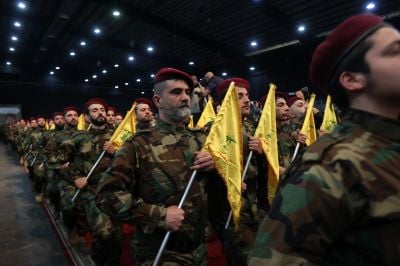
Today, what matters is no longer the discovery itself but what will be done about it. Will the two men arrested, both Hezbollah members, be tried like any other Lebanese citizen? Or will we see yet another inexplicable release and a token penalty? Everyone remembers the Kahaleh truck, and the silence that followed over the fate of the seized weapons. This time, however, it is the state’s own credibility that is at stake. Hezbollah, or at least its military wing, has now been officially outlawed. The state can no longer assert its authority in principle while tolerating, in practice, networks that operate beyond its control.
Dahr al-Baidar is a real-world test, and it comes as time is running out for Beirut. According to several sources, messages have reached Lebanon: if Hezbollah joins Iran in another war, Israel’s response could be especially violent. Worse still, Israel would hold the Lebanese state itself responsible for every missile fired, on the grounds that it failed to disarm the group.
The calendar is not helping. The military negotiations in Tampa could be pushed back until after the Israeli elections, or even after the U.S. midterms. Meanwhile, airstrikes are resuming, the region is simmering, and Benjamin Netanyahu may find in a new confrontation the perfect pretext for a triumphant comeback.

How dangerous must things become before the guardians of the Republic stop mistaking caution for capitulation? Must we wait for the irreparable? At this point, inaction is starting to look like contempt for a population still being asked to believe in the rebirth of Lebanon. It also looks like recklessness toward an international community that Lebanon keeps begging to protect its territory, even as it leaves such serious questions about uncontrolled weapons unanswered.
This case, one too many, goes far beyond a car, two suspects and a few hundred kilos of explosives. It raises a fundamental question: can the Lebanese state enforce its own decisions ?
Luck has intervened once. It will not do so twice.

 1 p.m. recap: Third death in 2 days in Israeli-occupied south Lebanon, Salam comments on the Dahr al-Baidar case, Saudi Arabia bombs Yemen