






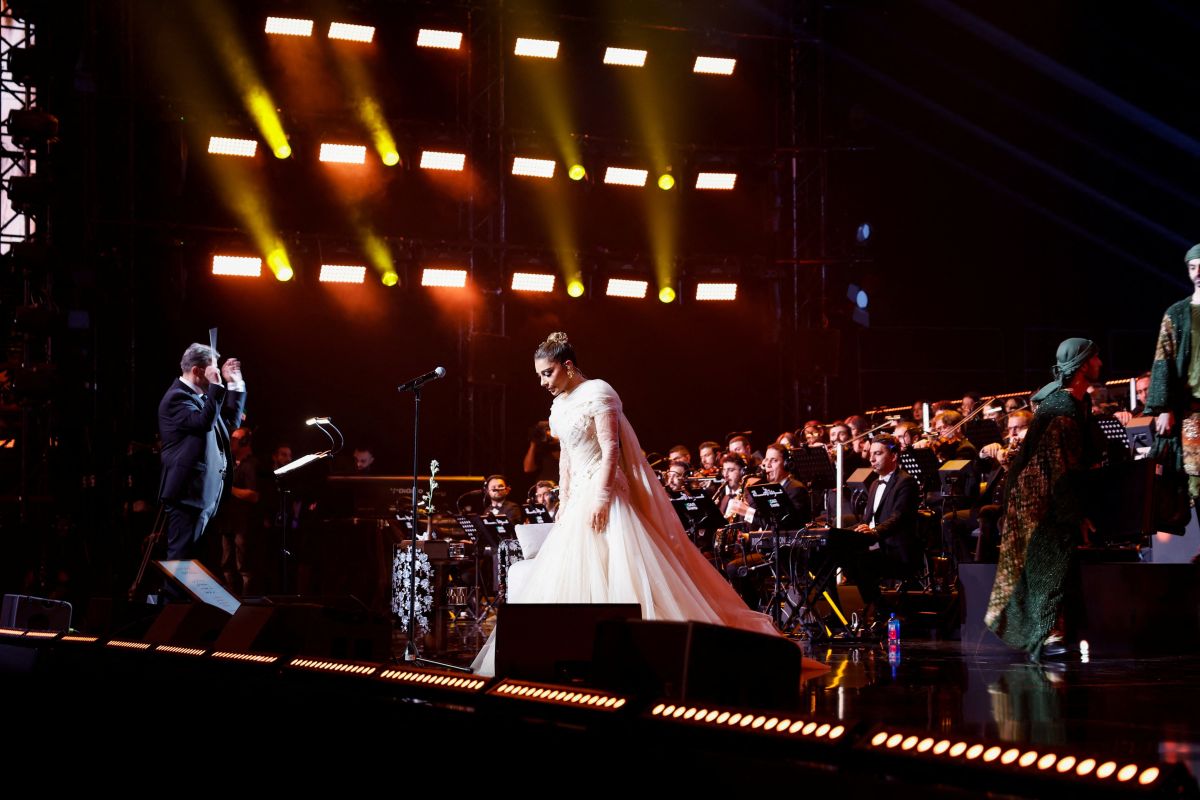
Syrian singer Assala Nasri performs in Damascus for the first time in 15 years, in Syria, on Sept. 17, 2026. (Credit: Yamam al-Shaar/Reuters)






Bachar El-Halabi is a Lebanese writer.There is something striking about watching Assala Nasri return to Damascus after 15 years away.The famed Syrian singer left her country after publicly supporting the uprising against Bashar al-Assad’s regime in 2011. Her return this week wasn’t just another concert. It was a homecoming, and an intensely political and cultural moment in a country and region profoundly different from the one Assala left behind.Watching snippets of the concert, I could not help thinking of another Arab singer and another moment exactly two decades earlier.In September 2006, Lebanese singer Julia Boutros emerged as one of the most prominent cultural voices celebrating what Hezbollah called its “divine victory” over Israel following the July war. Her song Ahiba’i (my beloved) famously drew on a message Hezbollah leader...
Bachar El-Halabi is a Lebanese writer.There is something striking about watching Assala Nasri return to Damascus after 15 years away.The famed Syrian singer left her country after publicly supporting the uprising against Bashar al-Assad’s regime in 2011. Her return this week wasn’t just another concert. It was a homecoming, and an intensely political and cultural moment in a country and region profoundly different from the one Assala left behind.Watching snippets of the concert, I could not help thinking of another Arab singer and another moment exactly two decades earlier.In September 2006, Lebanese singer Julia Boutros emerged as one of the most prominent cultural voices celebrating what Hezbollah called its “divine victory” over Israel following the July war. Her song Ahiba’i (my beloved) famously drew on a message Hezbollah...

 8 p.m. recap: Israel again threatens Beirut’s south suburbs; 2 ships hit near Hormuz; Riyadh football matches canceled