






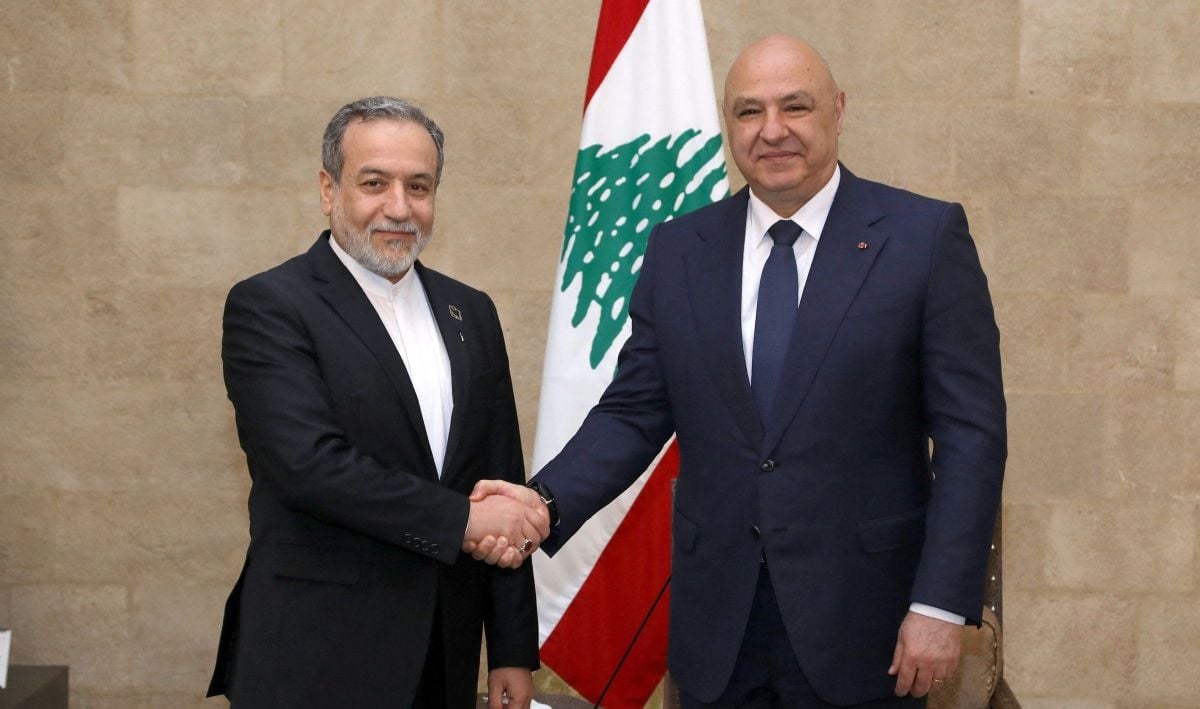
President Joseph Aoun (right) and Iranian Foreign Minister Abbas Araghchi during their meeting at the presidential palace in Baabda, east of Beirut, on June 3, 2025. (Credit: Lebanese Presidency)






BEIRUT — President Joseph Aoun and Iranian Foreign Minister Abbas Araghchi agreed during a phone call Wednesday on “the need to support diplomatic solutions to end conflicts in the region,” the Lebanese presidency said in a statement.
The two discussed the regional situation in light of recent developments and agreed that diplomatic solutions were “the best way to resolve conflicts in the region,” the statement said.
Iran’s Foreign Ministry said Araghchi stressed during the call “the need to end Israeli attacks on Lebanon and the occupation of territories in the south of the country.” He also briefed Aoun on the “diplomatic efforts” Tehran has undertaken over the past few weeks, the ministry said.
Iranian delegation visits Beirut
The call came two weeks after Prime Minister Nawaf Salam met Iranian President Massoud Pezeshkian in New York in late September, on the sidelines of the United Nations General Assembly. Salam stressed the importance of preventing Lebanon from becoming a theater for regional conflicts and called for “bilateral relations based on mutual respect and non-interference.”
He also urged Tehran to appoint a new ambassador to Beirut following the controversy surrounding its designated representative, Mohammad Reza Shibani.
Meanwhile, Iranian Deputy Foreign Minister Saeed Khatibzadeh arrived in Beirut on Wednesday at the head of a diplomatic delegation, according to several media outlets. A delegation from the Amal Movement, led by Khalil Hamdane, received him on behalf of Parliament Speaker Nabih Berri. Hezbollah MP Ali Mokdad was also present.
The developments come amid escalating tensions between Saudi Arabia and Yemen’s Houthi rebels. The Houthis claimed attacks on facilities belonging to Saudi oil giant Aramco and Riyadh airport on Tuesday. The Saudi capital has faced daily attacks of unprecedented intensity for more than a week.
In June, a memorandum of understanding between the United States and Iran included provisions for an immediate and permanent cessation of hostilities on all fronts, including in Lebanon. Lebanese officials responded at the time that only the Lebanese state had the authority to negotiate on the country’s behalf. Beirut signed a framework agreement with Israel under U.S. mediation a few weeks later.

 2 p.m. recap: UNIFIL, Hezbollah at heart of debates; ballistic missile intercepted in Riyadh; pope operated for cancerous nodule