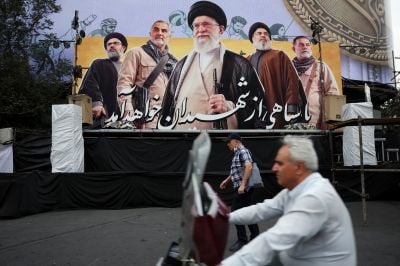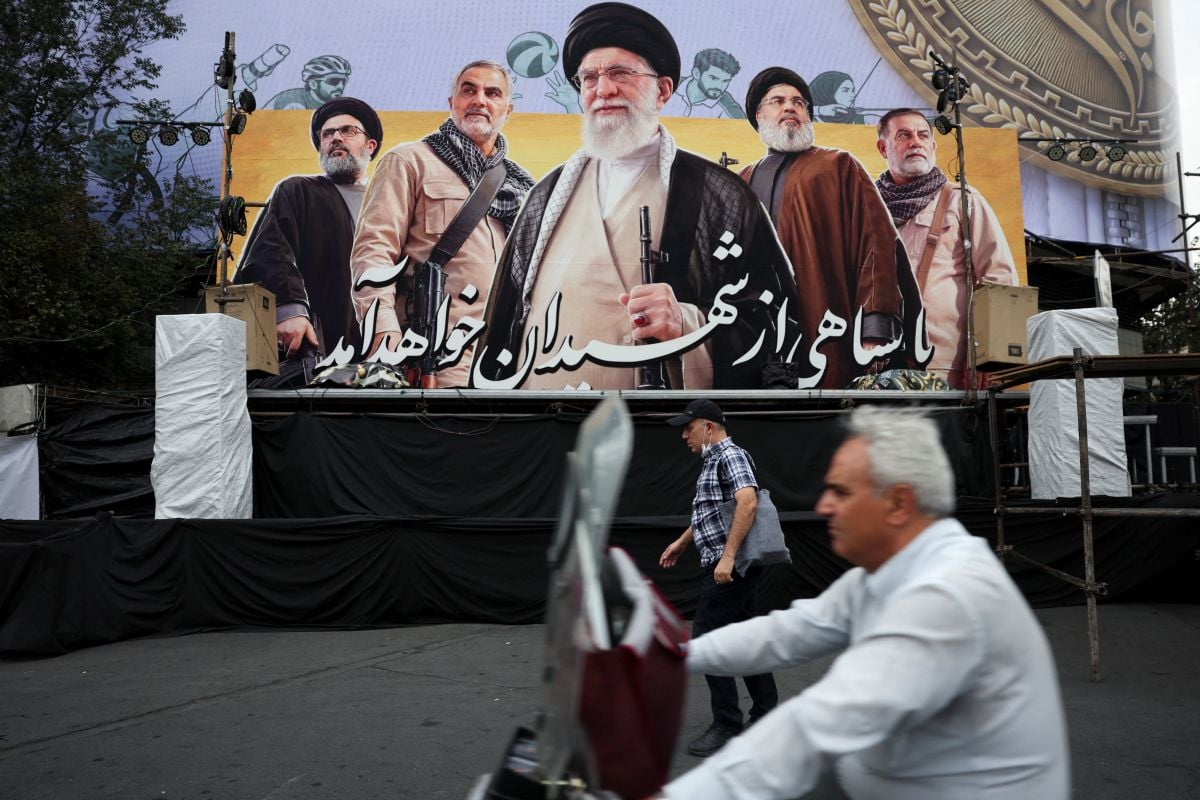
A man passes in front of a billboard showing the former Iranian Supreme Leader, Ali Khamenei, the former head of Hezbollah, Hassan Nasrallah, and the late leader of the al-Quds force, Qassem Soleimani, in Tehran, on Oct. 6, 2026. (Credit: Majid Asgaripour/WANA/Reuters)







Lebanon, Hezbollah, and the United Nations Interim Force in Lebanon (UNIFIL) remain high on the agenda in international discussions, as the Israeli army continues its assault on the South, with no clear horizon for negotiations with Israel and concerns over a "security vacuum" after the planned departure of the peacekeepers at the end of December. While no date has yet been confirmed by Washington for renewed negotiations with Israel — following the latest round of talks in Rome in August, which did not yield any breakthroughs — the State Department has nevertheless stated, through its spokesperson Tommy Pigott, that contacts with Lebanon and Israel are ongoing to advance dialogue between the two countries. The official also on the need to disarm Hezbollah to pave the way for southern Lebanon’s reconstruction and the return of the displaced, noting that Gulf and European countries could mobilize “billions of dollars” for this effort — provided the Lebanese state has a monopoly over arms.
Meanwhile, United Nations Under-Secretary-General for Peace Operations Jean-Pierre Lacroix, who met with President Joseph Aoun, said that Lebanon must have a say in UNIFIL's future. He said that discussions will "soon begin" in the Security Council on this topic, as numerous Lebanese officials have called for keeping the peacekeepers, amid ongoing tensions and the Israeli occupation of southern Lebanon. The Council addressed the issue in early September, with the United States firmly opposing any extension of the Force’s mandate, which is regularly criticized by Israel. In other news, a senior Iranian diplomat arrived in Beirut during the day. On the ground, Israeli fighter jets carried out strikes on the districts of Bint Jbeil, Marjayoun, and Nabatieh after a morning marked by artillery fire.
Why it matters
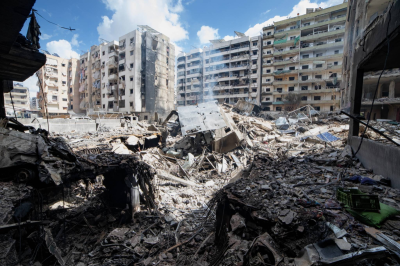
Whole swaths of southern Lebanon are devastated by Israeli bombing and destruction, while the Israeli army continues to occupy an area of more than 600 square kilometers. Many villages remain inaccessible to their residents, preventing the return of displaced families, and attacks continue daily despite the nominal cease-fire in place since June 2026. Lebanese authorities have already admitted they lack the means to begin reconstruction, making them dependent on external aid, which itself is conditional on the disarmament of Hezbollah, though the party itself refuses to disarm until Israel withdraws from southern Lebanon. All these factors threaten to further complicate the situation in the south and could worsen if UNIFIL departs — as some fear a fresh regional flare-up between Iran and the United States could once again engulf Lebanon in full-blown war.

Tensions remain high between Saudi Arabia and the Iran-backed Houthis of Yemen. The Saudi-led coalition said Wednesday it had intercepted a missile fired by the Houthis toward Riyadh. In the morning, warning messages were sent by phone to residents, alerting them to an "aerial threat" and urging them to seek shelter, while the Houthis claimed strikes on Aramco facilities, an airport, and a refinery in Saudi Arabia.
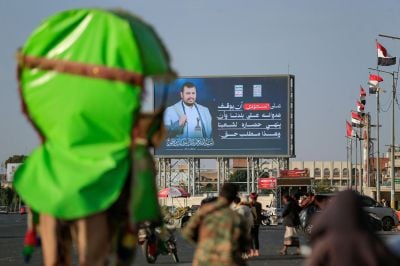
Early Wednesday, Riyadh reported that four people — two women, a man, and a child — had been injured by missile debris in the capital, and that an Aramco administrative site in Dhahran was hit by an attack that sparked a limited fire but caused no casualties. On Tuesday, the coalition claimed strikes in Yemen against sites contributing to the Houthis' "war effort."

- Turkish police took control of the headquarters of opposition broadcaster Halk TV and detained eleven of its employees. The takeover comes two weeks after the blocking of T24, a major independent news website accused of "LGBT propaganda." Opposition journalists and media in Turkey are routinely targeted by the courts for alleged offenses ranging from defamation, insult to President Recep Tayyip Erdogan, corruption, or spreading fake news.
- Pope Leo XIV, 71, has begun his recovery in Rome after having a cancerous nodule removed from his lung the previous day. Further tests are being carried out to check for potential signs of cancer spread. According to specialists, these tests will determine the exact stage of the disease and possible treatments such as radiotherapy, though the pope — a tennis enthusiast known for his excellent health — has a very positive prognosis so far.