






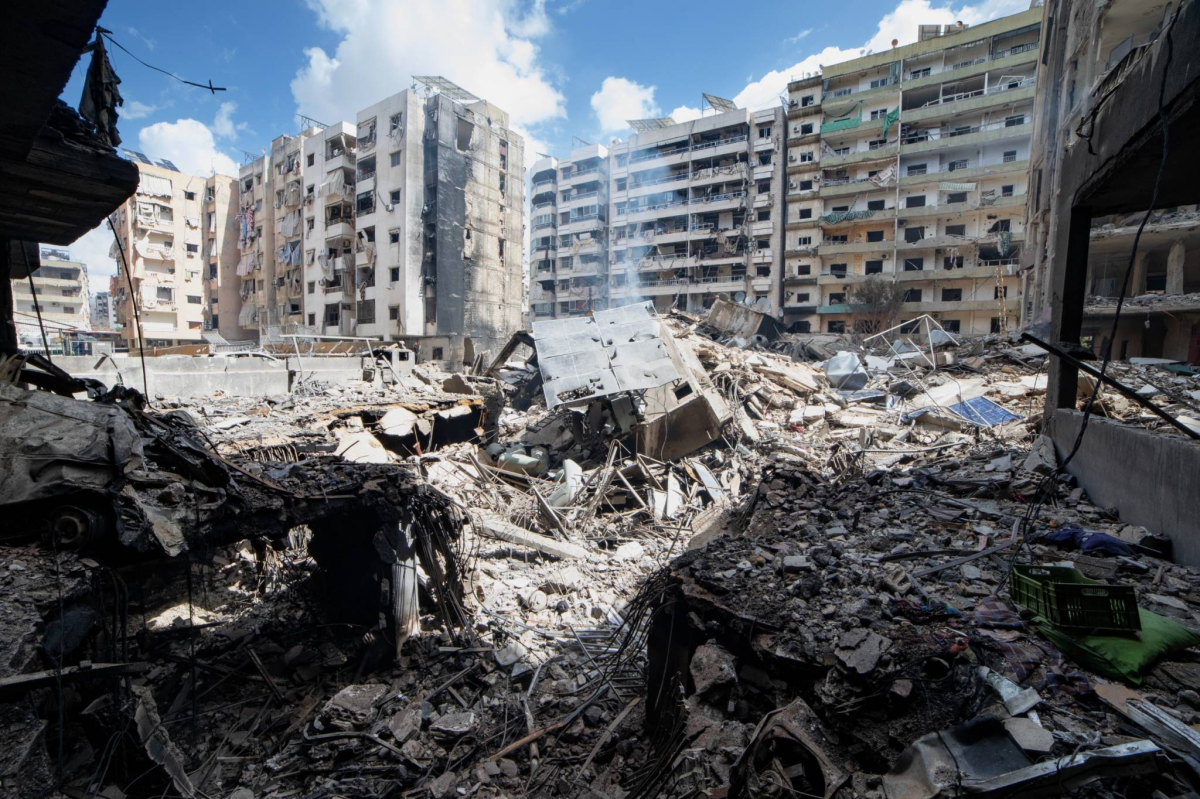
A neighborhood in the southern suburbs of Beirut in ruins following Israeli bombardments, on Nov. 27, 2024. (Credit: Mohammad Yassine/L'Orient-Le Jour)






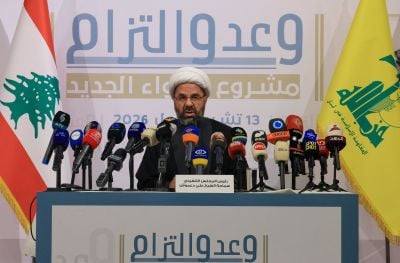
BEIRUT — Hezbollah announced Tuesday a new housing aid program for displaced people and families whose homes have been destroyed or rendered uninhabitable by Israel's bombardments since October 2023. Called "Promise and Commitment," the initiative offers aid of up to $14,000 for those in Beirut and its southern suburbs, and up to $12,000 in other regions, according to Sheikh Ali Daamouch, president of the party's executive council.
The aid packages include $8,000 for the purchase of furniture, and $6,000 or $4,000 respectively for rent. The aid will be distributed over a year, in four quarterly installments, with a first payment of $3,500 or $3,000 depending on the region.
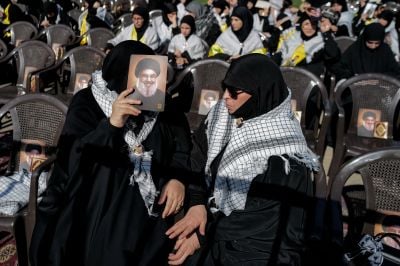
The program targets those affected by Israel's two successive wars, particularly residents of border villages that are currently occupied by Israel or inaccessible due to ongoing attacks, even if their homes have remained intact. The rehousing aid is reserved for families deprived of their primary residence and who do not own a second home. Those who have already received a furniture indemnity after the 2024 war will only be eligible for the rent allowance, provided they meet the requirements.
Daamouch also called on landlords and business owners not to raise their prices in light of these imminent payments. To receive the full aid, families must have resided in the affected home as their primary residence, not as a secondary home, and must not own another dwelling that could replace their home, he noted. Those who own a replacement home will be entitled to the furniture assistance, but not the rent component.
If these payments actually come through, they will mark another significant round of financial support by the party to its supporters since the start of the two devastating wars waged by Israel, after 2024 aid promises were only partially delivered before being suspended. The main target of the aid is people from the regions which have borne the brunt of Israel's aggression, notably southern Lebanon, the Bekaa, and Beirut’s southern suburbs.
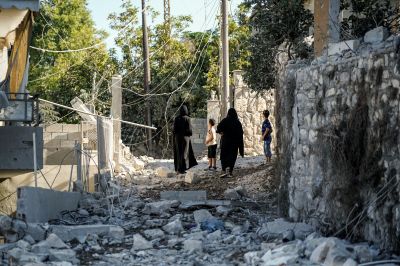
Since 2023, Israel has killed more than 9,000 people in Lebanon and has destroyed entire swaths of Lebanese territory near its southern border. Lebanese authorities estimate that reconstruction could cost as much as $27 billion.
Since June 2026, Hezbollah has ceased to claim attacks under an agreement brokered between the U.S. and Iran, but Israel continues to occupy more than 600 square kilometers of Lebanese territory. Israel also continues to conduct daily attacks against southern Lebanon, including air and drone strikes, artillery fire, and home and infrastructure demolitions, rendering many villages inaccessible to their inhabitants and preventing displaced families from returning home.
Hezbollah's aid package announcement comes months after it suspended compensation payments to its popular base. On Oct. 7, Reuters reported that the party received $200 million from Tehran to aid Lebanon's forcibly displaced. U.S. President Donald Trump has disputed the existence of this aid, accusing the group of seeking to conceal its "financial difficulties." Washington has been pressuring Beirut to move quickly on disarming Hezbollah, a U.S. state prerequisite for the provision of any reconstruction aid.
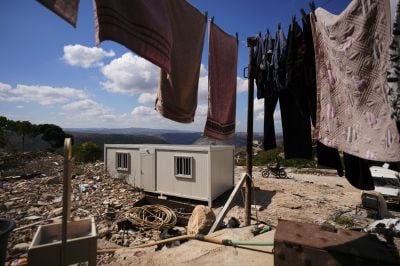
Daamouch did not specify the total amount allocated to the new program or the number of intended beneficiaries. According to figures from OCHA, the U.N.'s humanitarian agency, more than 800,000 people forcibly displaced by Israel's war on Lebanon have returned home since major hostilities subsided in June 2026. About 360,000 people remain displaced, however, including around 26,000 currently housed in public accommodation centers.
Reconstruction, a 'responsibility' of the state
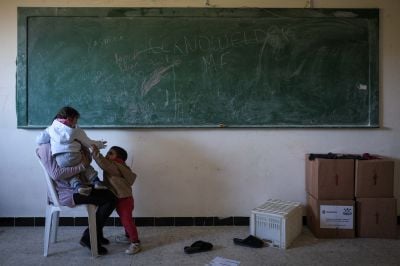
Israel's ground offensive and bombing campaign against Lebanon forced hundreds of thousands of people, the majority of whom are Shiite, to leave their homes in search of safety and shelter elsewhere. Following an aid program announced in 2024, Hezbollah's compensation payments were eventually partially distributed before being completely suspended due to lack of funds.
Hezbollah was deprived of much of its financial inflows after the fall of the Assad regime in December 2024, the closing of land routes via Syria, and the suspension of flights between Tehran and Beirut since February 2025.
Beyond these financial measures, Daamouch sharply criticized the Lebanese authorities, accusing them of failing to set up a direct aid program for those affected. He also accused "certain official institutions" of contributing to a blockade preventing aid from reaching people in need of assistance. Insisting on the state's responsibility regarding reconstruction and relocation, he asserted that Hezbollah's action does not "replace its obligations."
The Hezbollah leader also defended his party's "resistance," presenting it as a "national necessity," while calling on the Lebanese to engage in dialogue rather than hate speech. "Your bet is lost," he finally declared to those who "were counting on Hezbollah's inability to assist its people." In early October, Prime Minister Nawaf Salam acknowledged from Nabatieh the scale of the region's financial needs, while assuring that his government would mobilize available resources to allow the South "to recover."
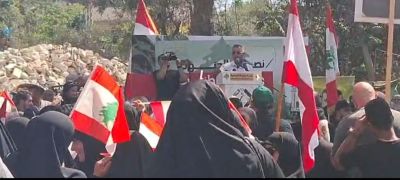
Hezbollah’s announcement prompted a reaction from Beirut MP Fouad Makhzoumi who called on the government, Banque du Liban (BDL, central bank), the Special Investigation Commission, and the judicial and security authorities to verify the origin of these funds and the channels through which they were channeled. In a post on X, he argued that Hezbollah's aid program raises “serious questions” about the sources of these sums, their entry into Lebanon, and their distribution outside official financial channels.
Whilst asserting that providing aid to affected families is a “national duty,” Makhzoumi warned that their suffering could be used as a “cover for parallel financial systems” or as a “pretext for circumventing Lebanese laws,” particularly in light of U.S. sanctions targeting individuals and networks accused of financing Hezbollah. “There is no sovereignty for a state that does not hold a monopoly on weapons and does not control the flow of money,” he added.

 1 p.m. recap: Hezbollah offers extensive aid package for the displaced; ICRC warns of 'disaster' in Middle East; explosive device found in the Bekaa