





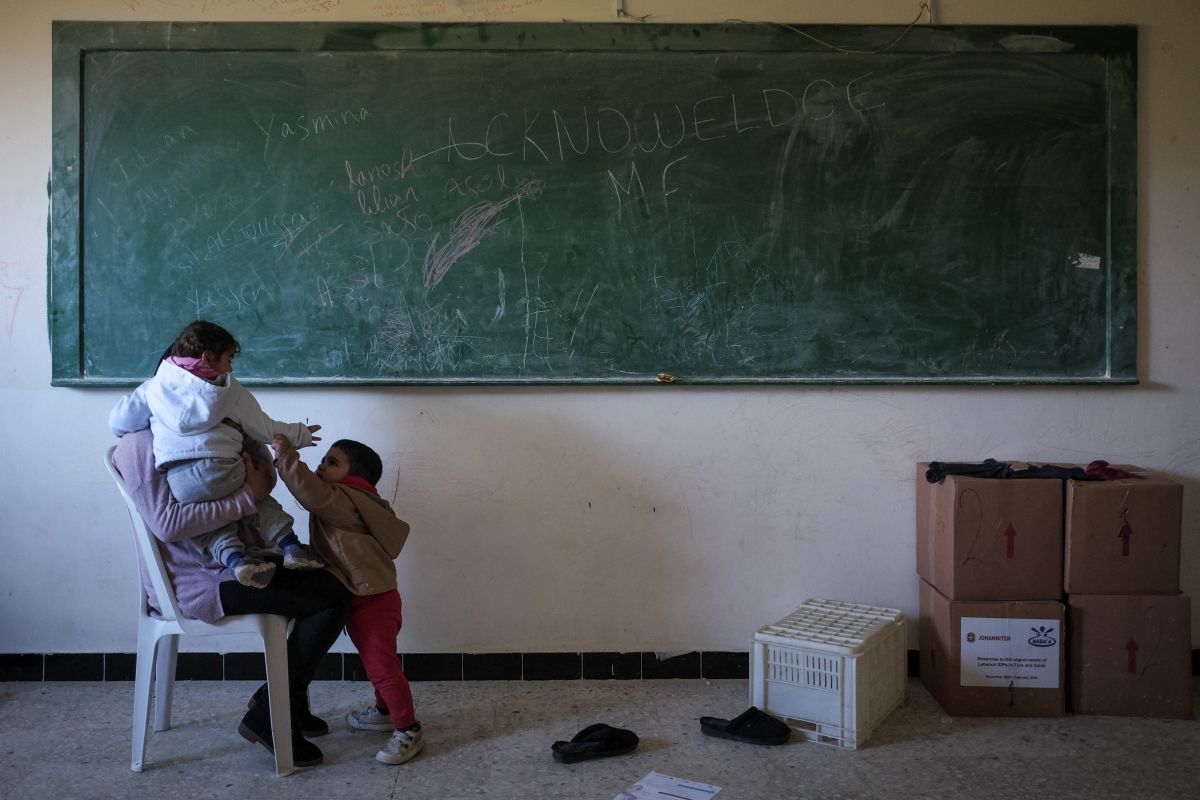
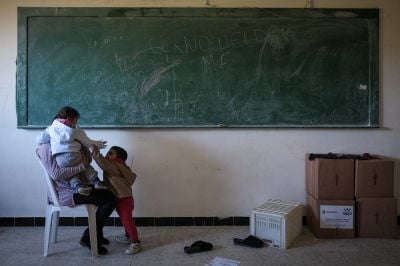
Children are playing in a classroom in a school that has been turned into a shelter in Tyre, southern Lebanon, in February 2024, during the war between Israel and Hezbollah. Photo João Sousa/L’Orient-Le Jour






Ordered to evacuate by Wednesday from the schools where they have found refuge in the city of Sour in southern Lebanon, 250 families from the village of Beit Lif (Bint Jbeil), along with dozens more from other towns now inaccessible due to Israeli occupation or entirely destroyed, are refusing to leave. The Education Ministry wants to reclaim these buildings before the end of the month so that students can resume in-person classes, even as the school year, already disrupted by the consequences of the ongoing war, began on Sept. 15. The displaced, to whom authorities have offered alternative shelters in the villages of Hmeiri and Jibal al-Botom in the Sour district, argue that these reception centers are unsuitable and the regions unsafe, especially as daily Israeli strikes continue to threaten the South.
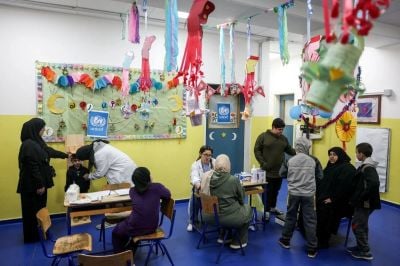
During the war, "550 of the country’s 1,228 public schools were turned into shelters" to host the hundreds of thousands of displaced people, according to a report by the Center for Lebanese Studies. Three public schools are mainly affected in Sour: a high school, a middle school, and a co-ed institution, according to Bilal Kashmar, spokesperson for Sour's Disaster Management Authority, an organization under the Union of Municipalities of the region. These establishments are sheltering around 450 families, half from Beit Lif. On Saturday, a statement published on behalf of the displaced people of Beit Lif said they are refusing to leave the premises, while calling for "suitable alternative solutions."
Places that are 'not even fit for animals'
"We went to see the centers offered in Hmeiri and Jibal al-Botom. These places are not even fit for animals," laments Ghadban Moustapha, a father from Beit Lif, contacted by our publication. Married to three women and father of sixteen children, he and his family found refuge in a school in Sour last March, the day after Hezbollah fired missiles at Israel following the Israeli-U.S. offensive against Iran.
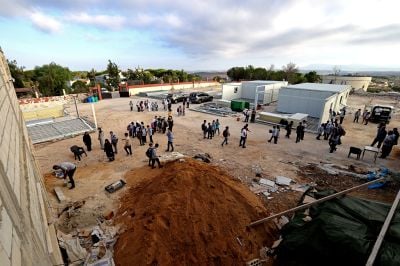
"They’re offering us prefabricated plastic or metal shelters in Jibal al-Botom, as well as about ten rooms with no daylight," he explains, also noting that this area "is near Mansouri," where the Israeli army conducts daily strikes and demolitions. In Hmeiri, the authorities are offering several rooms to the displaced, in addition to the possibility of housing them in the village of Abbassieh in Sour. "In some cases, these are old garages, some without windows," Ghadban Moustapha protests. In an effort to pressure the displaced to leave, "the authorities threatened to cut off the water and the diesel fuel that powers the generators," he says. "We’ve bought diesel ourselves and we plan to stay here."
"I haven’t yet enrolled my children in school because I don’t know what’s ahead for me or where my family will end up," says Ali, another displaced man from Beit Lif. He accuses "the political parties that haven’t bothered to contact the displaced." He recalls losing his home in the first war in 2023. "I then sold my car to build a small room with a kitchen. I lost everything again in 2026," laments this father of three children.
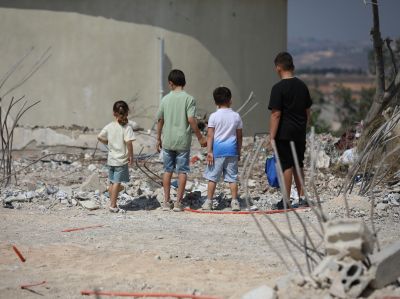
The facilities that the authorities want to evacuate also host displaced people from Naqoura, Dhaira, Yarin, and Mansouri, as well as Ramieh and Haddatha (Bint Jbeil), all areas now under Israeli army occupation. A displaced person from Dhaira, who arrived in Sour in October 2023 and wishes to remain anonymous, asserts that "the majority of these families want to stay here." Still unsure where to go, he believes the proposed housing is "dangerous because of Israeli strikes nearby. I don’t want to risk something happening to my family."
Schools open both to displaced people and students
"The alternative reception centers are suitable (for the needs of the displaced). They are identical in terms of conditions and equipment" to the housing these families currently occupy, defends Bilal Kashmar of Sour's Disaster Management Authority. According to him, "several families" have agreed to move to these centers. Those who refuse to leave prefer the city of Sour because it is a large city where many services are available, he says. Regarding Wednesday’s ultimatum, Kashmar says he "does not know what will happen after this deadline," explaining that the responsibility lies with the Education Ministry.
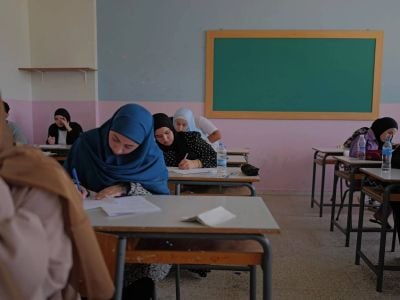
A source within the ministry, however, notes that it does not have the authority to forcibly remove the displaced if they decide to stay. Faced with this situation, several public schools could thus continue to house displaced families in some of their rooms, while opening their doors to students, the source believes. Contacted for comment on the matter, neither the Sour municipality nor the Ministry of Social Development was available.
This article originally appeared in French on L'Orient-Le Jour.

 7 p.m. recap: Aoun rejects leniency toward Hezbollah, Qatar eyes 2 power plants in Lebanon, Gantz bows out