












It was written. Lebanon was always going to be, as so often, the main loser of this sequence. Either it was excluded from the U.S.–Iran cease-fire — now looking increasingly illusory — and Israel would continue bombing it with complete impunity for days, weeks, or even months. Or it was included, under Iranian pressure, allowing both the Islamic Republic and Hezbollah to claim victory and further entrench their hold over a state that has been trying, for a year now, to free itself from them.
The opening of direct negotiations with Israel offers a third path. That is, on balance, a positive development: it brings the state back to the center of the equation and allows it to defend its own interests, long sidelined by both Tel Aviv and Tehran. Beirut must now prove that it is best placed to negotiate a cease-fire, an Israeli withdrawal from southern Lebanon, and a durable agreement capable of ending this permanent state of war, one that brings nothing but Lebanon’s continued ruin.
A few months ago, in these same pages, we argued that the conditions for making peace with Israel were not fulfilled and that it was in our interest as Lebanese to settle for a return to the 1949 Armistice Agreement in a strengthened form.
Our arguments were as follows: Lebanon is in far too weak a position to negotiate a favorable deal; Israel’s criminal conduct in Gaza, the West Bank, Lebanon, and Syria does not make it a credible partner for peace; the country is too fragile to absorb either war or peace, given the internal tensions either could inflame; and, finally, Lebanon remains attached, like Saudi Arabia, to the 2002 Arab Peace Initiative, which ties peace to the creation of a Palestinian state, a lever that remains the Arab world’s last point of leverage over Israel.
But these arguments are now entirely outdated. Hezbollah’s adventurism, which has led to yet another Israeli invasion and the devastation of a large part of southern Lebanon, unfortunately leaves us with no choice but to pursue peace with Israel if we hope to restore the country’s territorial integrity. The problem is that even this peace, imposed by force, is not something we are in a position to deliver. On paper, the negotiations are set to take place in a more favorable context than in the past, given Hezbollah’s weakening, its political isolation, and the fall of the Assad regime in Syria. A large portion of the Lebanese public and political establishment also seems ready to accept a cold peace with Israel, not out of conviction but out of pragmatism.
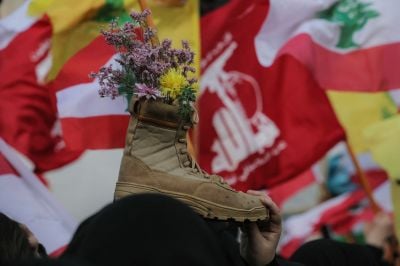
Yet the main question is not whether we are willing to sign peace with our neighbor, but whether we are capable of ensuring that it is actually upheld by all components of the country. Our only leverage vis-à-vis Israel rested on at least a partial success in the policy of disarming Hezbollah. Because this effort has been a complete failure, and because the state has either been deceived or, at worst, dishonest, we are entering negotiations with no serious cards left to play. Facing Israel, Lebanon is left with nothing in hand.
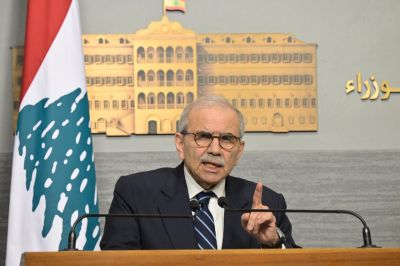
Israel will continue bombing the country and pressing its invasion in the South until it receives credible guarantees of our commitment to disarm Hezbollah. We can keep making grand speeches and empty promises, but no one is fooled. Prime Minister Nawaf Salam is sincere in his determination to carry out this mission, but he is deeply isolated and has almost no means of action. Parliament Speaker Nabih Berri has chosen to side with Hezbollah against the state. And President Joseph Aoun is clearly not ready, for both political and ideological reasons, to confront the party-militia.
Even before considering its capabilities, which would be a legitimate question if it showed any real willingness, the Lebanese Army, and the security apparatus more broadly, has displayed such complacency, and at times even such collusion, with Hezbollah that there is serious doubt it will ever see the militia as an enemy of the state. And since Hezbollah will never give up its weapons through national dialogue, unless the Iranian regime collapses, we are completely stuck.
In this context, negotiations with Israel are bound to fail. Tel Aviv knows it, Tehran knows it and, one hopes, Beirut knows it too. The only remaining question is whether Washington sees it the same way, or whether President Donald Trump will once again throw his full weight behind a deal, as he did in Gaza, that none of the parties will ultimately respect.
This editorial originally appeared in French in L'Orient-Le Jour and was translated by Sahar Ghoussoub.

 8 p.m. recap: Israel again threatens Beirut’s south suburbs; 2 ships hit near Hormuz; Riyadh football matches canceled