












We are living through strange times. Iran is attacking the Gulf, Jordan and even Egypt; Donald Trump is promising to bomb the Islamic Republic "much more forcefully" than last time; and hardly a day goes by without an Israeli official threatening one of its neighbors. And yet ... almost no one seems to care anymore.
This can be attributed to a mix of fatigue, information overload, weariness and, at the same time, a certain clarity. Everyone seems to have understood that the volcano will inevitably erupt, and that, in the meantime, very little of what is happening around it really matters.
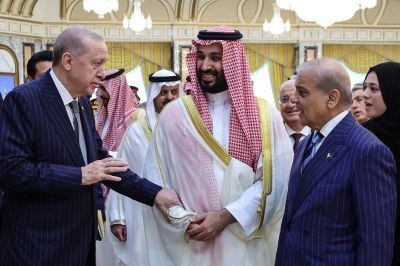
The region is in flux, yesterday’s enemies are reconciling, alliances are being forged anew, and alternative routes are emerging. But none of this will matter much once things get serious. Even the new "Sunni crescent," a highly symbolic alliance between Ankara, Riyadh and Islamabad, will not fundamentally alter the equation as long as the Iran question remains unresolved.
The entire Middle East remains in limbo over this question. Far from resolving it, the U.S.-Israel war has, in fact, made it even more complicated. We have moved from a "either a bad deal or a war" scenario to one of "either a very bad deal or a very big war."
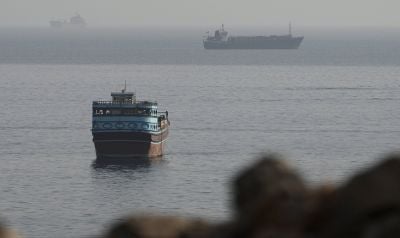
The Islamic Republic wants to change the rules of the game and be handed the keys to the Gulf. In its view, victory cannot be merely political, otherwise the war will resume; it must also be strategic. Hence its insistence on seeking control of the Strait of Hormuz.
It is unlikely to accept any agreement that does not grant it such a status. Yet granting it that status would be disastrous for the other Gulf countries, for the region and even for the global economy. The alternative? Waging an even larger-scale war than the previous one, at an even greater human, political, diplomatic and economic cost, in the hope that the Iranian regime will eventually bend — or by creating the conditions to bring about its downfall.
Donald Trump wants neither option. So he is playing for time, hoping that, under the pressure of the blockade and its own internal divisions, the regime will eventually give in. In the meantime, he is seeking to contain it across the region while pushing for an alliance between Israel and Saudi Arabia — an alliance the kingdom has so far refused to embrace.
The longer this uncertainty persists, the more it becomes a defining feature of the region. If this low-intensity war drags on for months or even years, it will have a profound impact in the medium and long term: any major political or economic development will be put on hold pending a resolution. And each actor will increasingly settle into its temporary role, until that role eventually becomes permanent.
The American, a sheriff whose authority is waning. The Iranian, a resister who refuses to yield. The Israeli, trapped in a war with no end in sight. And the Arab, a spectator to a storm they see coming but cannot stop.
Lebanon, Syria, Iraq and Palestine have lived with this persistent uncertainty for years. But how long will the Gulf monarchies be able to endure it? And will it push them to accept some form of Iranian hegemony — or, on the contrary, to move even closer to Israel?
It is difficult to see what might be a game-changer in the coming months, short of an internal collapse of the Iranian regime — which seems unlikely — or another full-scale war, which is equally improbable. Neither the Israeli elections nor the U.S. midterm elections appear likely to significantly alter the current course of events.
For Lebanon, this means remaining in this situation, with recurring escalations of varying intensity, for months to come. Nothing will change before the Israeli elections, and probably very little will change after the vote either.
Israel will give nothing. Not the slightest concession to Lebanon, which, despite its diplomatic push for peace, is not regarded as a credible actor in Israel’s eyes as long as it has not lifted a finger against Hezbollah. And that finger will not be lifted — especially as long as Israel occupies Lebanese territory — for all the reasons we have explained time and again.
Here too, the situation is at a standstill. And our only real asset — the attention Donald Trump is giving us — is likely to quickly fade.
So all that remains is the uncertainty. An uncertainty that is no longer a mere interlude between two wars, but which could become the region’s new normal. Perhaps the question is no longer when the next escalation will break out, but who will be able to hold out the longest through this seemingly endless wait.
This editorial first appeared in L'Orient-Le jour and was translated by Joelle Khoury

 8 p.m. recap: Israel again threatens Beirut’s south suburbs; 2 ships hit near Hormuz; Riyadh football matches canceled