











There are military occupations. And there are also more insidious occupations. Those that end up colonizing consciences, until they determine not only the wars a people must fight, but also the tears it is allowed to shed.
This may be the most profound political legacy left today by Ali Khamenei in Lebanon.
For months, the inhabitants of south Lebanon have watched their homes, land, businesses, and memories disappear. They have lost their loved ones, their security, and at times, even the hope of ever returning to the life they once knew. And when they dared to express their exhaustion, their anger, or simply ask the legitimate question of — why are we once again paying the price of these wars ?— they were immediately brought back into line.
They were told that the battle went beyond their individual suffering, that displacement was "part of jihad," that destruction was a form of sacrifice, and that strategic patience was a revolutionary virtue.
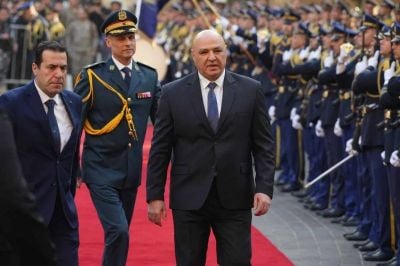
This discourse is not an accident. It is the logical consequence of a political project born with the 1979 Iranian Revolution — a project that has progressively asked part of the Lebanese population to shift the centre of their allegiance.
This logic explains everything else. It explains why, after the Israeli withdrawal in 2000, war never truly left the south. It explains why thousands of young Lebanese were later sent to die in Syria in the name of a battle that was no longer Lebanon’s. It also explains why, even today, the inhabitants of the south discover that the essential decisions concerning their future are still being made elsewhere.
These inhabitants never chose to open this front. They never chose its continuation or its end. Yet they have borne the cost of each of these decisions.
Yet they were denied the right to cry. Until, suddenly, tears became acceptable … at Ali Khamenei’s funeral. The contrast is striking. For months, those mourning the loss of their homes were urged to be patient. Those who asked why their children were dying were urged to think of the cause. Those who questioned the cost of this war were suspected of undermining the "resistance."
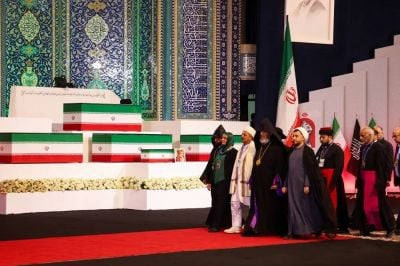
The problem is not that some Lebanese mourn Khamenei. Everyone is free to choose where their loyalties lie. The problem is that those who now demand respect for that grief have long denied the inhabitants of the South the right to fully live out their own.
For more than forty years, they were asked to share the priorities of the Islamic Republic, its battles, its enemies, its victories, its defeats, and even its mourning. But how many times has the Islamic Republic shared Lebanon’s grief ?
Have the razed villages, the thousands of dead, the hundreds of thousands of displaced, the families who lost everything, ever provoked a comparable level of mobilization? Even the assassination of Hassan Nasrallah — Tehran’s most loyal ally and its standard-bearer for decades — never generated such an outpouring of emotion.
This asymmetry alone sums up half a century of relations between Lebanon and the Iranian project.
They were asked for their land.
Then their homes.
Then their children.
Then their silence.
Then their patience.
Today, they are being asked for their tears.
Ultimately, today’s debate is not only about negotiations or even about the disarmament of Hezbollah. It concerns a far more fundamental question: does Lebanon want to become once again the sole master of its own decisions — and of its own mourning?
Because there is no such thing as partial sovereignty.
When decisions are made on behalf of the Lebanese about the wars they must fight, it also ends up meaning that the sacrifices they must accept are decided for them.
And then, the dead they are expected to honor.
And then, the pain they are allowed to express.
It is precisely this chain that the state is now trying to break. When Joseph Aoun states that "no one will negotiate on our behalf," he is not merely defending a diplomatic process. And when he pledges to repair what Hezbollah has destroyed, he is setting out two irreconcilable conceptions of the country.
This is perhaps the true political rupture of this moment. For the first time in decades, there is a president who is no longer asking the Lebanese to adapt to the consequences of decisions made elsewhere. He is asserting that these decisions must finally return to the state. Not because the state is infallible, but because it is the only actor that can be held accountable before the Lebanese for both their wars and their peace.
The houses of the South will be rebuilt. The roads will reopen. Schools will welcome their students again. The fields will be replanted. Even if all of this takes years.
But there is an even more difficult reconstruction: the one that consists in restoring to some Lebanese the conviction that no cause, however great it may be, has the right to appropriate their own pain.
This editorial first appeared in French on L'Orient-Le Jour and was translated by Joelle Khoury.

 7 p.m. recap: Iran warns Egypt, Israeli soldiers vote in south Lebanon, Haret Hreik responds to Kataeb