











"Wars begin when you will, but do not end when you please," as the saying goes. Because they had been preparing for this for decades, because they had learned from the limits of their "strategic patience," because they realized fairly quickly that their main adversary lacked stamina and consistency, because they were prepared to lose a great deal rather than give in even a little, and because they had no qualms about bombing their Arab neighbors — even though they were not belligerents — the Islamic Republic’s leaders had good reason to believe that the war against the world’s leading power and its Israeli ally could turn to their advantage.
But did they imagine, even in their most delusional hubris, that it would end with an agreement granting them not only tens of billions of dollars without requiring a single concession, but also, as the icing on the cake, Lebanon served up on a silver platter? Were Iran’s leaders such strategic geniuses that, as early as March 2, they had foreseen that Hezbollah’s intervention in the war would not merely serve as a sacrificial card to ensure the regime’s survival, but would ultimately allow them to strengthen their influence over Lebanon?
Disregarding whether the South is razed to the ground, whether thousands of Lebanese have been killed, or whether it will take the country years to recover from this war, the only thing that matters to the Islamic Republic and to Hezbollah is that the "Great Satan" itself eventually acknowledges that the road to Beirut runs — and will continue to run — through Tehran.
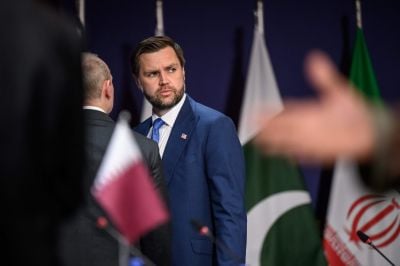
And so, Lebanon finds itself at the center of the U.S.-Iran negotiations. On the American side, the policy is so opaque that it’s best not to try to understand it for the moment: How is it possible to shift, in a matter of weeks, from a discourse radically opposed to Iran’s presence in Lebanon to the creation of a "deconfliction cell" involving the Islamic Republic?
On the Iranian side, however, the logic is strikingly clear. The more the United States gives in, the more Iran demands. "Force Israel to cease fire in Lebanon, or we’ll close the Strait of Hormuz!" Then it will be: "Force Israel to withdraw from Lebanon, or we’ll close the Strait of Hormuz!" And finally: "Agree that nothing can be decided in Lebanon without us, or we’ll close the Strait of Hormuz!"
Of course, much can still happen over the next two months. Israel will not agree to withdraw without obtaining security guarantees in return, Donald Trump still has time to change his mind 10 times, and the final deal may never materialize. But the Iranians have no problem dragging out negotiations for months or even years, and they can even accommodate an Israeli occupation that serves Hezbollah’s narrative. In the meantime, the sale of their oil, access to the international banking system, and the gradual unfreezing of their funds will allow them — and their allies — to recover financially, and the spirit of the Memorandum of Understanding makes them a major power in the Middle East. In other words, Tehran obtained everything it wanted: money and, more importantly, recognition.
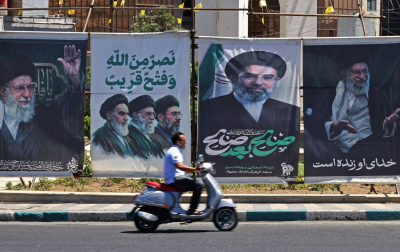
"If you’re not at the table, you’re on the menu," another adage goes. Lebanon is slipping back into its role as the scapegoat — the role it so loves to hate, and which allows it to do nothing and blame others for everything that happens to it. So, yes, the Lebanon-Israel talks in Washington continue, and the authorities have not yet reversed their decision to restore monopoly on arms. How can we still hope for anything at this point, with Israel on one hand, just a few months ahead of the general elections and having been abandoned by its ally in Iran, determined to defend tooth and nail its maximalist vision, and with Hezbollah on the other hand, ready to do everything it takes to torpedo the process? How can we expect the militia to be neutralized after the triumph of its patron?
In an effort to break the deadlock, many diplomats and experts are calling for negotiating Hezbollah’s shift into a political party in exchange for granting benefits to the Shiite community, within a broader regional process. Egypt, Qatar, and even Pakistan are working behind the scenes. But why would the Islamic Republic agree to change the very nature of its armed wing at the very moment it has proven more useful than ever, in order to secure institutional guarantees in a state it has, in any case, infiltrated and phagocytized for at least two decades?
This approach is based on the idea that Hezbollah and its Iranian patron can be normalized, and that the ideological factor, in both cases, is more flexible than it appears. It has the merit of highlighting one of the most interesting debates sparked by the conflict with Iran: Is Iran hostile to Arab countries, Israel, and the West because of what they have done to it, or because of who they are? In other words, will Tehran view all these actors as its enemies regardless of their policies, or have their policies themselves turned them into enemies?
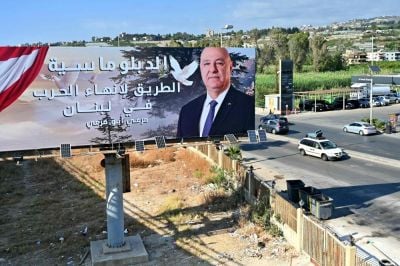
To this central question, the U.S. vice president JD Vance, the MoU’s architect, offers a fairly clear-cut answer, betting that the "new Iranian regime" will change its behavior thanks to the hundreds of billions of dollars that would flow into its economy. It is as if the financial incentives could fundamentally reshape the power of an ideology.
The ideology in question may no longer be the same after the war. Many experts on Iran argue that the regime has indeed changed, it is less religious and more nationalist, more driven by its interests than by a need to align with the revolutionary ideals of 1979. This shift may perhaps become visible on the domestic stage through so-called "social reforms."
But how can one imagine that the Guardians of the Revolution — who are so committed to "the unity of the fronts" that they are willing to risk another war with the United States to preserve it— the very same people who created Hezbollah, who have strengthened it for forty years, and who have full control over it on the ground, would agree to negotiate its disarmament at the very moment when they believe they have achieved a major strategic victory and are already preparing for the next confrontation? Unfortunately, sometimes "it’s the enemy who chooses us."
This editorial first appeared in French and was translated by Joelle Khoury.

 Evening recap: Netanyahu announces West Bank offensive; 7 killed in Jordan church shooting; tents burned in south Lebanon
 US strike on Iran this weekend? ‘Absolutely,’ says Barrack; ‘I have no idea,’ says Trump