







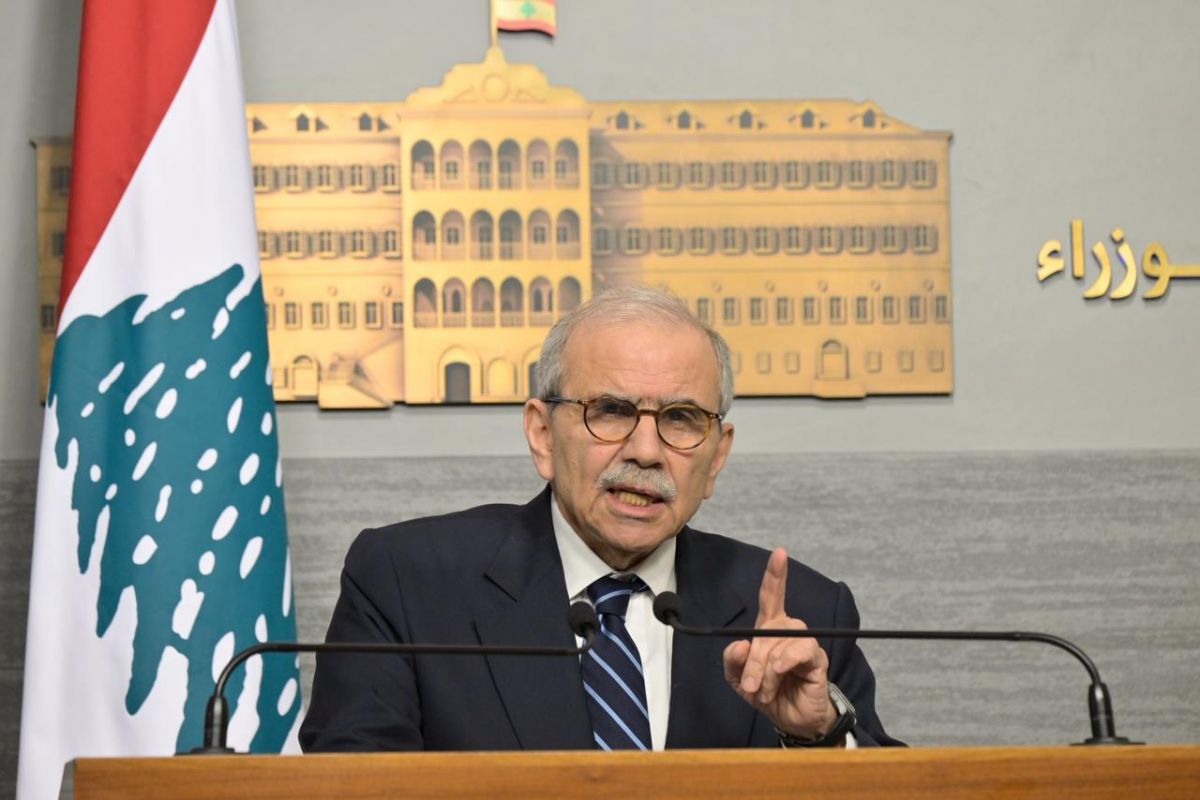
PM Nawaf Salam. (Credit: Undated photo published on the Grand Serail’s X account)






BEIRUT — PM Nawaf Salam said Sunday that south Lebanon would not be “abandoned once again,” adding that the government is continuing its efforts to end a war “that was not our choice” through direct negotiations with Israel scheduled for next week in Washington.
He made the remarks on the occasion of the 51st anniversary of the outbreak of the Lebanese civil war (1975–1990) on April 13, 1975, as Lebanon is once again gripped by a conflict that has already killed more than 2,000 people since March 2, when fighting resumed between Israel and Hezbollah.
Salam also called for “unity” in the current context, warning that “what was once a source of wealth for this country — its diversity — can sometimes become a factor of division,” in a speech shared on the Grand Serail’s X account.
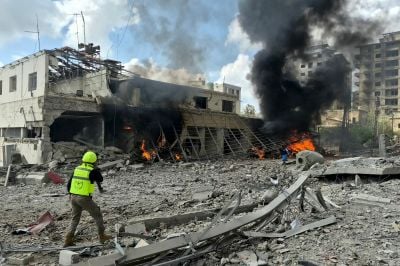
Reflecting on the outbreak of the civil war, he said, “We must today learn from our past, not use it for intimidation and terror, nor turn it into a weapon against one another.” The prime minister has faced criticism, and even threats from Hezbollah circles, over his willingness to engage in direct negotiations with Israel, whose army is razing large parts of southern Lebanon to establish a buffer zone.
'Our unity today is a national necessity'
Salam went on to draw an implicit parallel between the civil war and the current conflict, calling for national interests to take precedence — in what appeared to be a direct message to Hezbollah, which the Lebanese presidency and his government hold responsible for the ongoing war, launched in support of Iran after it was attacked by the United States and Israel.
“In this war [the civil war] which brought immense destruction, painful memories and divisions that have cost entire generations dearly, many made mistakes. Some of us were wrong to burden Lebanon with more than it could bear, prioritizing solidarity with just causes over the imperatives of state sovereignty and security,” he said, alluding to past Lebanese support — including his own — for Palestinian militias operating against Israel from southern Lebanon under the 1969 Cairo Agreement.
“Others among us were mistaken in believing that Lebanon’s weakness could become a strength,” he added, referencing a phrase by Pierre Gemayel, founder of the Kataeb Party, used to justify Lebanon’s non-participation in the 1967 war.
“All those who relied on external backers, believing they had no goal other than to support them, found themselves trapped in a game bigger than themselves,” he concluded.
“The dignity of the nation is the dignity of each and every one of you, without exception. If preserving it today requires humility and responsibility, then I am committed to that… and I call on each of you to hold fast to what unites us, so we can protect our homeland and the future of our children. Let us face the dangers that threaten us with reason, unity and national responsibility. Our unity today is not an emotional slogan, but a national necessity. All for the nation, and the nation for all of us,” he stressed.
Joseph Aoun's initiative and Taif Agreement
“It is our national duty today to assert that the South will not be abandoned once again, left alone to face fear, destruction and uncertainty. Its protection, like that of all Lebanon, can only come through a single, strong and just state, and we will continue our efforts to end this war that was not our choice,” Salam said.
“We are continuing our efforts to end the war, particularly through the initiative presented by the President of the Republic, Joseph Aoun, for negotiations with Israel, to stop the war and strengthen the institutions of the legitimate state so they can fully carry out their role in protecting Lebanon and the Lebanese,” he added.
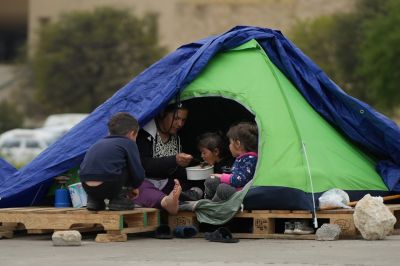
“We will continue working to end this war, recover all our prisoners, rebuild our destroyed towns and villages, ensure the safe return of displaced people to their communities and guarantee them a dignified and secure life, and restore the authority of the state across all its territory through its own forces … No one should be above or outside the law,” he continued.
Salam also called on the Lebanese to “implement the provisions of the Taif Agreement [which ended the civil war on Oct. 22, 1989, and calls for extending state authority over the entire national territory], to correct what has been applied against its text or spirit, to fill the gaps revealed by practice and to develop it whenever necessary.”
“I fully understand the pain of those who have lost loved ones, homes, villages and olive groves, and those who today are moving from one shelter to another. I understand your anger and your need to have your voices heard, even at the gates of the Grand Serail,” he said.
“I know the memory of Aug. 4 [the Beirut port explosion] has not yet healed, especially among my fellow citizens in Beirut, and that it has been revived in all its harshness by the tragedy of April 8 and its unarmed civilian victims. I also know that you are tired of being deprived of your right to decide your own fate,” he added.
The investigation into responsibility for the explosion — which occurred in a warehouse storing more than 2,000 tons of ammonium nitrate — has yet to be completed, while the work of investigative judge Tarek Bitar has been slowed by multiple legal challenges seeking his removal.