






Prime Minister Nawaf Salam (left) discussing with other government ministers during the Cabinet meeting on Aug. 13, 2026. (Photo posted on the Grand Serail’s X account)






BEIRUT — The Cabinet decided Thursday to amend decree No. 3214 related to the waste fee, but Information Minister Paul Morcos did not provide details of the changes during his press briefing after the meeting, and the minutes of the decision have yet to be made public.
Meeting at the Grand Serail the day after parliamentary sessions in which laws abolishing the death penalty, granting a general amnesty, and media and banking reforms were passed, the government also decided to suspend its meetings for two weeks, scheduling its next sessions for early September, according to the minister.
The issue of waste fees was one of the most significant items on the agenda and was initially set to be settled during the Aug. 7 session. Morcos clarified that most of the other agenda items had been approved, except those requiring the presence of the education minister, who was absent, without providing further details.
The decision on the fee was made despite opposition from the ministers of health, labor, telecommunications, and industry, the state-run National News Agency (NNA) reported.
Signed on June 15 and published three days later, decree 3214 had raised import fees from 0.10-0.50% to a range of 1 to 3% on 98 categories of products, in application of law 38 of Jan. 5, 2026. Its implementation was then suspended on June 29 after a wave of political, union, business, and civil society objections. It was referred to a ministerial committee including the ministers of finance, economy, environment, and industry. Negotiations then took place, resulting in a “good text,” according to the finance minister late last week, and a meeting with Prime Minister Nawaf Salam was scheduled Tuesday to lay the groundwork ahead of the Cabinet meeting.
'He's a friend'
The information minister also discussed the main points raised by the prime minister, who addressed the tensions in Parliament between himself and Defense Minister Michel Menassah over the general amnesty law. The minister wanted to make a speech presenting the army's perspective on the text, but Salam considered that he alone was authorized to speak on behalf of the government, adding that the army's reservations had already been communicated in advance.
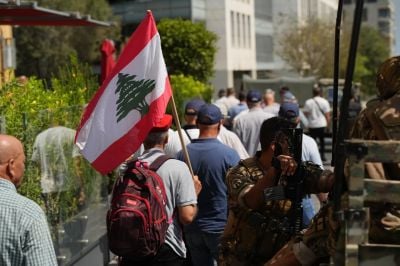
"He's a friend for whom I have all the affection, respect, and esteem. Like me, he is attached to the Constitution and governmental solidarity," Salam said about Menassah, before assuring that he had not barred him from attending Parliament despite their disagreement, stating that reports on this issue were false. He also called "slander" the claims that the army's opinion had been disregarded during the review of the amnesty law. He praised the adoption of this law and other key laws passed Tuesday and Wednesday by Parliament.
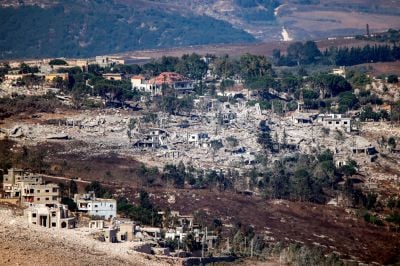
Salam, former president of the International Court of Justice (ICJ), also renewed his criticism of "the systematic destruction of villages in southern Lebanon by the Israeli occupation," which he considers "a violation of the laws of war and the Geneva Convention." He also repeated his criticisms of statements by Israeli Defense Minister Israel Katz on maintaining Israeli forces in Lebanon, Gaza, and Syria, calling them "completely unacceptable overall and in detail," adding that Washington had "done well" to correct the senior Israeli official during the day.
The prime minister also revisited the topic of negotiations with Solidere, addressed during the previous session. According to Morcos, he said "he had informed Solidere of the contents of this decision and stressed the importance for the ministerial committee chaired by the deputy prime minister to begin discussions as soon as Solidere’s response is received."
More than thirty years after the reconstruction of downtown Beirut, the government opened negotiations a week ago on the length of the mandate and the prerogatives of the Lebanese Company for the Development and Reconstruction of Beirut Central District, created by decree in 1994 for 25 years under law 117 of 1991, and extended for ten years by decree in December 2005.