


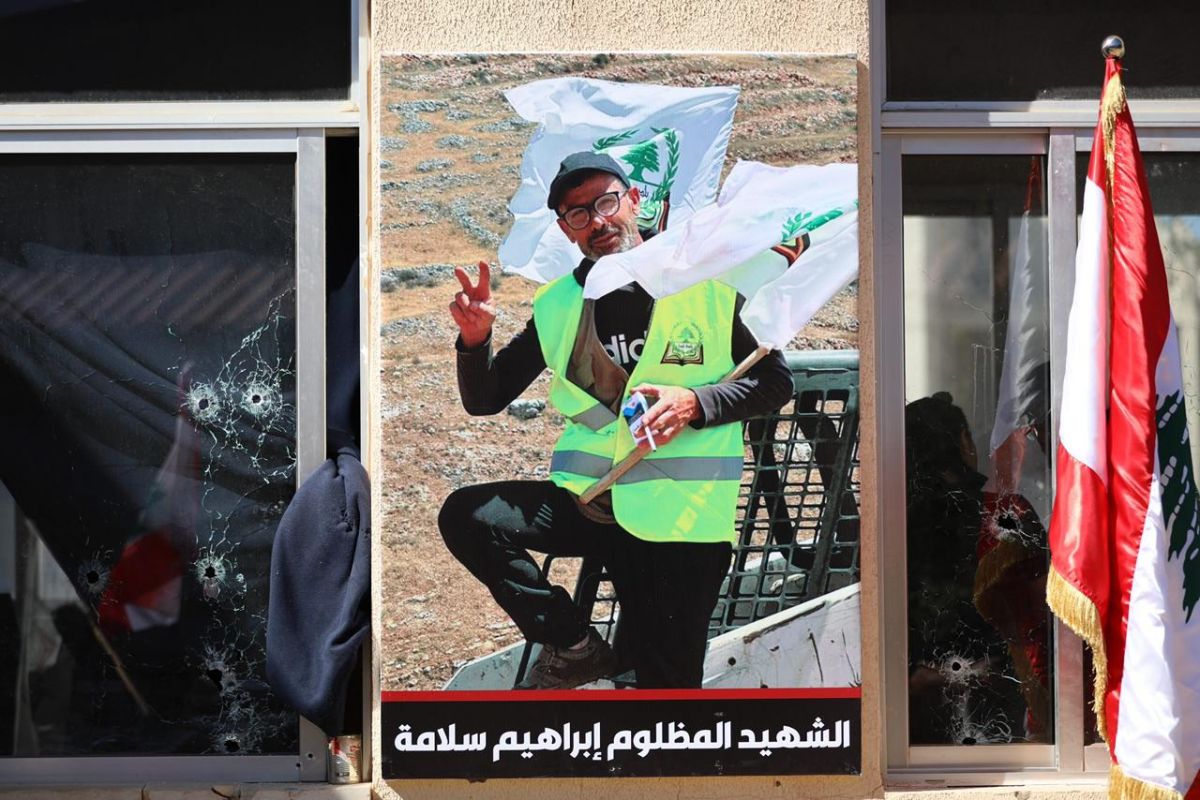
A photo of Ibrahim Salameh, killed by the Israeli army during an incursion in Blida, southern Lebanon, on the night of Oct. 30, 2025, is displayed on the façade of the bullet-riddled building. (Credit: Matthieu Karam/L’Orient-Le Jour)






SOUTH LEBANON — The Israeli army shot dead a municipal worker in the southern Lebanese border town of Blida in the early hours of Thursday morning, after having entered the Marjayoun district village and firing with machine guns at the municipal building there for at least 10 minutes straight, according to reports from L'Orient Today's correspondent in the South.
The victim of the attack was 45-year-old Ibrahim Salameh, a farmer who also worked cleaning the municipal buildings and was sleeping in one of the rooms.
The deadly operation — unprecedented since the start of the truce, which Israel violates daily — sparked outrage across southern Lebanon, with several municipalities calling on authorities to “assume their responsibilities” to protect the South and its residents. Israel has killed more than 330 people in Lebanon since agreeing to a truce last November.
In the wake of the attack, President Joseph Aoun instructed the army to respond to any further Israeli incursion in the South. Many Lebanese officials condemned the attack.
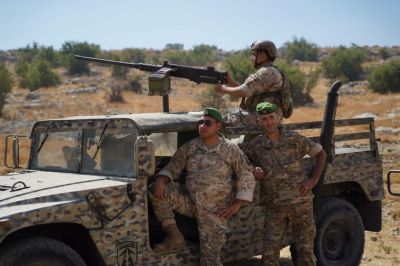
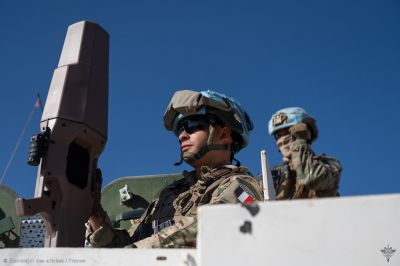
After calls from residents, upon hearing the machine gun fire and the sounds of screams, the Lebanese Army deployed in Blida, but was unable to intervene directly and had requested assistance from the U.N. Interim Force in Lebanon (UNIFIL), which did not take action. The Israeli army did not withdraw until several hours later.
The attack occurred in the early hours of the morning when an Israeli patrol, consisting of several vehicles and light armored ATVs, crossed the Blue Line and penetrated about one kilometer into Lebanese territory, accompanied by drones, our correspondent reported.
Once in Blida, it remained unclear whether the Israeli soldiers entered the municipal building or fired heavily at it from the outside, killing Salameh in his sleep.
Three hours later, the Israeli army withdrew. The Lebanese Army then deployed in the building, where it found Salameh’s body and transported it to a nearby hospital. In a brief statement on the events, the army said it had sent a patrol after “reports of gunfire” near the municipal building.
“An enemy ground unit entered the village and fired at the building, targeting one of the employees who was killed,” the army said, without confirming whether the Israeli troops had entered the building itself.
The Health Ministry confirmed the death of a citizen in Blida, “martyred under Israeli enemy fire during an incursion early this morning.” The victim will be buried tomorrow at 1 p.m.
Municipality president: 'Where was UNIFIL, the UN, and the mechanism?'
Panic-stricken, villagers had gathered overnight in fear of a major Israeli operation, before anger took hold during the day.
During a sit-in outside the municipal building, municipal president Hassan Hijazi protested: "Where was UNIFIL, the U.N., and the [cease-fire monitoring] 'mechanism' facing this blatant aggression and violation of Resolution 1701?"
"The only crime committed by Salameh and the martyrs of the South is that they are sons of this land. If they had fallen elsewhere, the whole world would have risen up," he added.
Hijazi also denounced the fact that the victim was killed "in an official building attached to the Interior Ministry."
"Yesterday, I received a call from the UNIFIL commander's office, who wanted to visit the village. I would have liked to see him here today and see the UNIFIL at night with the Lebanese Army heroes who faced the Israeli enemy," he said.
"The state is unfortunately absent today, and the army is subject to political decisions that limit its actions. The government, which wants to take away the weapons of the resistance, wants to strip us of our dignity," he accused.
Commenting on Thursday morning's operation in Blida, Israeli military spokesman Avichay Adraee claimed that the Israeli army entered "as part of an operation to destroy Hezbollah terrorist infrastructure."
The Israeli military says it "spotted a suspect inside the [Blida municipality] building and proceeded to detain him."
"When a direct threat to security forces was identified, shots were fired to eliminate the threat, and an injury was reported. The details of the incident are currently under investigation," Adraee said.
According to him, the building was recently used "for terrorist activities by Hezbollah, under the cover of civilian infrastructure."

During a meeting at Baabda Presidential Palace with Army Commander Rodolph Haykal, Aoun asked the army to "respond" to Israeli incursions "to defend Lebanese territory and the safety of citizens."
This order came the day after Israeli gunfire targeted Lebanese soldiers near the border. The head of state also said the cease-fire monitoring committee "should not be content merely to document facts, but should work to end them by putting pressure on Israel and pushing it to comply with the provisions of last November's agreement and to cease its violations of Lebanese sovereignty."
The committee, which met on Wednesday in the South, said it was working to find ways to "reduce" truce violations.
Municipalities in the South hold protests
Several southern municipalities, including those neighboring villages of Aitaroun and Mais al-Jabal, also condemned the incursion and the killing of Salameh, who was "killed while performing his civic and national duty."
The municipality of Aitaroun notably called on the army and security forces to "take on their national responsibilities in protecting the borders, the people, and the civil institutions."
Mais al-Jabal's municipality called for "a firm and serious response from the Lebanese state and government," stating that "verbal condemnations are no longer enough and remain useless unless followed by concrete measures."
UNIFIL, in response, said it was "gathering facts" on what happened in Blida to understand the circumstances, without further comment at this time.
Meanwhile, another Israeli incursion took place during the night about a dozen kilometers north of Blida, in Odaisseh, where soldiers blew up the village husseinieh (Shiite congregation hall), according to our correspondent.
Israeli fighter jets also carried out three raids on hills in the Jezzine district on Thursday morning.
The targeted zones are located on the heights of Mahmoudieh, Dimashkieh, and Jarmaq, our correspondent in south Lebanon reported, specifying that at least six missiles were dropped.
Warplanes also flew at medium altitude over several regions in the Bekaa and south Lebanon, from Nabatieh to Saida, according to our correspondents.
After several days of absence, Israeli drones also resumed low-altitude flights over Beirut’s southern suburbs, according to witnesses.
Reporting by our regional correspondent Muntasser Abdallah.

 7 p.m. recap: Netanyahu seeks mastermind behind Flydubai incident; Washington sanctions 2 French nationals; Ben Gvir's 'I want to kill you' threat