


Lebanese President Joseph Aoun receiving the American envoy Morgan Ortagus on October 28, 2025 in Baabda. Photo: Presidency






BEIRUT — U.S. envoy Morgan Ortagus held a series of discreet meetings with senior Lebanese officials on Tuesday as part of a regional tour centered on talks with Israel amid growing concern over a potential escalation of hostilities in Lebanon.
Her visit comes as leaks in Israeli media and Israeli military escalations have fueled speculation about preparations for a new confrontation with Hezbollah, even as Washington urges Beirut to engage in direct negotiations with Tel Aviv.
After spending the weekend in Israel, Ortagus met with President Joseph Aoun at the Baabda Presidential Palace at around noon Tuesday before leaving without speaking to the press. A source at the palace told L’Orient-Le Jour that the envoy did not plan to issue any public statements during her visit.
The same discretion had marked her meeting earlier in the day with Parliament Speaker Nabih Berri. In their meeting, Ortagus and Berri discussed "the general situation and on-the-ground developments related to daily Israeli hostilities in Lebanon, as well as the work of the cease-fire monitoring committee [also known as the 'mechanism'] and ways to strengthen its role," reported the official National News Agency (NNA).
Local broadcaster MTV reported that Ortagus presented Berri with two options during their meeting: direct talks with Israel or indirect discussions through the cease-fire monitoring committee.
When asked in the morning about a possible Israeli escalation, Deputy Speaker Elias Bou Saab replied that "the impressions left by the U.S. envoy point in the opposite direction."
Ortagus and Prime Minister Nawaf Salam also discussed the role of the 'mechanism,' with Salam emphasizing that the objective of any negotiations with Israel would focus on the implementation of the truce agreement, particularly with regard to Israel ending its attacks and withdrawing completely from the border areas it continues to occupy, of which there are at least six.
Salam added that one of the objectives of this process was also to secure the release of Lebanese prisoners in Israel. He also indicated that the implementation of the government's decision on the monopoly on weapons, both south and north of the Litani River, requires rapid support for the Lebanese Army and the Internal Security Forces (ISF). He stressed that a stable south requires international support for a conference centered on economic recovery and reconstruction.
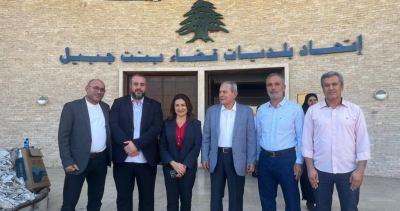
Meeting with Haneen Sayed
According to information from the LBCI channel, a meeting was also planned between Ortagus and the Social Affairs Minister Haneen Sayed to discuss "the capacity of these centers to cope with any developments that may occur in the coming weeks," according to the channel. Sayed had recently announced the rehabilitation of social assistance centers in the south during a tour a few days ago.
Sayed stressed that "in order to strengthen the state's presence in the south and ensure the continuity of its services, it is essential to ensure stability by implementing the cease-fire agreement." She added that "Lebanon now needs greater international support to help its institutions address humanitarian and social challenges, as the country's stability is essential for the region." Finally, Sayed presented her ministry's new strategy and action plan for the future, emphasizing that "social development is an essential pillar for strengthening national stability."
Diplomatic flurry
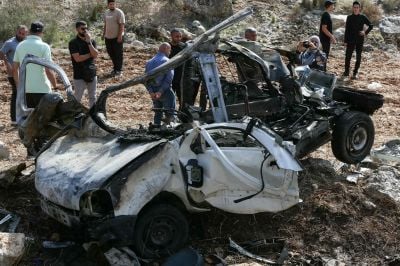
Lebanon is witnessing an unusually intense week of diplomatic activity as Israeli strikes intensify in the South and the Bekaa.
Alongside a new meeting of the cease-fire monitoring mechanism chaired by its new head, U.S. Gen. Joseph Clearfield, the country welcomed Arab League Secretary-General Ahmed Aboul Gheit on Monday. On Tuesday, Aoun also met an Egyptian delegation led by intelligence chief Hassan Rachad in Baabda — another group that left without commenting publicly. Speaking to Aoun, Rachad expressed Egypt's willingness to help Lebanon maintain stability in the south of the country. For his part, Aoun "welcomed any Egyptian effort likely to put an end to Israeli hostilities in Lebanon," according to NNA. On Monday, the President had already welcomed the Egyptian Ambassador, who had called for "caution" in the face of the current tensions.
Salam, for his part, praised "Egypt's historic role in supporting Lebanon at different stages of its history", stressing that "security and stability in the South are a national priority." For his part, the head of Egyptian intelligence reaffirmed "his country's position alongside Lebanon and its willingness to provide whatever is necessary to end tensions and support Lebanese security institutions."
U.S. envoy Tom Barrack is also reportedly expected to make what may be his final visit to Beirut before newly appointed U.S. Ambassador Michel Issa arrives by Nov. 10 to take over the Lebanese portfolio. These visits are seen as part of a broader American push urging the Lebanese state to move forward on disarming Hezbollah and expanding army deployment in the South.
Washington is reportedly drafting a new document to complement Barrack’s proposal, modeled in part on the Gaza framework. Still in early stages, the plan would emphasize direct negotiations between Lebanon and Israel to address border demarcation and Israeli withdrawal from occupied Lebanese territory.

As the risk of a possible Israeli escalation still looms, Issa has warned that international patience has limits, reminding Beirut that continued U.S. assistance depends on "national unity" and the responsibility of all political actors.
In September, Lebanon’s government endorsed an army-drafted plan to disarm non-state groups, primarily Hezbollah. U.N. Security Council Resolution 1701, which established the cease-fire between Israel and Hezbollah, calls for Israel’s full withdrawal from Lebanese territory and the disarmament of all militias south of the Litani River. However, Hezbollah has refused to surrender its weapons in the current context.
At least 12 people have been killed in Israeli strikes on Lebanon since last Thursday. On Sunday, Hezbollah leader Naim Qassem said the party does not intend to "launch battles" with Israel to avoid giving it a "pretext" for a wider war.
 7 p.m. recap: Houthis threaten Riyadh, Netanyahu talks of prolonged war against Hezbollah'; Israel arrests 2 men in Syria