






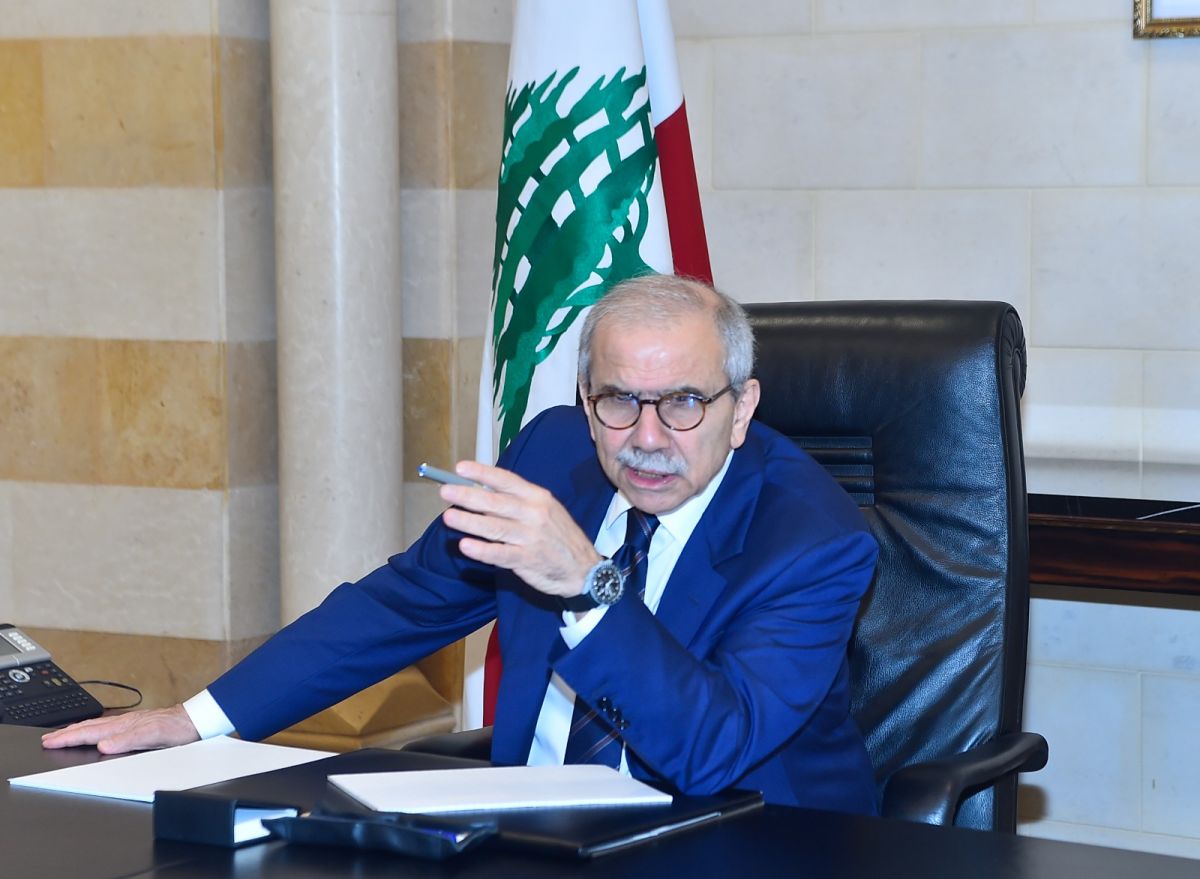
The Lebanese Prime Minister, Nawaf Salam, at the Grand Serail in Beirut, July 23, 2025. (Credit: X/@grandserail.)






BEIRUT — Prime Minister Nawaf Salam said Wednesday to the Saudi daily Asharq al-Awsat that restoring the state’s monopoly on arms in Lebanon is "not a provocation for anyone."
Stressing that this issue is at the heart of the inaugural address of President Joseph Aoun, as well as the ministerial statement, "approved by all Shiite MPs as part of a very large parliamentary majority that elected the president and twice gave its confidence to the government."
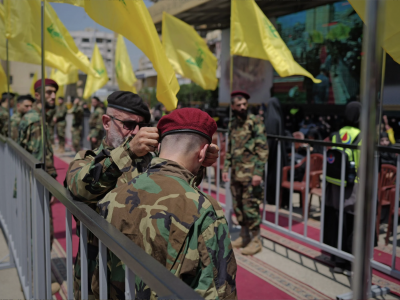
Greatly weakened militarily by the thirteen-month war with Israel, the Shiite party is conditioning any concession on its weapons to clear guarantees regarding the intentions of Tel Aviv and Washington. The cease-fire agreement between the pro-Iran group and Israel, in force since Nov. 27, provided for a total withdrawal of Israeli troops from southern Lebanon, where they still occupy five positions on Lebanese territory and carry out almost daily strikes.
On the Lebanese side, it was supposed to lead to the disarmament of Hezbollah – first south of the Litani, then in the rest of the country, as laid out by U.N. Resolution 1701, which serves as a framework for the truce agreement – something Hezbollah rejects. Israeli attacks on Lebanon over the past eight months have caused at least 285 deaths, according to a tally by L’Orient Today and the U.N.
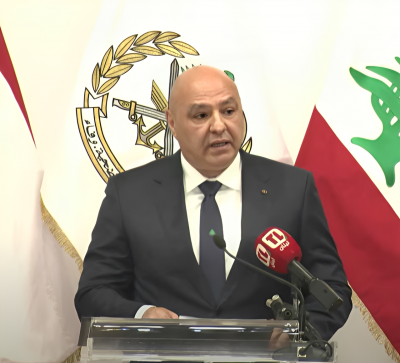
After the announcement of a Cabinet meeting to be held on Tuesday, Aug. 5, at the request of the head of government, to discuss the issue of disarming Hezbollah, Salam considered that the topic falls "within its natural context," recalling that he himself put it on the agenda as early as last April.
On Wednesday night, Hezbollah Secretary-General Naim Qassem declared that his group’s weapons "are intended to resist Israel, not for use inside the country,” and that any request for his party to give up its weapons amounted to "serving the Israeli project."
The Jaafarite mufti Ahmad Kabalan, known for his political closeness to Hezbollah, had earlier warned against "dividing the government over explosive issues that could throw Lebanon into the unknown."
The former judge at the International Court of Justice also denied any disagreements among Lebanese officials on the weapons issue, assuring he was in "full and continuous consultation" with the head of state and Parliament Speaker Nabih Berri. He explained that he put the issue on the agenda in accordance with the Taif Agreement, which calls, among other things, for the extension of state sovereignty throughout its territory by its own forces, and the implementation of the cease-fire agreement, in light of proposals by U.S. envoy Tom Barrack.
The head of government went further, stating that there would be "no going back" on the issue of the monopoly on arms, "nor on that of reforms, whose continuation must be ratified at Thursday’s parliamentary session and in upcoming government meetings."
Aware of these mounting pressures, along with the risk of the country once again coming under Israeli military attack, official Lebanon has put in place a plan to finalize the disarmament project for Hezbollah as well as Palestinian factions. This project (which the Americans, who are exerting huge pressures, are said to be aware of) is expected to be discussed at the Cabinet meeting on Tuesday, according to information from L’Orient Today.