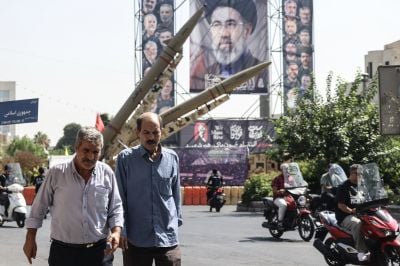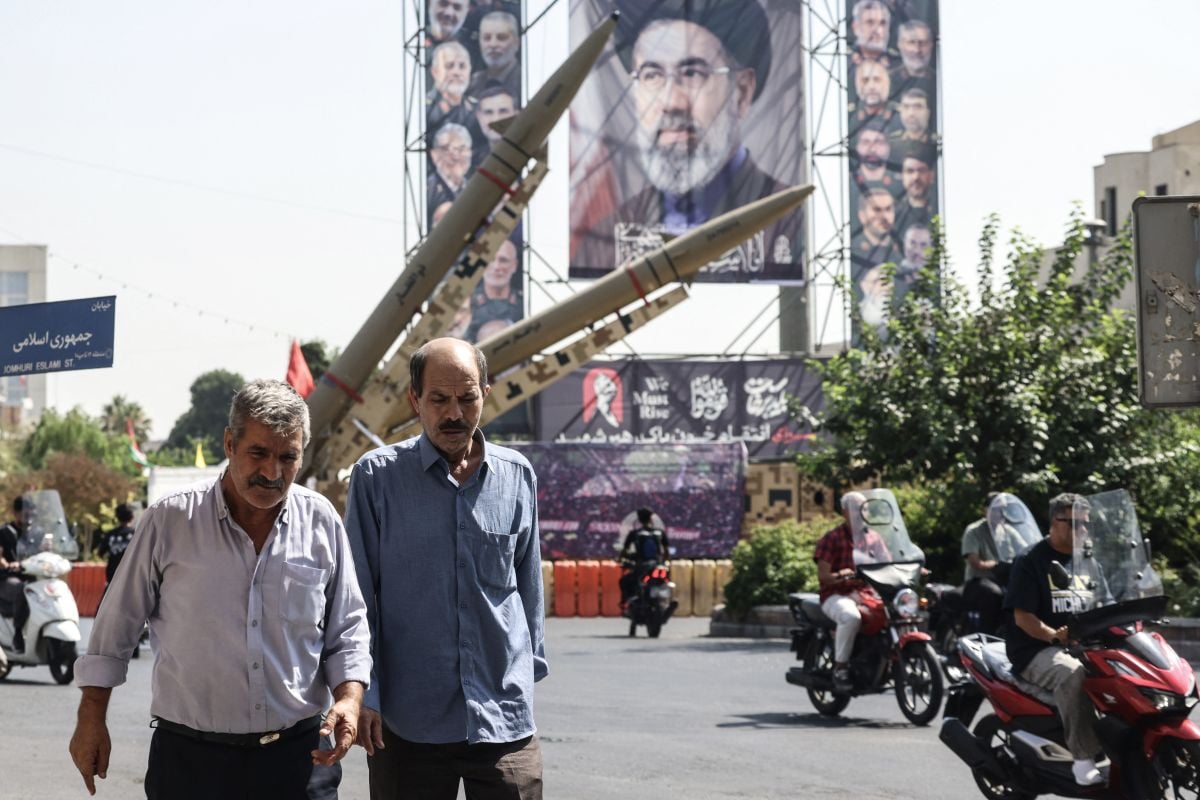
Iranians walk past Iranian-made Zolfaghar missiles displayed alongside a large portrait of Iran's Supreme Leader, Mojtaba Khamenei, at Baharestan Square in Tehran, on Sept. 28, 2026. (Credit: Atta Kenare/AFP)






Top story
Iran has received a formal response from the United States to its latest offer to end the war in the Middle East, the government said Wednesday, as reported by state media, without specifying the content. "Today in the Cabinet, the U.S. side's proposal was presented to President Massoud Pezeshkian by Foreign Minister Abbas Araghchi," government spokeswoman Fatemeh Mohajerani told the official Irna news agency.
After more than seven months of conflict and diplomatic stalemate, indirect talks resumed last week between the U.S. and Iran on the sidelines of the U.N. General Assembly, but the outcome remains highly uncertain. Iran says it has set out seven conditions to bring an end to hostilities and reopen the strategic Strait of Hormuz, the main sticking point in the war brought about by U.S. President Donald Trump. Not all of these have been made public, but Tehran notably demands the cessation of hostilities on all Middle Eastern fronts — including in Lebanon, where Israel is battling Hezbollah; the unfreezing of its assets held abroad; the lifting of sanctions on its oil sector; and an end to the U.S. blockade.
Why it matters
Iran locked down the Strait of Hormuz after the war was started by Israel and the United States at the end of February. Washington responded several months later by imposing its own blockade of Iranian ports, which hurt Tehran's crude oil exports. The closure of Hormuz has impacted global trade and caused fuel prices to soar.
On the ground and militarily, a lull has been observed in recent weeks: the United States has not struck Iran since Sept. 1, even though ships are regularly targeted in the Strait of Hormuz. However, the United States has intensified its long-standing economic war against Iran, imposing sanctions on all Iranian airlines and vowing to be tough on foreign companies that assist them.
What to watch for
A flight by Emirati airline FlyDubai, scheduled to connect Dubai to Tel Aviv and carrying about 180 Israelis, sent conflicting distress signals and ultimately landed at a regional airport in northwestern Saudi Arabia, briefly raising fears that it had been hijacked. According to Israeli press reports, the incident was due to a fight between the plane's pilot and co-pilot, during which several conflicting alert signals were sent.
The incident took place in a tense context, amid ongoing war in the Middle East — not only during a regional conflict but also ahead of legislative elections in Israel in October, as authorities there have repeatedly warned of an increased threat to the country. Prime Minister Netanyahu on Tuesday spoke of "indications" of possible attacks before the vote.

In other news
- In South Lebanon, an Israeli army drone struck Nabatie Fawqa Wednesday morning, injuring four people, including a Lebanese soldier who was seriously wounded, according to an army statement. This incident follows a restive night in South Lebanon where Israeli forces continued their bombardments and demolitions.
- The Pentagon has announced the official end of the anti-jihadist coalition's mission in Iraq after 12 years, led by the United States. The U.S.-led coalition's mission ends Wednesday, after driving jihadists from the country but leaving it amid internal tensions. The coalition's forces were deployed in Iraq and Syria in 2014 to fight the Islamic State group, which had seized large swathes of territory in both countries and committed atrocities there.
- Syrian authorities announced last night that they arrested, in Deraa province in the country's south near the Israeli-occupied Golan, three members of a cell "affiliated with Hezbollah" who were allegedly planning attacks, including rocket fire. Hezbollah denied any link to this cell on Wednesday, denouncing what it called allegations that could have originated from Israel to sow discord between Lebanon and Syria.
- The civil servants' strike continues today and tomorrow in Lebanon. The League of Public Sector Employees is also expected to keep public offices closed every Friday to demand higher transport allowances. The Serail in Saida was closed Wednesday, our correspondent in southern Lebanon reports. Employees went to work to deal with the most urgent matters, but without receiving civilians. Contract teachers from the Lebanese University protested again today outside the Education Ministry to call for tenured positions.
- A Saudi official denied to AFP that representatives of the kingdom were present at a meeting Sunday in Abu Dhabi between Israeli Prime Minister Benjamin Netanyahu and United Arab Emirates President Mohammed bin Zayed.