


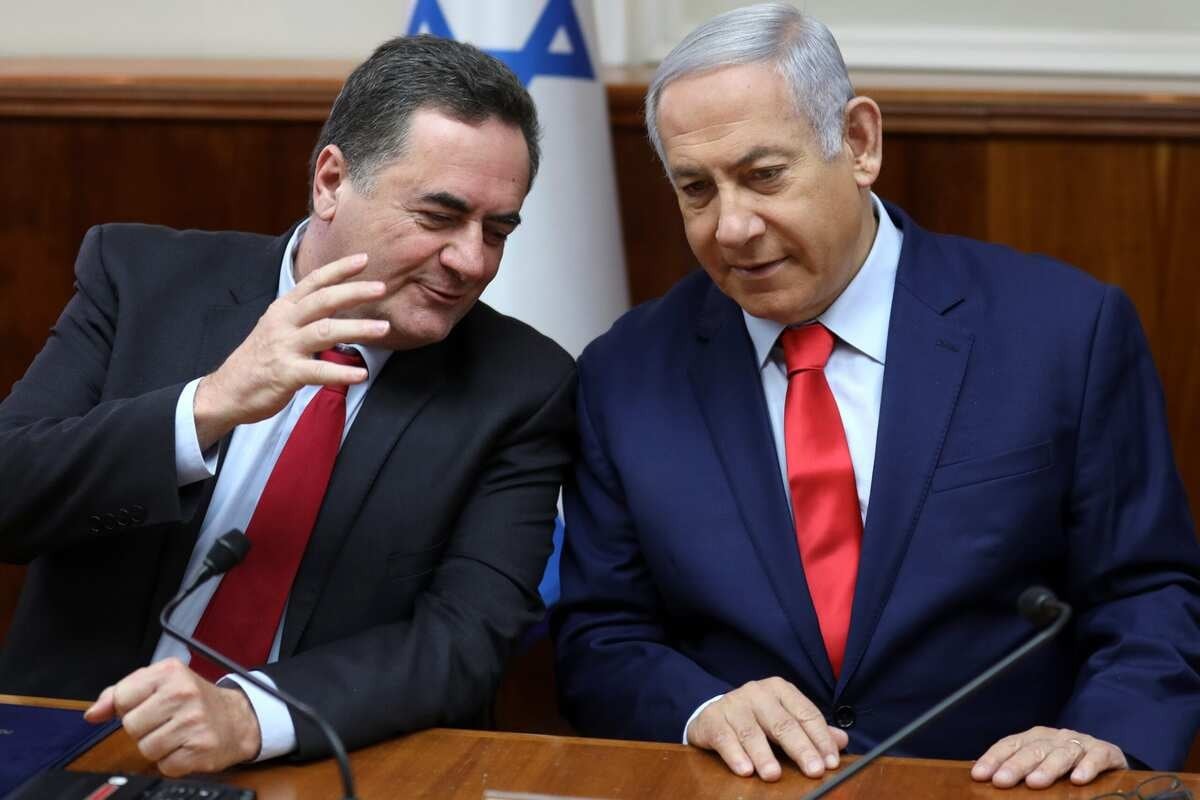
Israeli Prime Minister Benjamin Netanyahu (right) and Israeli Defense Minister Israel Katz (left). (Credit: Gali Tibbon/AFP via Getty Images)







Israel Katz threatens to expand occupation to southern Lebanon and strike Beirut's southern suburbs. The Israeli Defense Minister warned that any rocket fire or drone launch toward Israel would provoke a "powerful response" against the southern suburbs. He also threatened to expand ground operations to the Nabatieh and Litani regions, stating that any territories conquered would, according to him, be emptied of their residents and permanently integrated into the Israeli so-called "security zone."
Israeli Prime Minister Benjamin Netanyahu, for his part, issued a warning to Hezbollah and Iran: "Do not dare attack us, you will receive a blow like you have never imagined." These warnings come as the Israeli army accuses the Lebanese Army of having "failed" in its mission to disarm the party.
Why it matters
These threats come as security discussions are underway in Tampa, Florida, where the Lebanese delegation intends to raise the issue of continued Israeli aggression in southern Lebanon.
Since the signing in June in Washington of the tripartite framework agreement between Lebanon, Israel and the United States, which provides for a gradual withdrawal of the Israeli army from occupied areas, only a "pilot zone" in Zawtar Gharbieh, in the Nabatieh district, has been evacuated.
At the same time, Tel Aviv and Washington are pressing Beirut to disarm Hezbollah, which categorically rejects this prospect and is working to rebuild its military capabilities.
One week before the Israeli legislative elections, Netanyahu, engaged in a tight race, has little incentive to show less firmness toward Hezbollah in southern Lebanon. His public attacks against the Lebanese Army can also be interpreted as a way to demonstrate this intransigence.

Netanyahu says he discussed the importance of eliminating the Iranian regime with Trump. The Israeli prime minister said he spoke the previous day with the American president about the need to end the Iranian regime.
"We are determined to see through the elimination of the Iranian regime," he said in a statement released by his office, adding that he had discussed it "many times with Trump, including yesterday."
These statements come a week before the Israeli parliamentary elections on Oct. 27, as Netanyahu makes the Iranian threat central to his campaign, amid fears of a new confrontation between Israel and Iran which could draw Hezbollah into the war.
The United Kingdom will deploy fighter jets to protect Saudi Arabia from Houthi attacks. London will send Typhoon jets of the Royal Air Force (RAF) to defend Saudi cities and strategic infrastructure against ballistic missiles and drones from Yemen's Houthis, the British Defense Ministry announced.
"The Houthis' incessant attacks on our ally, Saudi Arabia, are absolutely appalling," said British Defense Minister Wes Streeting, quoted by Reuters, particularly condemning the targeting of Riyadh airport. London specified that the aircraft would carry out exclusively defensive missions, without striking Houthi rebels.
- Aoun and Salam review the situation in southern Lebanon and the strengthening of the state’s presence. After a round of diplomacy marked by visits to Beirut from the secretary-general of the Arab League, the French foreign minister and the Qatari prime minister, and against a backdrop of increasing regional tensions, President Joseph Aoun received Prime Minister Nawaf Salam in the Baabda Presidential Palace. The two officials reviewed the situation in southern Lebanon, the strengthening of state institutions in non-occupied localities, and post-UNIFIL prospects. They also reviewed projects agreed with Qatar, particularly in the electricity sectors, as well as measures taken by the army and security forces to maintain the country’s stability, in coordination with the judiciary.
- Tom Barrack says Ahmad al-Sharaa wants to normalize relations with Israel. The U.S. envoy for Syria spoke at the Global Security Forum in Doha. According to him, the Syrian president wants to reassure Israel about his intentions: "I am not in an aggressive mindset, I have no problem with Israel, I want to normalize relations with Israel." Barrack also called for an end to Israeli operations in Syria.
- The Lebanese Forces (LF) want to shorten Parliament's term. Seven months after the parliamentary session which extended the legislature by two years, Lebanese Forces deputy leader Georges Adwan presented a bill to the Chamber seeking to reduce Parliament’s mandate by a year. If passed, parliamentary elections, initially postponed to 2028, would be held in May 2027. The LF could thus capitalize on growing polarization around Hezbollah's weapons, which they believe favors their popularity, especially among Christian voters, where the Free Patriotic Movement and, to some extent, President Joseph Aoun appear to be losing ground.
- Turkey will maintain troops in Iraq and Syria until "border security" is achieved. Ankara will maintain its military presence in both countries, in agreement with its neighbors, until the security of its territory is fully ensured, Turkey’s defense minister said in an interview with AFP. According to an Iraqi security source, between 800 and 1,000 Turkish soldiers are deployed in Iraq. In Syria, their number was estimated between 16,000 and 18,000 at the time of Bashar al-Assad’s fall at the end of 2024, according to Turkish sources quoted at the time.