


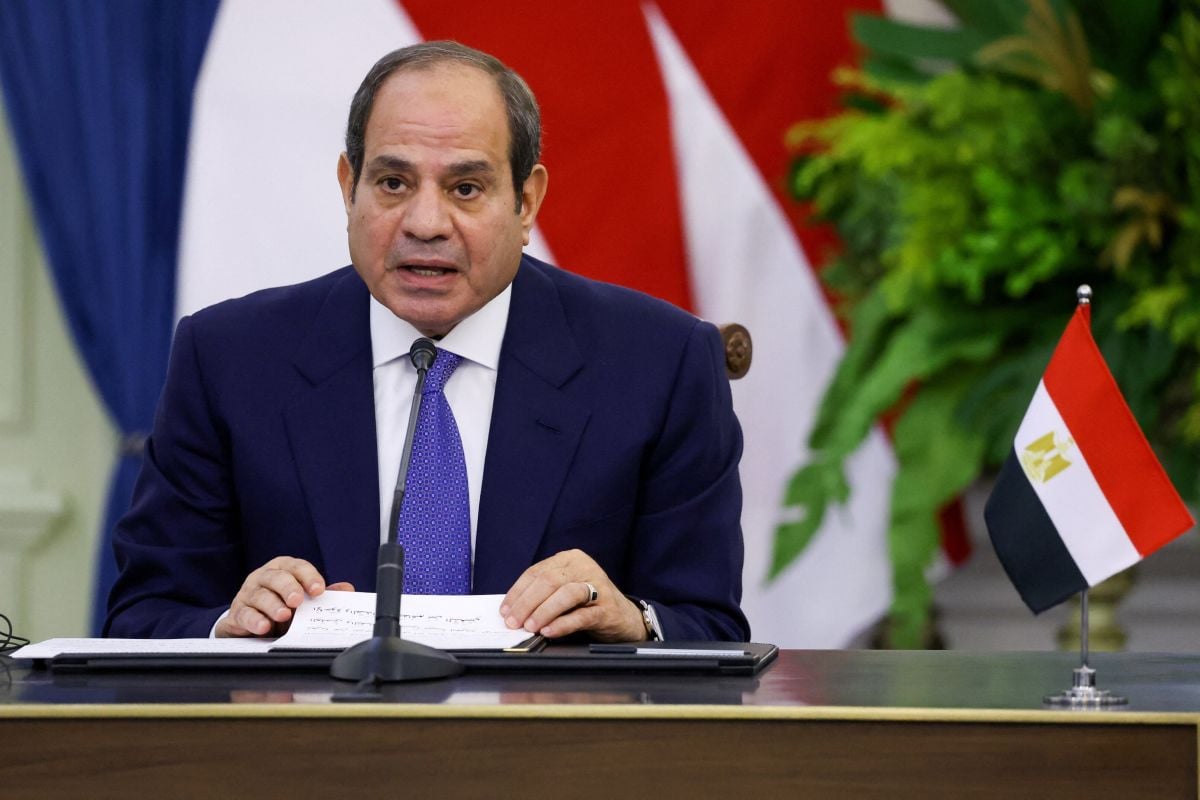
Egyptian President Abdel Fattah al-Sissi speaks during a joint press conference with Indonesian President Prabowo Subianto, following their meeting at the Merdeka Palace in Jakarta, Indonesia, on Oct. 11, 2026. (Credit: Ajeng Dinar Ulfiana/ Reuters)







Iran warns Egypt against intervening in the Yemen war. Iranian Foreign Minister Abbas Araghchi warned Egypt against any military intervention in Yemen alongside Saudi Arabia, arguing that foreign involvement would only further complicate the conflict. "Egypt has enough experience to avoid getting entangled in such a highly complex conflict," he said in an interview broadcast Wednesday by Iraqi state television Al-Iraqiya.
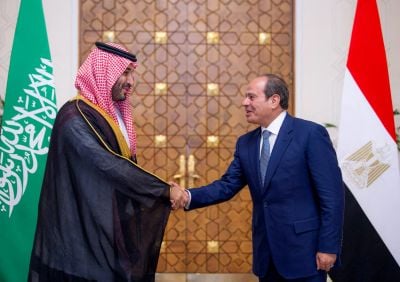
The Egyptian parliament is set to decide on Oct. 26 whether to authorize military support for Riyadh, after postponing a vote initially scheduled for Sunday. Egyptian President Abdel Fattah al-Sissi said Wednesday that the military support proposed by Cairo was intended to "defend Saudi territory and does not include attacks" in Yemen. "The stability of our brothers in the Gulf is a matter of Egypt’s national security," Sissi added. In this context, French President Emmanuel Macron also visited Saudi Arabia on Wednesday. It was the first visit by a Western head of state to the kingdom since Houthi strikes intensified in early October.
Why it matters
The stakes now extend well beyond the standoff between the Houthis and the Yemeni government backed by Riyadh: the possibility of Egypt entering the conflict raises the risk of further regional escalation. Since early October, the rebels have stepped up attacks against Saudi Arabia, notably targeting Riyadh airport and oil infrastructure. According to the coalition led by Riyadh, the airport has been targeted 20 times since the start of the month. At the same time, fighting in Yemen has intensified. For Saudi Arabia, securing Egyptian military support would strengthen its defensive capabilities and its leverage against the rebels. For Cairo, direct involvement would expose its forces to a prolonged conflict with no guarantee of victory. For Tehran, the involvement of another military actor alongside Riyadh could further complicate the regional balance of power.

Netanyahu says 'overthrowing' the Iranian regime is the only way to eliminate the threat from Tehran. Campaigning ahead of the Oct. 27 legislative elections, Israeli Prime Minister Benjamin Netanyahu said Wednesday that “overthrowing” the Iranian regime was the only way to eliminate the threat from Tehran. “There is only one way to eliminate this threat once and for all: overthrow the Iranian regime. That is the order I have given to the army, the Mossad and the security services,” Netanyahu told supporters in Dimona, in southern Israel.

- Israeli soldiers cast ballots in southern Lebanon. Six days before civilian voting begins, Israeli soldiers began voting Wednesday in their country’s legislative elections, including in occupied territories where they are deployed. More than 850 fixed and mobile polling stations were set up in various army units and operational areas, from Lebanon to Syria and the Gaza Strip. In southern Lebanon, a polling station was set up in the occupied village of Zawtar Sharqieh, in the Nabatieh district, according to images shared online.
- Lebanon 'cannot be the stage for others’ wars.' On the 36th anniversary of Christian leader Dani Chamoun’s assassination, Lebanese President Joseph Aoun recalled that “the Lebanese are the ones who pay with their lives, their security and their country’s stability.” He called for the preservation of national unity and for state authorities alone to be entrusted with “the decision to make war or peace,” stressing that “the years of war have taught us that Lebanon cannot be the stage for the wars of others.”
- Iraq closes a border crossing with Iran amid U.S. pressure. Iraqi authorities have closed the al-Sheeb border crossing with Iran until further notice, as Washington pressures Baghdad to further isolate Tehran. According to political sources cited by AFP, the United States wants all crossing points between the two countries closed, except for two: one in federal Iraqi territory and another in the autonomous Kurdistan region.
- Haret Hreik denies Hezbollah military infrastructure in its municipal building. The municipality of Haret Hreik categorically denied Wednesday the presence of Hezbollah military infrastructure in its building, as alleged in an article on the Kataeb website citing an analysis by the Israeli research center Alma. “Simply relaying allegations from an Israeli military body ... does not turn them into established facts,” the municipality said, warning of the risk of exposing the building, its staff and civilians to a possible strike. The statement criticized the media outlet for publishing the accusations without independent verification and reserved the right to take legal action.