





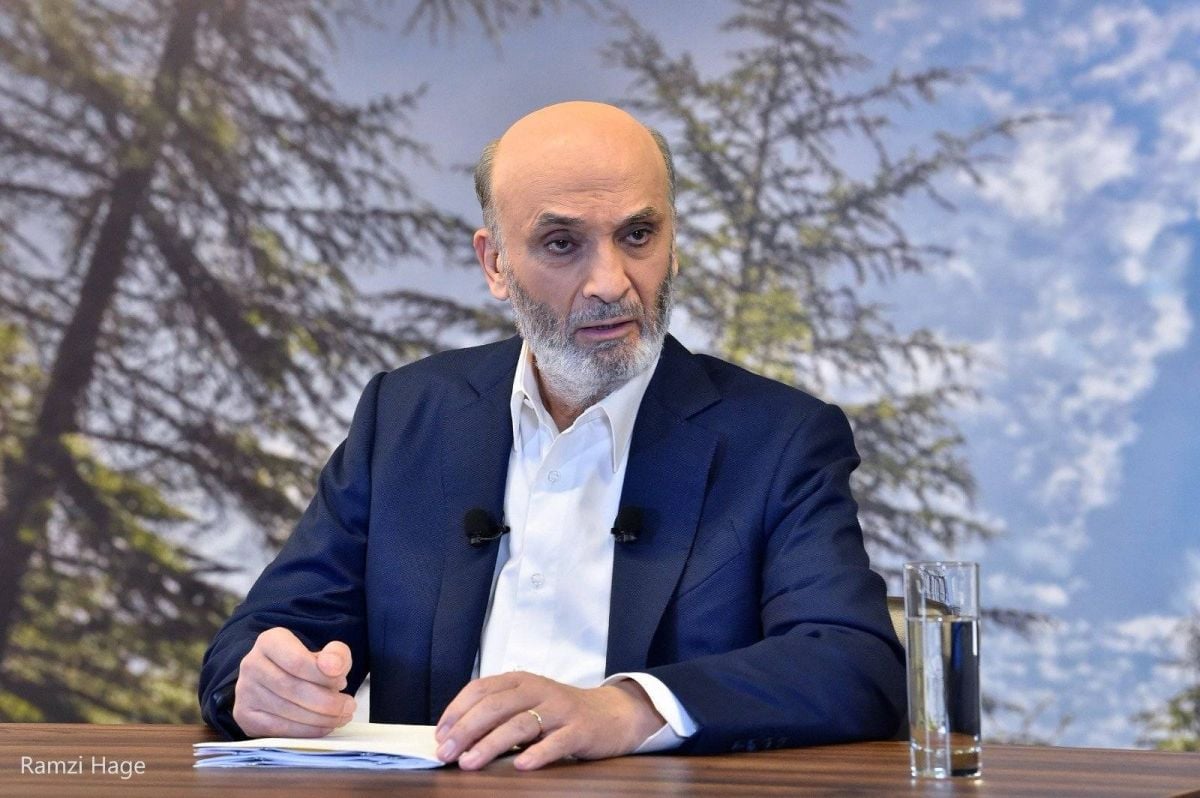
The leader of the LF, Samir Geagea. (Credit: Photo X / @DRSamirGeagea)






BEIRUT — Lebanese Forces leader Samir Geagea on Friday criticized the Lebanese authorities’ “wait-and-see” approach to Hezbollah’s disarmament, urging them to “take inspiration” from Iraq, where he said the prime minister “is not afraid of confrontation.”
In an interview with the al-Markaziya news agency, Geagea said the “heart of the problem” in the negotiations between Lebanon and Israel “is not new and dates back to the November 2024 cease-fire, when the then-Hezbollah-led government agreed to dismantle the party’s weapons in exchange for an Israeli withdrawal. But that did not happen.”
The Lebanese Army has said it dismantled most of Hezbollah’s military infrastructure south of the Litani River, but the Shiite group quickly re-established itself in the area, from where it launched attacks on Israel after fighting resumed on March 2, 2026.
The example of Iraqi Prime Minister Zaidi
"It is not the army that bears responsibility for this situation, but rather the wait-and-see political authority that is trying to buy time to find a solution," Geagea said.
He called on officials to “take inspiration from Iraqi Prime Minister Ali Zaidi, who set a deadline for the state monopoly on arms and is not afraid of confrontation.” On June 29, Zaidi issued an ultimatum to pro-Iranian Iraqi militias, calling on them to hand over their weapons by the end of September.
Following the November 2024 cease-fire and the start of President Joseph Aoun’s term, Geagea had repeatedly criticized the new head of state for his willingness to negotiate with Hezbollah and refusal to confront the group. His position softened in the months that followed, but Geagea now appears to be returning to his earlier stance, adopting a tougher tone toward the authorities as negotiations between Beirut and Tel Aviv stall.
Geagea defends Assir and accuses Hezbollah
On the general amnesty law, adopted by Parliament Wednesday after months of political and sectarian debate, Geagea mocked the “alignment of the Free Patriotic Movement with Hezbollah,” whose lawmakers walked out of the chamber to protest the amnesty granted to Islamist detainees who had attacked the Lebanese Army.
This prompted the Lebanese Forces leader to recall the saying, “You only love your first love,” referring to the alliance between the two parties from 2006 to 2024.
Geagea said the Lebanese Forces supported the amnesty because of the “injustices suffered by Islamists,” which he attributed in part to Hezbollah’s influence on the political scene.
“Many were imprisoned unjustly on trumped-up charges, sometimes simply because they supported the Syrian revolution. Then there is the particular injustice suffered by Ahmad al-Assir [a controversial Salafist sheikh accused of taking part in fighting against the army in Abra in 2013], who was a thorn in Hezbollah’s side,” he said.
The Christian leader also accused the Iran-backed party of “repeatedly sending the Resistance Brigades [a Sunni group affiliated with Hezbollah] to provoke clashes with Assir’s men,” and said that when this failed, “they fabricated a story to send the army to Abra.”
Rajji's absence in Washington
Geagea also addressed the standoff between Defense Minister Michel Menassah and Prime Minister Nawaf Salam. Salam had refused, in the name of government unity, to allow Menassah to deliver a speech defending the army and criticizing the release of Islamist detainees, as well as the army’s position on the amnesty law.
“The state treats the army like a new car parked on the side of the road, prevented from being driven, but from which a part is taken out whenever needed,” he said.
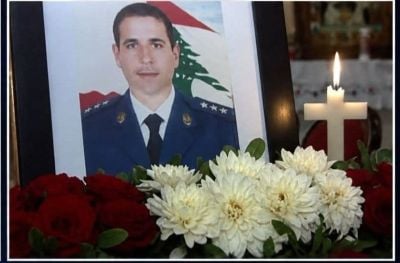
“To avoid a Sunni-Shiite dispute over the amnesty, they put the army’s martyrs at the forefront, using them as a facade for political interests, which is the greatest betrayal of them,” he added. “If anyone has to be held accountable, it is the one who provoked their martyrdom by sending them to attack Abra at the time,” he said, again referring to Hezbollah.
Finally, when asked about the sidelining of Foreign Minister Joe Rajji, a Lebanese Forces ally, during the president’s visit to Washington, Geagea said he was “surprised by this absence, at a time when we are told we are living in a state of institutions.”
“However, because we are waging a major political confrontation — ourselves, as well as the president of the republic and the prime minister — we sometimes have to turn a blind eye to some small mistakes in light of the bigger picture; and Minister Rajji himself is aware of this,” he concluded.

 7 p.m. recap: Iran warns Egypt, Israeli soldiers vote in south Lebanon, Haret Hreik responds to Kataeb