






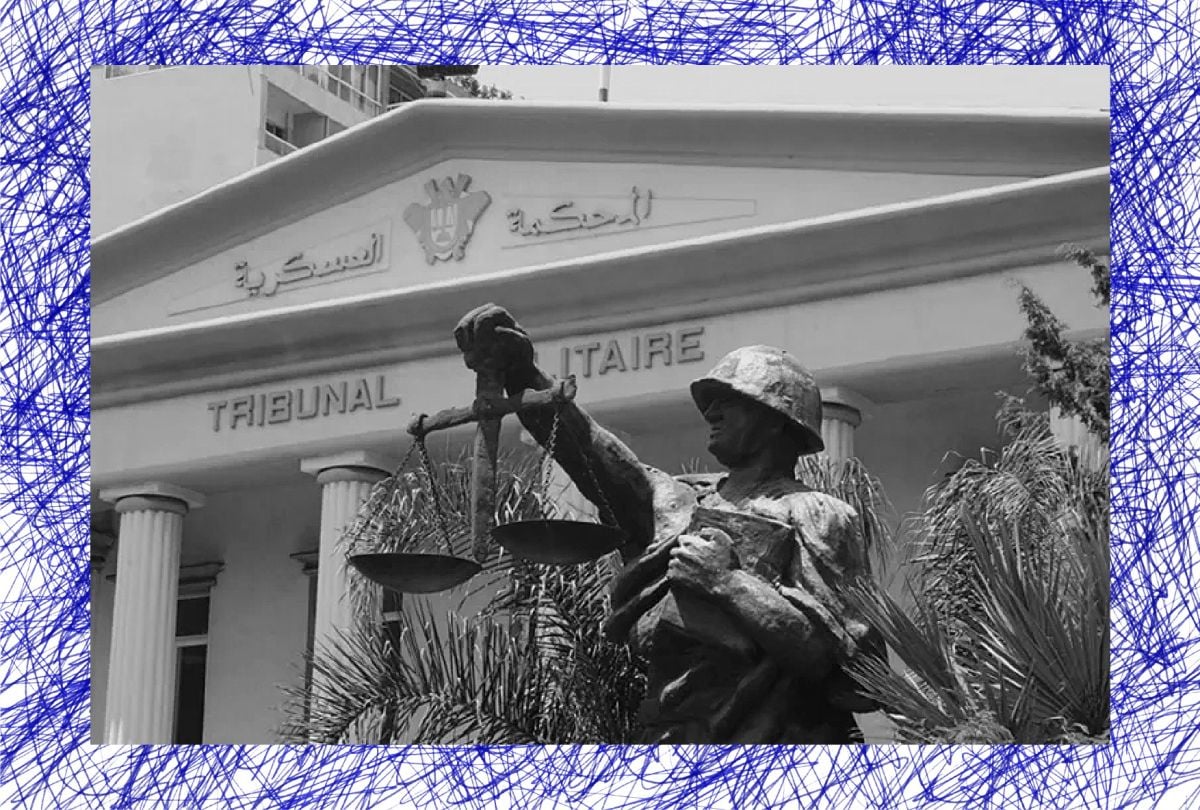
Lebanese military court. (Credit: Lebanese Army)






Explosives belonging to Hezbollah. A former security chief accused of wasting public funds. And a Lebanese ambassador accused of illegally contacting an Israeli diplomat.
At first glance, the three cases have little in common.
Yet, in recent weeks, all three have crossed paths with the same institution: Lebanon’s military justice system.

From the investigation into hundreds of kilograms of explosives seized at Dahr al-Baidar, to accusations against former State Security chief Tony Saliba over alleged waste of public funds, to a complaint against Lebanon’s ambassador to Washington, Nada Hamadeh Moawad, over alleged contact with Israel’s ambassador — all three have landed, in one way or another, within the military judiciary’s orbit.
What exactly falls within Lebanon’s military judiciary’s jurisdiction? How does it differ from the ordinary courts? And what’s with the controversy surrounding it?
Let’s break it down.

1. What exactly falls under military jurisdiction?
More than you might think.
Lebanon’s military judiciary does not deal only with soldiers. Its jurisdiction can depend either on who is involved or the nature of the alleged crime.
It covers military offenses, but also:
a) Terrorism;
b) Treason;
c) Espionage and collaboration with the enemy;
d) Weapons and ammunition offenses; and certain crimes involving the army or security services;
e) Crimes against members of foreign armed forces present in Lebanon, or affecting their interests.
Members of the ISF, General Security and State Security can also fall under its jurisdiction for offenses related to their duties.
That broad scope can explain three recent cases as well as the 2023 case of soldier Sean Rooney of the peacekeeping forces, when five Hezbollah-linked people were indicted in the affair.
Now more recently, after hundreds of kilograms of TNT and C-4 belonging to Hezbollah were seized in Dahr al-Baidar on Oct. 5, an investigation was launched under the supervision of Government Commissioner before the Military Court Claude Ghanem and Top Prosecutor Ahmad Rami al-Hajj. Justice Minister Adel Nassar has separately sought to refer the case to the Judicial Council, an exceptional tribunal whose rulings cannot be appealed.
As for former State Security chief Tony Saliba, the Court of Cassation, Lebanon’s highest Court, also recently ruled that the military judiciary has jurisdiction over a complaint against him, alleging waste of public funds, illicit enrichment and influence peddling.
And when a lawyer filed a legal notice against Lebanon’s ambassador to Washington, Nada Hamadeh Moawad, over alleged contact with Israel’s ambassador, Hajj referred it to the military prosecution as a routine procedural step. Ghanem, for his part, subsequently dismissed the complaint without further action.
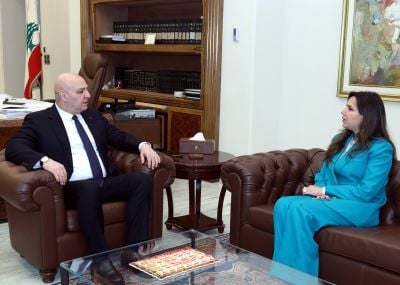
So, appearing on the military prosecution’s radar does not necessarily mean being charged, or even investigated. And “military” describes the jurisdiction, not necessarily the persons who can find themselves before it.
This raises the next question.
2. How does it differ from the regular judicial system?
First, there isn’t just one “Military Court.”
Like the ordinary criminal justice system, Lebanon’s military judiciary is divided into three branches: prosecution, investigation and judgment.
At the prosecution stage, the Government Commissioner before the Military Court and his deputies perform broadly the same prosecutorial functions within military jurisdiction as the ordinary public prosecution does in the regular courts.
Then come the military investigative judges, including a first military investigative judge. Their role broadly mirrors that of investigative judges in the ordinary judiciary: They investigate cases falling within military jurisdiction before deciding how they should proceed.
Finally come the courts themselves — and there are three levels.
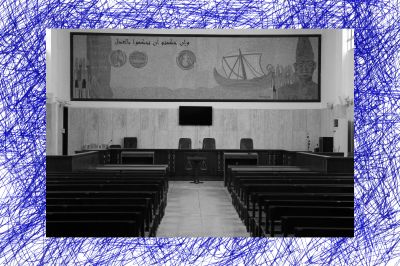
At the bottom are single military judges spread across Lebanon’s five military regions. They handle misdemeanors and petty offenses carrying no more than one year in prison, a fine, or both.
More serious cases go before the Permanent Military Court in Beirut, currently presided over by Brig. Gen. Wassim Fayad. And a small but important distinction: When Fayad is called the “head of the Military Court,” that doesn’t mean he runs the entire military justice system. He heads this court specifically.
At the top sits the Military Court of Cassation, which examines challenges to judgments of the Permanent Military Court, certain decisions concerning release from detention and requests for rehabilitation.
So far, that may sound remarkably similar to the ordinary judiciary.
But there are important differences.
First, military courts are not composed exclusively of military judges. They are mixed. In felony cases, i.e., the most serious, before the Permanent Military Court, a military judge presides alongside one judge from the ordinary judiciary and three military judges. At the Military Court of Cassation, a civilian judge presides alongside four military judges.
The victim’s role is different too. Before the military judiciary, a victim cannot join the criminal case as a civil party to seek compensation. The criminal proceedings are between the military prosecution and the accused; any claim for damages must be brought separately before the competent civil court.
The military system also has no equivalent of the ordinary judiciary’s Indictment Chamber, which reviews certain decisions made during the investigative stage. Some of those functions are instead performed by the Military Court of Cassation.
In short, the military judiciary borrows parts of the ordinary judicial system — including civilian judges — but operates under its own structure and procedural rules, which raised controversy.
This brings us to the next question.
3. Why is the military judiciary so controversial?
One major criticism is that civilians — including protesters and even minors — can be tried before military courts. Human rights organizations have documented cases involving protesters brought before military justice following demonstrations and clashes with security forces, while also raising concerns over alleged torture, interrogations without lawyers and other fair-trial violations.
There have been attempts to change that. A bill debated in Parliament in 2025 would sharply restrict military jurisdiction, excluding civilians altogether, as well as non-military offenses committed by soldiers and alleged torture or abuse committed by security officers during investigations. Military courts would retain jurisdiction over offenses including treason and espionage, unlawful contact with the enemy, terrorism, weapons and certain crimes against military personnel or UNIFIL.
But the reform has stalled. In September 2025, Parliament’s Administration and Justice Committee failed to agree on a “consensus formula” and sent the bill to the General Assembly without amendments.
Then there is the question of political influence.
In March 2026, when the government declared all Hezbollah military activities illegal, three Hezbollah supporters arrested for illegally possessing and transporting weapons were released after six days in detention on bail of just LL1.9 million — around $21 — each.
The decision by the Military Court, headed by Brig. Gen. Wassim Fayad, caused controversy and was appealed by Government Commissioner Claude Ghanem. A judicial source said the justice system was facing its limits amid partisan pressure. Fayad is allegedly close to Hezbollah.

 7 p.m. recap: Katz threatens Beirut south suburbs; London seeks to protect Riyadh; Netanyahu discusses ‘eliminating’ Iran’s regime