







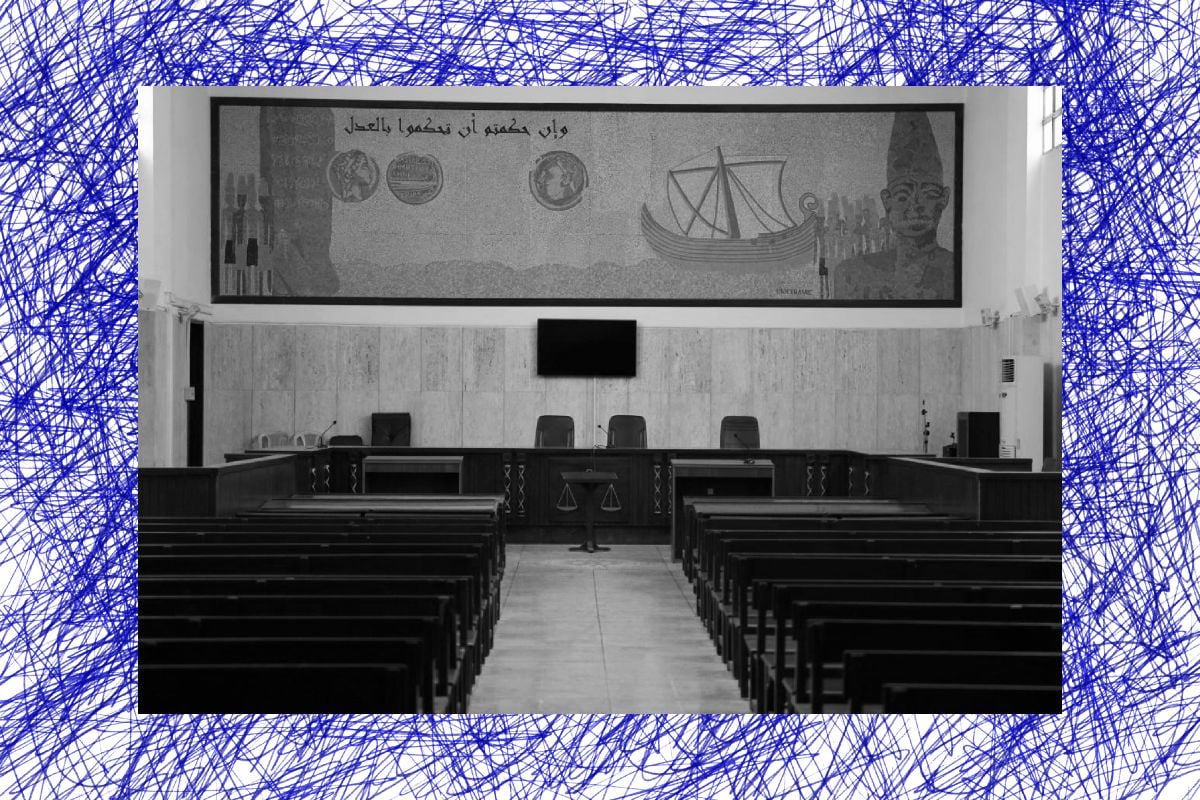
A Lebanese courtroom. (Credit: AFP)






In early November, Judge Tarek Bitar, leading the Beirut Port explosion investigation, was summoned for questioning.
Why? Because he was accused of “usurping his power.”
The complaint was filed in 2023 by former chief prosecutor Ghassan Oueidat, former Finance Minister Ali Hassan Khalil and former Customs Director Badri Daher, all of whom were charged in Bitar’s investigation.
If you’re confused, you’re not alone. How does a prosecutor accuse a judge? Who supervises whom? And which court outranks which?

Let’s break it down.
1- First thing to know: Lebanon has two parallel court systems
Lebanon’s judiciary is split into two separate branches: Administrative Judiciary and Civil Judiciary (or ‘judicial judiciary,’ if we want to stick to the original Arabic term).
The Administrative Judiciary is centered around the State Shura Council. It handles conflicts with the state, ministries, municipalities and public institutions.
If you’re challenging an administrative decision, this is where your case goes. It also gives legal advice to the government. In short, if the conflict involves public authority, this is where it lands.
The Civil Judiciary handles nearly everything else: civil disputes, commercial cases, criminal cases, real estate conflicts and parts of personal status. This is the system most people interact with, and the one that controls major criminal investigations.
Imagine a crime. The police or a security agency rush to the scene, but they don’t act alone. Under Lebanese law, all security forces work under the Public Prosecution’s authority.
After securing the scene, the first call goes straight to the public prosecutor, the state’s — and the people’s — representative in criminal cases.

From that moment, the judicial police follow the prosecutor’s orders, who decides which security agency takes the lead (ISF, army intelligence, State Security, or others) and tells them exactly what to do. This can include making arrests, collecting evidence, calling forensics and sealing off the area.
Once the initial evidence is collected, the file goes to an Investigating Judge, who conducts a deeper, structured investigation: hearing witnesses, ordering expert reports, reviewing every detail and deciding whether the case goes to trial.
If it moves forward, the case lands in the Criminal Court, which tries major crimes like murder, kidnapping and terrorism. Three judges hear each case. The prosecutor argues guilt, the defense argues innocence and the judges issue the verdict.
If someone challenges that verdict, it goes to the Court of Cassation, Lebanon’s highest court, which checks whether the law was applied correctly, not the facts of the case.
For certain lesser crimes, cases go from the Court of First Instance (which is the first trial court where most criminal and civil cases begin) to the Court of Appeal, which can reassess evidence and hear new arguments, and finally, if need be, to the Court of Cassation.
In cases of murder, there are no appeals.
Now, in the Beirut Port explosion case, the same procedure unfolded.
The army was deployed to the crime scene under Public Prosecution orders. But given the scale of the crime, the government issued a decree sending the case to the Judicial Council, the special court that handles extremely sensitive political and national cases. It was the Judicial Council that tried Lebanese Forces leader Samir Geagea back in the 90s.
Once that happened, the investigation had to be handled by a judge appointed by the justice minister and approved by the Higher Judicial Council, which is how Judge Fadi Sawan and, later, Bitar were assigned to the case.

2- This brings us to the Higher Judicial Council. What is it?
In short, the Higher Judicial Council is the guardian of judicial independence. Basically, it supervises all judges.
It manages judges’ appointments, transfers, promotions and discipline. It also reviews judges’ files, forms disciplinary bodies, orders investigations when something goes wrong, and weighs in on judicial reforms.
Appointments within the council are to be approved by the justice minister. In the event of disagreement with the minister, the council meets again until the decision becomes final. The Justice Ministry issues it by decree,
In short, the minister participates but cannot override the Higher Judicial Council.
As for the Judicial Inspection Authority, it monitors how courts function and how judges and clerks perform. It audits courts, investigates complaints, flags dysfunction and recommends disciplinary action.
It works closely with the Higher Judicial Council, which uses its reports to make decisions about judges. Legally, it falls under the administrative supervision of the justice minister, but this does not give the minister the power to influence judicial outcomes.
Think of it as the judiciary’s internal quality-control unit.
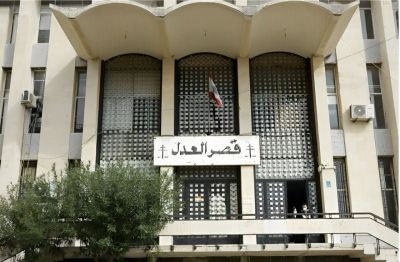
3- What about the Justice Ministry?
The ministry has a large role but not a judicial one.
It handles administration: court buildings, budgets, staff, logistics, international cooperation and drafting reforms. It also participates procedurally in judicial appointments and proposes the investigating judge for cases before the Judicial Council.
It also drafts legal texts when assigned, gives opinions on matters referred to it, represents the state in court, and oversees prisons as well as juvenile detention and rehabilitation. It also supervises notaries, court-appointed experts, bankruptcy trustees and conciliation monitors.
But it cannot tell judges what to rule or prosecutors whom to charge. It runs the system, not the decisions.
Now, what is the Justice Ministry’s Cases Authority? It is basically the State’s legal team. It’s the body that files lawsuits on behalf of the Lebanese state, defends the state in cases brought against it — inside and outside Lebanon — and prepares all legal briefs, filings and memorandums.
It receives and processes all judicial notifications related to cases involving the state, appears before both civil and administrative courts and handles everything needed to protect the state’s interests in any lawsuit, whether the state is the plaintiff or defendant.