



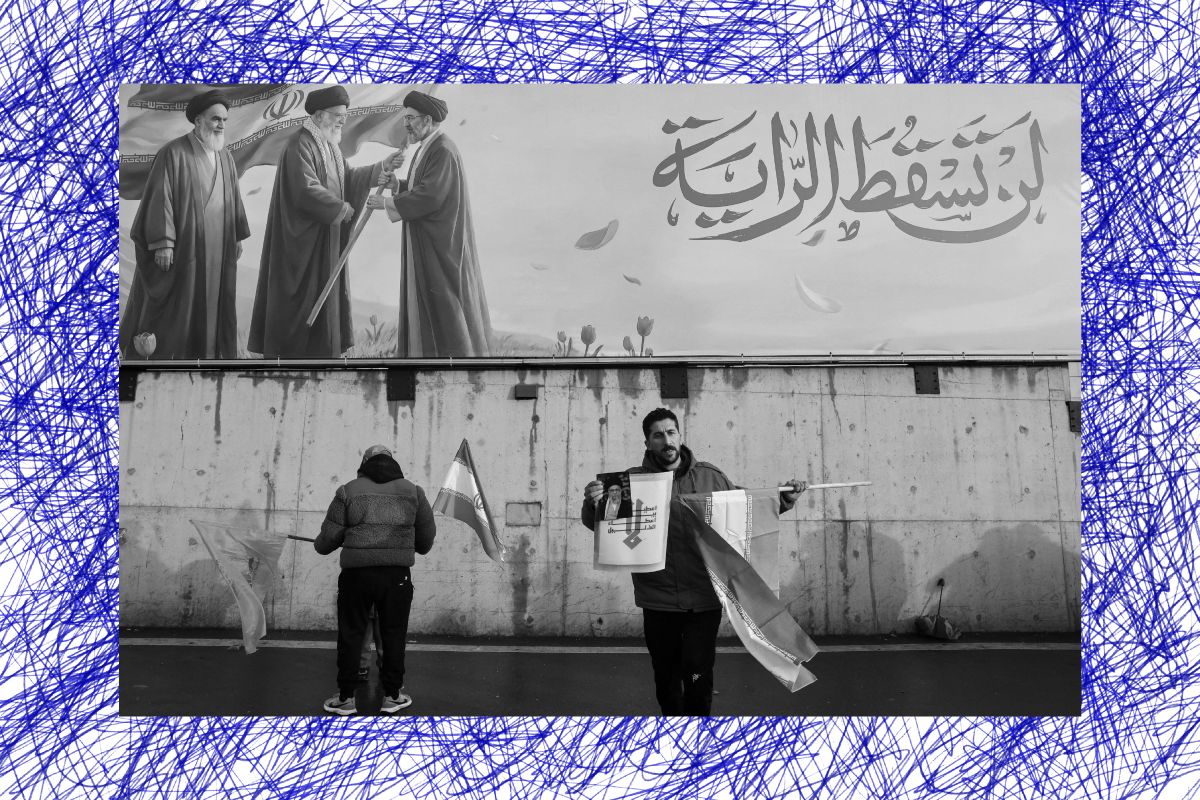
A man holds an Iranian flag and a photo of late Iranian Supreme Leader Ayatollah Ali Khamenei during a demonstration against the expulsion of the Iranian ambassador to Lebanon, in Beirut, March 26, 2026. (Credit: Amr Abdallah Dalsh/Reuters)






Iran’s ambassador to Lebanon, Mohammad Reza Sheibani, was supposed to leave Beirut by March 29, after receiving an ultimatum from Foreign Minister Joe Rajji.
Rajji declared Sheibani persona non grata, as per a term in the Vienna Convention on Diplomatic Relations. Sheibani was given until March 29 to leave, but he did not, which many considered a violation of the treaty.
On March 30, Iran’s Foreign Ministry spokesperson, Ismail Baghaei, made it clear: the ambassador is staying and will “continue his mission in Beirut.”
Is the Iranian ambassador now a diplomat illegally residing in Lebanon? On what basis can a diplomat be expelled from a host country, and what does the Vienna Convention say about this? Were there any violations, and how? What can Lebanon realistically do next from a legal perspective?
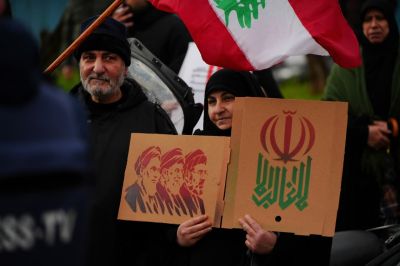
Let’s break it down.
1- What is the 1961 Vienna Convention on Diplomatic Relations, and which article was violated?
The Convention was adopted in 1961 by more than 190 countries, including, of course, Lebanon and Iran.
It is basically the rulebook for diplomacy. It sets rules for how countries deal with foreign diplomats. What they can do, what protections they have, and how states can respond when things go wrong.
The key part in the Lebanon-Iran situation is Article 9, which gives the “receiving state” the right to declare a foreign diplomat persona non grata. Meaning: you're no longer welcome.
“The receiving State may at any time and without having to explain its decision, notify the sending State that the head of the mission or any member of the diplomatic staff of the mission is persona non grata or that any other member of the staff of the mission is not acceptable,” the text reads.
In this case, Lebanon did exactly that.
Now, what happens if the ambassador refuses to leave?
2- What can the Lebanese state realistically and legally do?
Let’s break this legal step by legal step, according to the Convention.
- Lebanon declared Sheibani persona non grata.
Under Article 9 (1), the receiving state, Lebanon here, can at any time and without explanation, tell the sending state, Iran, that a diplomat is no longer welcome.
- In this case, Iran must, as per the Convention, recall the ambassador or end his functions.
- Iran refused, so Lebanon can stop recognizing Sheibani as a diplomat.
This is what Article 9 (2) states. If the sending state does not act “within a reasonable period of time,” the receiving state has the right to refuse to recognize that person as a member of the diplomatic mission.
Article 43 (b) says that a diplomat’s function ends when the receiving state gives that notification.
- But until that point, he still has diplomatic inviolability.
This is crucial. Under Article 29, a diplomat “shall not be liable to any form of arrest or detention.”
- Now, since he was notified, it means his diplomatic mission ended, but the immunity does not vanish instantly.
Under Article 39 (2), privileges and immunities normally continue until he leaves the country, or until the end of a “reasonable period” to do so.
So legally, the transition is not: “declared unwelcome today, arrestable tomorrow.” It is more layered than that.
While his diplomatic functions can end, his immunity does not necessarily disappear instantly across the board, and the embassy remains protected, as per the inviolability of the diplomatic mission premises.
So why did a government source say that Sheibani is an Iranian citizen “that is illegally residing” in Lebanon and thus cannot leave the Iranian embassy?
Here’s the twist.
According to Article 13 of the Vienna Convention, a head of a diplomatic mission must present their credentials to the receiving state before taking up their functions.
Sheibani arrived in Lebanon in February 2026 but had yet to present his credentials to the president. So technically speaking, he is not yet an accredited diplomat. Therefore, he is residing illegally in Lebanese territories.
All this remains on paper, but the political reality is different. In Lebanon, sectarian alignment often outweighs state decisions, and this is one of those moments.
In this context, Parliament Speaker and Amal leader Nabih Berri (and Hezbollah ally) rejected the expulsion.
Hezbollah has gone further, pressuring President Joseph Aoun and Prime Minister Nawaf Salam to reverse the decision, calling it a “capitulation to foreign pressure.”
So, the state is split. The diplomatic standoff persists.
3- Has this situation happened before?
Lebanon has not expelled any ambassadors before.
But a similar scenario with Iran happened — and it didn’t end very differently.
Forty-three years ago, in 1983, in the middle of the 1975–90 Civil War, Lebanon was already accusing Iran of interfering in its internal affairs.
The same Convention was in place back then. Meaning, the same rules applied.
Then–Prime Minister Shafiq Wazzan’s government decided to expel Iran’s chargé d’affaires at the time, Mohammad Nourani.
He was given 72 hours to leave.
On paper, the decision was clear. In reality, it quickly fell apart because, as is the case today, political considerations in Lebanon have the upper hand.
Religious leaders — both Sunni and Shiite — mobilized in the streets against the expulsion, organizing sit-ins and pressuring authorities to reverse the decision.
At the time, many Muslim leaders (again, both Sunni and Shiite) viewed Iran as “pro-resistance” against Israel and Western influence — a perception that helped explain the cross-sectarian opposition.
The situation escalated further on the day of the planned departure. Beirut’s international airport was bombarded at dawn, forcing it to shut down and delaying the diplomat’s exit.
Today, the landscape has shifted, with much of the Sunni political scene becoming openly critical of Hezbollah and its Iranian backing.
Today, Iran is backed by Hezbollah and Amal in Lebanon — both Shiite ( like the Iranian regime) and long-time allies — who are openly supporting the ambassador staying.

 1 p.m. recap: Third death in 2 days in Israeli-occupied south Lebanon, Salam comments on the Dahr al-Baidar case, Saudi Arabia bombs Yemen