







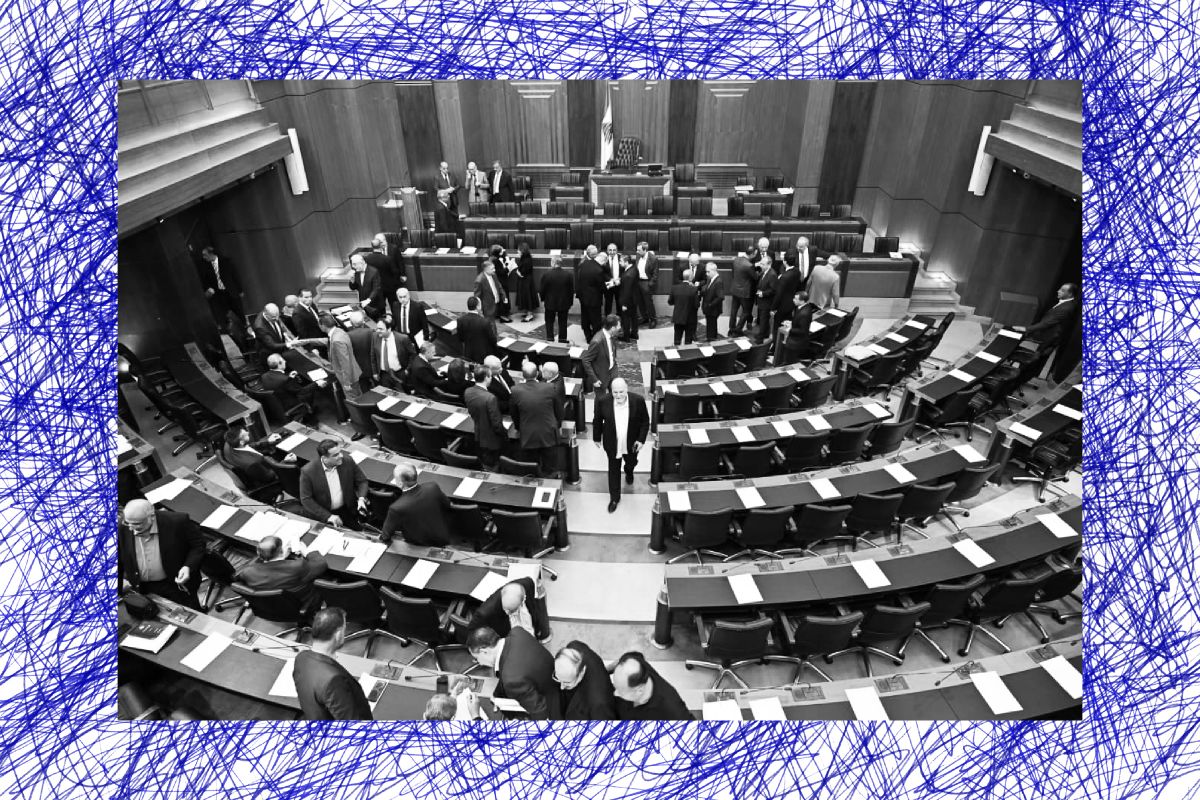
Parliament during a plenary session. (Credit: Mohammad Yassin/L'Orient Today)






Talk of a possible delay of the parliamentary elections, so far still scheduled for May, has intensified recently.
Technically speaking, postponing elections is far from a routine democratic exercise. But in Lebanon, the issue is less about whether a delay would happen and more about how it would be engineered.
There is also a shadow debate over the nature of the postponement itself: would it be a short technical delay of a few months, or a full political prorogation, extending Parliament’s mandate by a year or two?
So, where do things stand?
Let’s break it down.
1) Why is there talk of postponing the elections in the first place?
The most immediate trigger is the expatriate vote.
In a nutshell:
In June 2025, 67 MPs (a majority in the 128-seat Parliament) proposed amending Article 112 of the electoral law, which provides for a single diaspora constituency to elect six MPs, to instead allow expatriates to vote for all 128 seats from abroad.
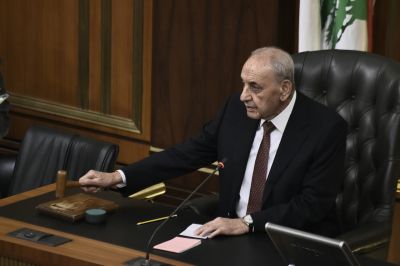
But Article 112 has never been implemented, and the amendment never reached a vote after the speaker repeatedly declined to add the proposal to the parliamentary agenda.
Parliament had already bypassed the article in the 2018 and 2022 elections due to missing decrees. The 2022 expatriate vote, which influenced the results of several districts, made the issue even more politically sensitive.
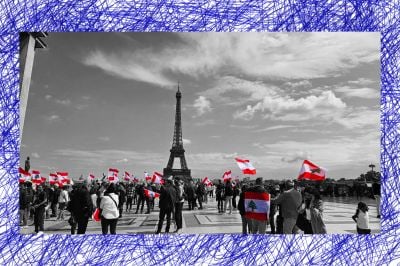
Now the debate goes beyond the diaspora. Some actors argue that a postponement could create space to tackle deeper issues: the state’s monopoly over arms, unfinished Taif Agreement provisions such as creating a Senate and abolishing political sectarianism, advancing decentralization and even drafting a new electoral law.
In this framing, postponement is not presented as a technical delay, but as a political pause to renegotiate the system itself.
In some political circles, calculations also hinge on broader regional shifts, including speculation about a potential weakening or even fall of the Iranian regime. This development could reshape the balance of power in Lebanon by undermining Iran’s allies, most notably Hezbollah, and, by extension, the Amal Movement.
2) So how can Parliament renew its own mandate, and for how long?
In principle, parliamentary elections must take place before the current Parliament’s term expires.
If they cannot be organized on time, MPs would need to pass a law extending their own mandate.
This is highly controversial and often criticized as unconstitutional.
Yet Lebanon has already gone down that road.
Technically, any extension would require Parliament to convene and adopt a law specifying the duration of the prorogation, whether for a few months or several years.
The president would then have three options: sign the law, return it to Parliament for reconsideration or refer it to the Constitutional Council.
In practice, once political consensus is established, institutional checks rarely block extensions.
Postponement can also happen indirectly.
Administrative delays, unresolved legal disputes or security arguments can create circumstances where elections simply cannot be organized on time.
That de facto delay can later be formalized through a parliamentary vote, extending the mandate.
In short, postponement may come through an explicit political decision or through procedural drift that eventually leaves Parliament with no alternative but to extend itself.
3) Has Lebanon done this before?
Yes.
Lebanon has already had multiple parliamentary extensions over the past decade, turning postponement into a familiar yet controversial political tool.
Parliamentary elections in Lebanon are supposed to be held every four years. After the 2009 vote, elections should have taken place in 2013. Instead, successive mandate extensions kept the same Parliament in power until elections were finally held in 2018, followed by the most recent vote in 2022.
2013 — First extension
Parliament extended its mandate by 17 months, citing deteriorating security conditions, spillover from the Syrian civil war and its inability to agree on a new electoral law.
2014 — Second extension
A second extension followed, this time for 31 months, justified by continued security concerns, institutional paralysis and persistent disagreements over the electoral framework.
2017 — Third extension
An additional 11-month extension was adopted after the approval of the proportional representation law (adopted for the first time), allowing time to prepare the logistics and organize the vote, eventually held in 2018.
Sidenote: Proportional law means parliamentary seats are divided based on the total number of votes each electoral list receives, using a formula (electoral quotient) to decide how many seats each list gets.
Each previous extension was enacted through a law passed by Parliament. If postponement occurs again, it would likely follow the same procedure. A draft law would be introduced, Parliament would vote on the duration of the extension, and the text would then be promulgated by the president, with the possibility of referral to the Constitutional Council.
In practice, these successive decisions kept the 2009 Parliament in office for nearly a decade before the electoral cycle resumed with the 2018 and 2022 elections.
