


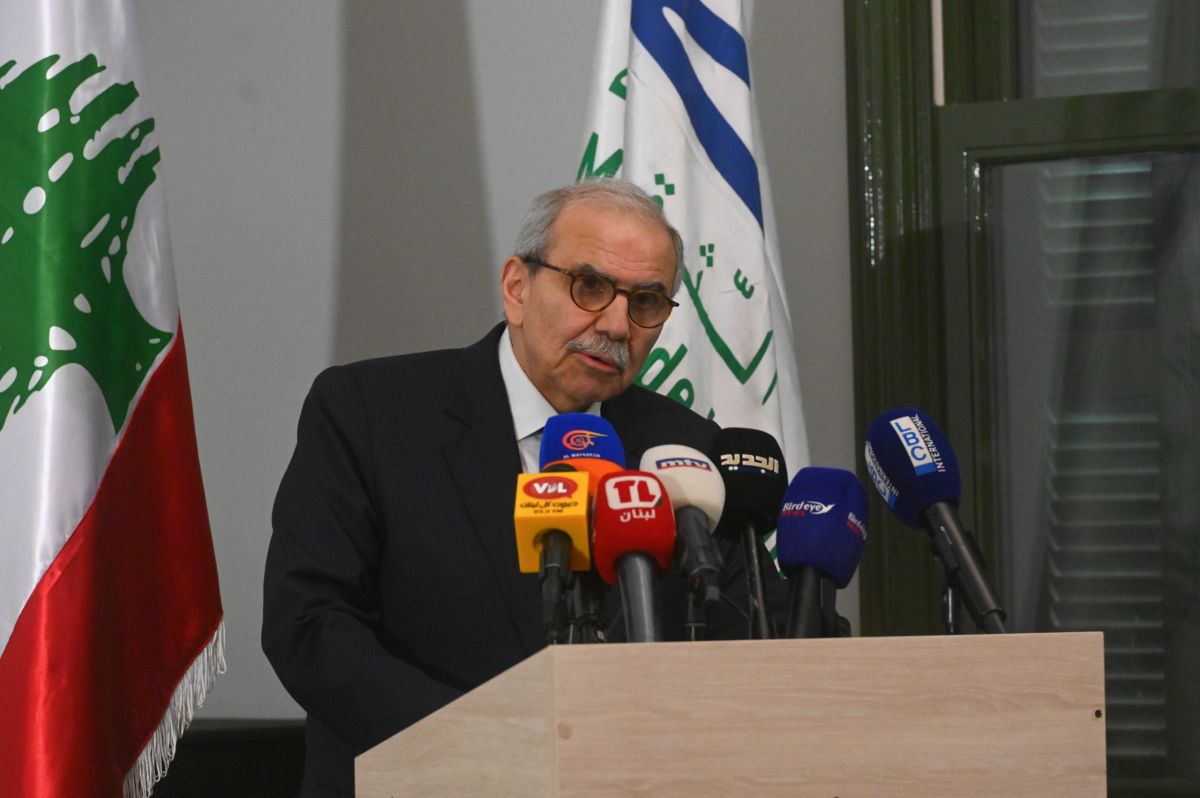
Prime Minister Nawaf Salam, during a conference at the National Library in Beirut, on Feb. 20, 2026. (Credit: Mohammad Yassine/L'Orient-Le Jour)






BEIRUT — Prime Minister Nawaf Salam on Friday sharply criticized Lebanon’s sectarian political system, calling it one that “undermines the concept of citizenship” by preventing equal access to public office.
Speaking at a conference titled “Citizenship and State Sovereignty” at Beirut's National Library, Salam argued that the system denies Lebanese equal opportunity to aspire to positions they seek. He said a potential solution lies in establishing a confessional Senate, as provided for in the Constitution, which would allow for the abolition of sectarian seat allocation in Parliament.
Salam noted that while the Constitution guarantees equality before the law, that principle is compromised in matters of personal status, which vary according to religious affiliation. “On this point, equality before the law becomes its opposite: discrimination between Lebanese,” he said.
He added that inequality is even more apparent in political life, where access to senior public, political and administrative posts is governed by sectarian quotas.
Under the 1943 National Pact, top leadership positions are divided among the country’s main sects: the president is Maronite Christian, the prime minister Sunni Muslim and the speaker of Parliament Shiite Muslim.
Members of smaller communities are typically limited to ministerial posts, Salam said, while “minorities” face even greater barriers to public office.
He said the sectarian quota system extended throughout the public administration, “even to the lowest ranks,” contradicting the concept of citizenship, particularly in Lebanon, where patronage networks are deeply entrenched.
Impact on state legitimacy
Salam said sectarian allocation of public positions persisted despite the adoption of an appointments mechanism by the government, which he said has often succumbed to political bargaining.
He described the system as “a source of harm both for the state and for the citizens,” weakening administrative effectiveness.
In his view, Lebanon must find a way to preserve collective religious identities while ensuring equal civic rights. He pointed to Article 22 of the Constitution, which calls for a bicameral legislature. Under that model, the Senate would represent religious communities, while the lower house (Parliament) would be elected on a nonsectarian, national basis.
“Draft laws exist on this issue, but they have not yet received the attention they deserve,” Salam said.
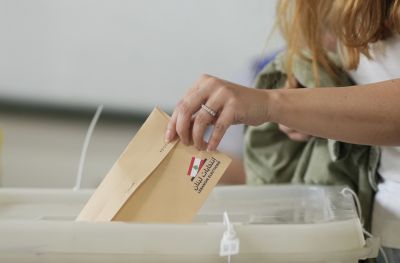
Under the 2017 electoral law, the 128 seats in Parliament are distributed across 15 electoral districts — with six additional seats designated for expatriates — and allocated among religious denominations.
“The crisis of citizenship in Lebanon lies in the absence of full political recognition of a person’s right to exist independently of their sectarian affiliation,” Salam said. This absence, he argued, undermines “the legitimacy of a just and strong state.”

 7 p.m. recap: Netanyahu seeks mastermind behind Flydubai incident; Washington sanctions 2 French nationals; Ben Gvir's 'I want to kill you' threat