








(Credit: Anwar Amro/AFP/L'Orient Today illustration)






On Sept. 2, MP Cynthia Zarazir presented an urgent draft law — or fast-track bill — to amend Article 1 of the Lebanese nationality law.
At first glance, the proposition is deceptively straightforward: add a single word — mother — to the first article so it reads, “Any person born to a Lebanese father [or mother] is considered Lebanese.”
But that single insertion carries enormous weight.
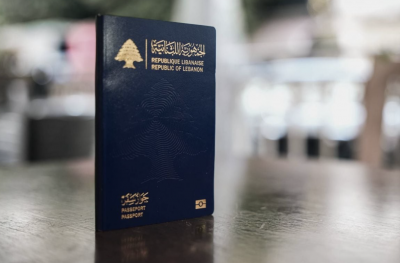
Behind it lies a deeply entrenched legal and political framework that has, for decades, prevented Lebanese women from passing their nationality to their children and spouses, a system rooted in complex intersections of patriarchy, sectarian balance and demographic anxiety.
For many politicians, this remains a needed restriction to avoid upsetting the country’s sectarian balance between Muslims and Christians, particularly concerning women married to Palestinian and Syrian men.
If passed, the amendment would challenge a century-old legal order and reshape the lives of thousands of Lebanese women and their families.
Previously, there have been several attempts to change this law before, but this time, things might look different. How?
Let’s break it down.

1. What does the law say?
Lebanon’s nationality law dates back to 1925 — yes, a century ago — and it’s still stuck there.
Here’s how it works:
- If a Lebanese man marries a foreign woman, she can apply for citizenship after one year. Their children are Lebanese citizens.
- If a Lebanese woman marries a foreign man, neither he nor their children can become Lebanese.
Citizenship automatically passes through the father, not the mother.
That means children of Lebanese men are citizens, but those of Lebanese women — even if they’re born in Lebanon — are not.
The only exceptions?
- Children born in Lebanon who would otherwise be stateless, or
- Children born to unknown parents.
In other words, a Lebanese woman’s child with an unknown father (or an unmarried woman’s child) has more right to Lebanese nationality than her child with a known foreign father. Put more simply, a single Lebanese mother can pass on her nationality only if her child remains without one for over a year after birth.

One important thing: Children of Lebanese women married to foreigners face constant legal and social hurdles.
They must renew their residency permits every one to three years, apply for work permits to be able to hold a job, and are often barred from or discriminated against in many professions.

2. What has been done so far?
Lebanese activists and NGOs have spent over two decades campaigning to amend the nationality law. Previous proposals were buried in parliamentary committees and never made it to a vote, including the following:
Sept. 2024 – MP Cynthia Zarazir submitted an urgent draft law to amend Article 1 of the nationality law.
May–April 2019 – The National Commission for Lebanese Women presented a draft law to then–Prime Minister Saad Hariri to grant limited rights to the children of Lebanese women married to foreigners under 18. Around the same time, MP Inaya Ezzeddine proposed granting such children full civil and social rights, while MP Rola Tabsh called for granting them full nationality without exception.
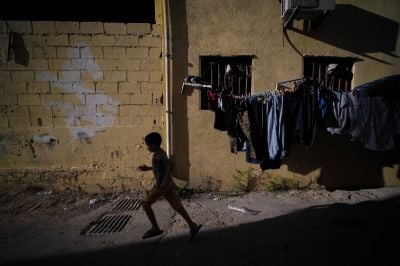
2018 – Then–Foreign Minister Gebran Bassil proposed a discriminatory amendment allowing Lebanese mothers to pass nationality to their children, except when married to Syrian or Palestinian men, prompting widespread backlash.
That same year, Walid Joumblatt’s Democratic Gathering Bloc proposed a bill to allow children of Lebanese women to be naturalized and enable foreigners living in Lebanon to apply for citizenship under specific conditions.
Ahead of the May 2018 elections, several politicians pledged reform, but the government instead issued a controversial naturalization decree granting Lebanese citizenship to more than 300 foreign nationals, sparking outrage among activists advocating for Lebanese women’s families. It was reported that the decree served figures in Lebanon close to the former Assad regime.
2012–2013 – A ministerial committee reviewed the law but recommended only limited privileges for children of Lebanese mothers, avoiding full reform.

2010 – Decree No. 4186 granted husbands and children of Lebanese women “courtesy” residency permits, though the process was costly and cumbersome.
1994 – A mass naturalization decree granted citizenship to tens of thousands of residents but left gender discrimination in the nationality law untouched.

3. What happened recently in Parliament? And what's next?
For now, Lebanese mothers still cannot pass their nationality to children born to non-Lebanese fathers — nor to their spouses.
While this isn’t the first attempt to amend the century-old law, it’s the first time an urgent draft law has been officially submitted.
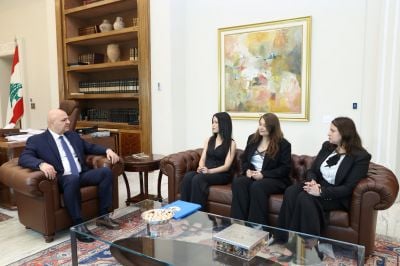
So what’s different this time?
Normally, a bill in Lebanon goes through three stages:
1. It’s submitted.
2. Sent to the relevant parliamentary committees.
3. Reviewed, amended, and then — maybe — discussed in a plenary session.
But when it’s submitted as an urgent draft law:
Parliament recognizes it as urgent,
- It can be presented by a single MP,
- And it can be voted on immediately after minimal discussion, IF it figures on the agenda of the next parliamentary session.
Karima Chebbo, director of the My Nationality is a Right for Me and My Family campaign — launched 22 years ago — told L’Orient Today she fears Parliament might strip the bill of its “urgent” status and send it back to committee. The campaign collaborated with Zarazir to be able to submit the bill.
Chebbo explained that activists struggled to have the bill officially deposited in Parliament — meaning registered with the General Secretariat — until they learned it could be done via a notary public, which simplified the process.
Zarazir told L’Orient-Le Jour that the next step is to push for the bill to be added to the agenda of the next parliamentary session.
The last parliamentary session took place on Sept. 29, but neither the nationality bill nor the controversial proposal to amend the electoral law on expat voting appeared on the agenda.
The next session, scheduled for Tuesday, Oct. 28, did not take place due to a lack of quorum. Both bills, namely the expat voting bill, were absent from the agenda, prompting many MPs to boycott the meeting.
Quick Explainer:
Anyone — an NOG, expert or citizen — can draft a proposed law.
But for it to exist officially, it must be registered with Parliament's General Secretariat, which stamps and records it. Once registered, it still needs a Member of Parliament to sponsor it and formally present it to the Parliament Speaker, who can then send it to the committee or put it on the plenary agenda.
That's where Cynthia Zarazir stepped in — she took on the sponsorship and submitted it as an urgent draft law, which only requires one MP to do so.
