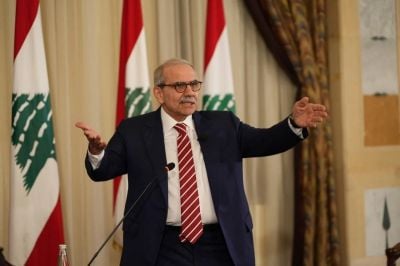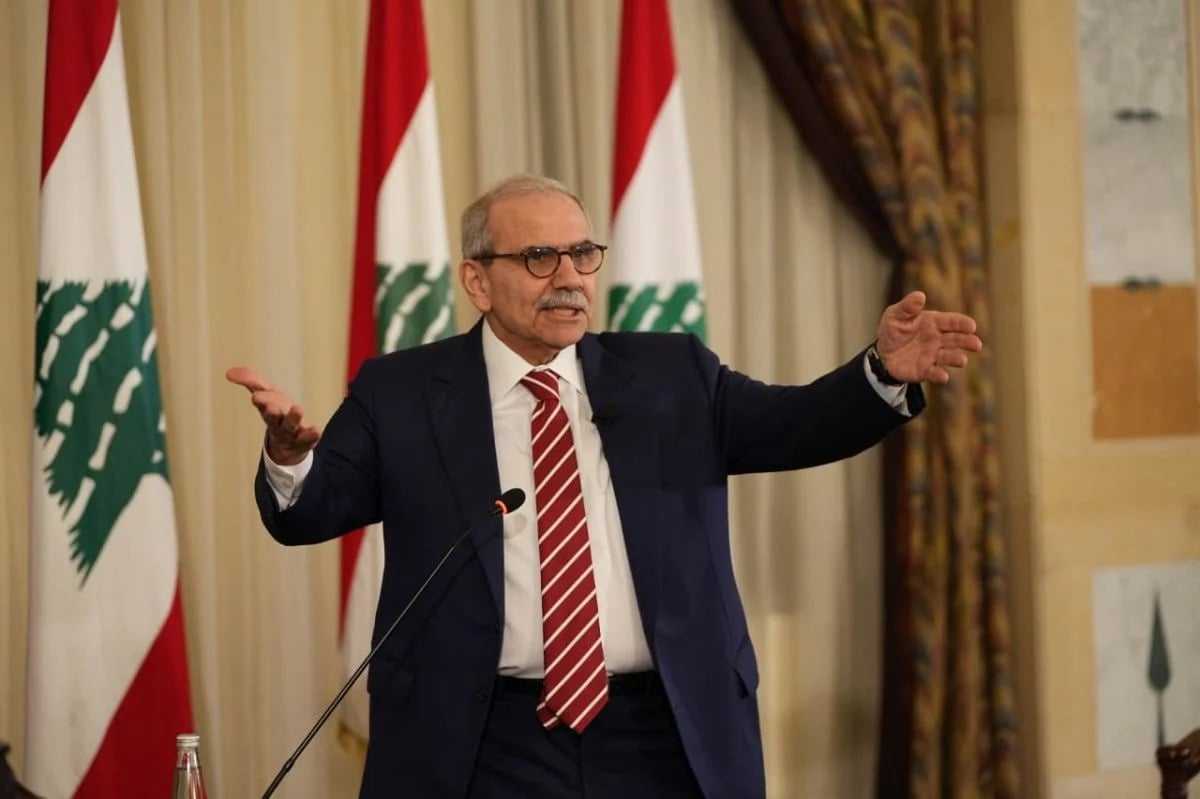
Prime Minister Nawaf Salam at the Grand Serail during an interview with L'Orient-Le Jour, on Sept. 14, 2025. (Credit: Mohammad Yassine/L'Orient Today)






BEIRUT — Prime Minister Nawaf Salam took a firm stance toward Hezbollah on Wednesday night during a televised interview, marking his first public statement since last Friday's signing of the negotiation framework between Lebanon and Israel. "What state can function with two armies?" he asked, describing the consequences of the two wars of the last two years as a "real catastrophe." He added that it was due to these wars initiated by Hezbollah in October 2023 and March 2026 that the Lebanese state has ended up entering direct negotiations with Israel.
Following the harsh reactions in recent days from the Amal-Hezbollah duo in response to the framework agreement — which notably links Hezbollah's disarmament to Israeli withdrawal — Salam warned that his government would give in "neither to blackmail nor to threats of civil war," and would not "backtrack on the goal of restoring the state's monopoly over arms." However, he assured that he was not seeking "confrontation" with the pro-Iran group and would do everything to avoid "armed conflict."
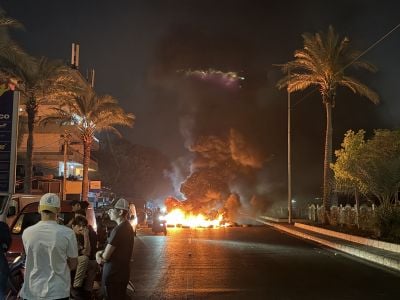
Since Friday, Hezbollah officials have raised the specter of "civil war" if the authorities did not retract the agreement signed in Washington, before somewhat softening their threats and affirming that they would not take to the streets. He added that he had thanked Parliament Speaker Nabih Berri, also head of the Amal movement, for his intervention to prevent "discord" and an escalation in the streets. Berri, like Hezbollah, had rejected the agreement, assuring that it would not "pass," while also rejecting internal strife.
Salam also called on Hezbollah "to respect the commitments it had itself undertaken in the Taif Accord, Resolution 1701, the November 2024 cease-fire declaration, and the ministerial statement" regarding disarmament. "We want all weapons in Lebanon to be under the command of the Lebanese Army. What state can function with two armies?" he asked. The prime minister recalled that Lebanon had committed, under Resolution 1701, to making South Lebanon a demilitarized zone. "Yet today, we are discovering tunnels and weapons," he lamented. The army had stated, as part of the summer 2025 disarmament plan, that it had almost completed dismantling Hezbollah's infrastructure south of the Litani River. However, as soon as Hezbollah fired rockets at Israel on March 2, 2026, the group carried out attacks and mobilized its fighters in the area.
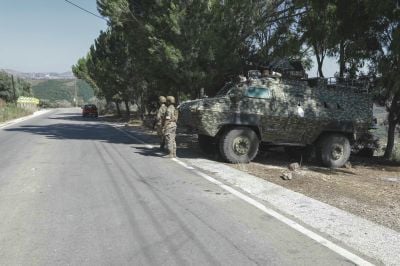
Referring to the Israeli withdrawal in 2000, Salam wondered why the Lebanese Army had not then been allowed to deploy in the South. "Today, every zone evacuated by the Israeli army will be taken over by the Lebanese Army, which will extend its authority there," he said. In this context, the prime minister announced that the Israeli withdrawal from the "pilot zones"— as planned in the framework agreement — would take place "in the coming days." Israeli sources reported to Israel's Channel 11 Tuesday night that the withdrawal in these zones will be postponed until a supervisory commission, including the Lebanese and Israeli armies and the United States, is established.
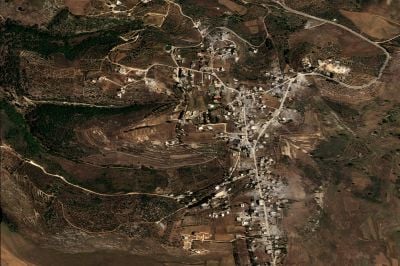
The prime minister specified that an initial zone would include Zawtar Gharbieh and Zawtar Sharqieh on the north bank of the Litani in the Nabatieh district, as well as several other villages in the region. The second, at Ghandourieh and Froun in the Bint Jbeil district, on the south bank of the Litani opposite Zawtar, presents a different situation, in his view. While there are reportedly no Israeli tanks present, the area remains under Israeli fire control.
Two successive wars
Discussing the "support" war for Gaza (October 2023-November 2024), the prime minister remarked, "Regardless of the adventure of the support war and its consequence — which some describe as victories — what we see is the number of victims and the reconstruction cost: it is a real catastrophe."
"We are not negotiation enthusiasts, but we have gotten to this point after two wars that caused thousands of casualties," continued Salam, recalling that the first war caused more than $7 billion in direct damages, not counting estimated economic losses of $13 billion. He also described the second conflict as a "war of revenge linked to Ali Khamenei," who was assassinated in Feb. 28 at the start of the Israeli-U.S. war against Iran.
A tripartite framework
Salam finally affirmed that Lebanon's priority for the upcoming cycles of direct negotiations with the Israeli state under U.S. auspices will be to establish a timetable for Israeli withdrawal from national territory. He indicated that if the Lebanese-Israeli agreement text is understood as a framework outlining the negotiation process, the issue of Israeli withdrawal must be settled according to a precise timetable. "Our priority for the upcoming negotiation rounds will be to establish this timetable," he stressed.
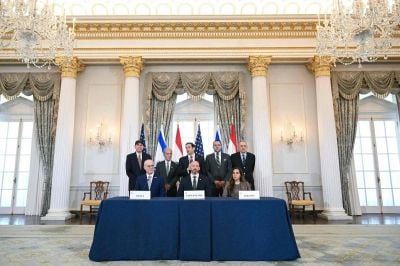
Addressing the people of southern Lebanon, Salam stated that the text does indeed provide for an Israeli withdrawal. "What is the difference between a redeployment outside Lebanese territory and a withdrawal? The framework provides for a redeployment outside Lebanese territory. The word "territory" is used with the definite article, meaning the entire Lebanese territory. So it means a withdrawal," he said.
Salam also admitted to having "a problem" with the expression "framework agreement." He considered that this term was "a source of misunderstandings." "We are not talking about an agreement called a "framework agreement," but rather a tripartite framework," he said, further explaining that it is a "framework for negotiations, in order to reach an agreement, and not an agreement in itself or a treaty."