






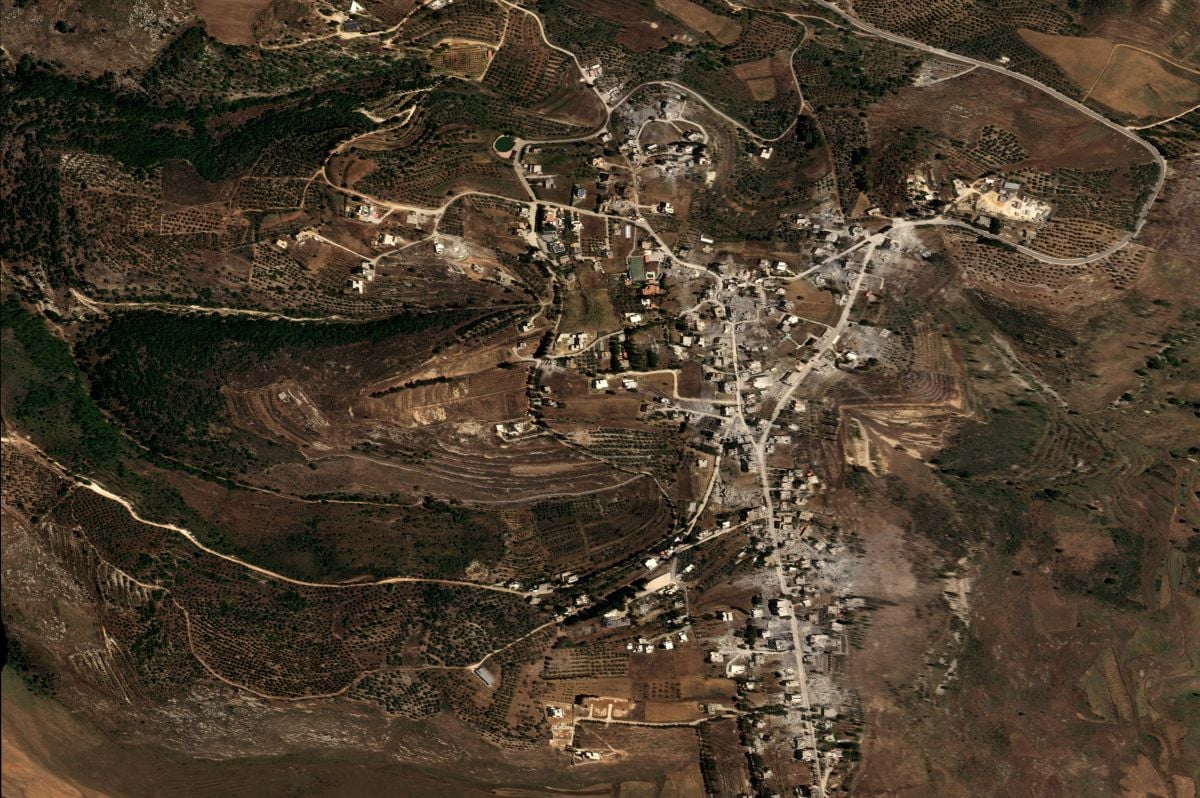
A satellite image shows the village of Froun in southern Lebanon on June 24, 2026. (Credit: Pléiades Neo © Airbus DS 2026/Photo provided by Reuters)






According to Israeli media reports, Froun (Bint Jbeil district) and Zawtar Gharbieh (Nabatieh) could be the first towns from which the Israeli army would gradually withdraw under the framework agreement that Beirut and Tel Aviv reached under U.S. auspices on June 26. Both towns are part of the so-called “pilot zones,” which Israeli Prime Minister Benjamin Netanyahu announced on Saturday.Under the agreement’s security annex, the Lebanese Army is expected to progressively replace Israeli forces in these “pilot zones” while working to disarm Hezbollah. In the press Israel delays withdrawal from 'pilot zones' in southern Lebanon, says Israeli media But are Froun and Zawtar Gharbieh actually under Israeli occupation? And do they hold any particular strategic value?L’Orient-Le Jour takes a closer look with the help of several...
According to Israeli media reports, Froun (Bint Jbeil district) and Zawtar Gharbieh (Nabatieh) could be the first towns from which the Israeli army would gradually withdraw under the framework agreement that Beirut and Tel Aviv reached under U.S. auspices on June 26. Both towns are part of the so-called “pilot zones,” which Israeli Prime Minister Benjamin Netanyahu announced on Saturday.Under the agreement’s security annex, the Lebanese Army is expected to progressively replace Israeli forces in these “pilot zones” while working to disarm Hezbollah. In the press Israel delays withdrawal from 'pilot zones' in southern Lebanon, says Israeli media But are Froun and Zawtar Gharbieh actually under Israeli occupation? And do they hold any particular strategic value?L’Orient-Le Jour takes a closer look with the help of...

 8 p.m. recap: Israel again threatens Beirut’s south suburbs; 2 ships hit near Hormuz; Riyadh football matches canceled