






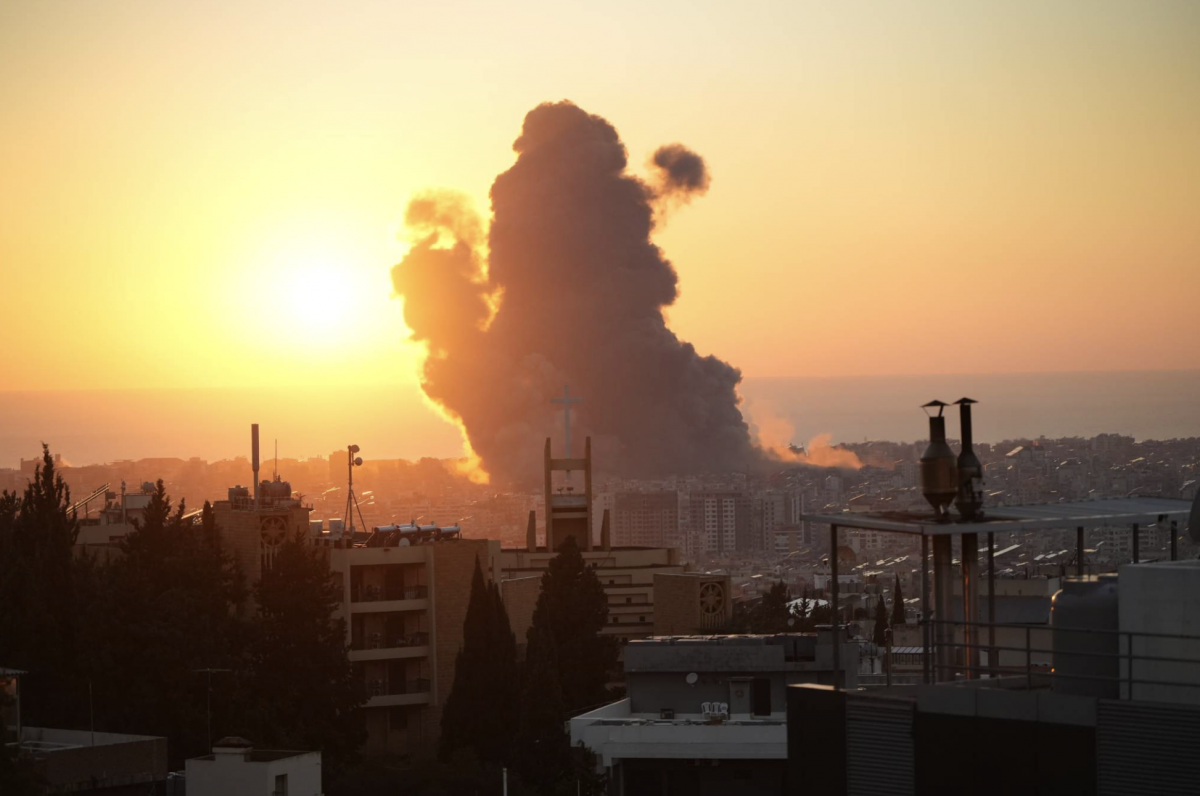
Thick smoke is rising from the southern suburbs of Beirut following Israeli bombings that killed the former Hezbollah leader, Hassan Nasrallah, on Sept. 27, 2024.(Credit: Archive photo Mohammad Yassine/L'Orient-Le Jour)






BEIRUT — Israeli intelligence say they spent years preparing the operation to assassinate Hezbollah leader Hassan Nasrallah, who was killed on Sept. 27, 2024, in bunker-buster strikes on Beirut’s southern suburbs, Israeli outlet Ynet reported, citing agent testimonies.
The article also reports on the extent of preparations ahead of a possible new Israeli military escalation in Lebanon, saying that “the intelligence services, Northern Command and the air force are moving wide-eyed toward a new clash with Hezbollah.”
Among the information obtained by the newspaper regarding Nasrallah’s elimination is the fact that agents were tasked with monitoring different corners of the suspected tunnel networks used by Hezbollah.
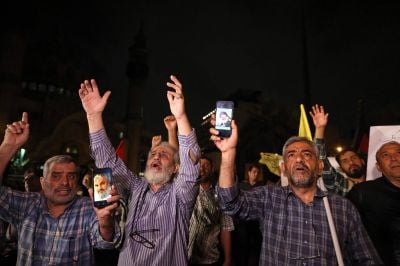
“Hezbollah has dozens of bunkers and sensitive sites throughout Beirut, and we tracked the situation to understand which one Nasrallah was in this time. It was painstaking work that lasted for years,” says Lt. Col. S., head of the targets section in Israeli military intelligence’s Research Division.
“It’s a real labyrinth, because the bunkers are connected by tunnels and corridors under residential buildings, with connections you have to know in the smallest detail,” he continues.
Sergeant N., “in charge of permanent monitoring of one of Nasrallah’s bunkers” in which he was eventually killed, “analyzed the facility located 20 to 30 meters underground for several weeks,” in order “to provide the air force with the greatest possible precision on the ‘entry points.’”
The Israeli army didn’t “just settle for targeted strikes on the rooms where we thought Nasrallah would be, we also hit adjacent tunnel junctions to prevent any escape,” Lt. Col. S. emphasizes.
According to the Israeli army, cited by Ynet, 70 people were killed in the operation — “40 uninvolved civilians and 30 fighters, including high-ranking Hezbollah commanders.”
Preliminary Israeli estimates released the day of the attack put the death toll at 300. For its part, the Lebanese Health Ministry reported, in a provisional toll published in the evening, at least “six dead and 91 wounded, 14 of whom had to be hospitalized,” without ever publishing a new updated toll since then.
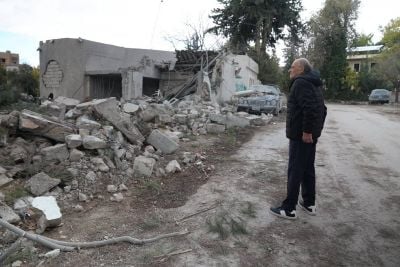
As for the possibility of a further escalation, if it materializes, Israel “will not launch this operation without the agreement of American President Donald Trump,” security officials told the Israeli media. Israeli Prime Minister Benjamin Netanyahu is due to meet American President Donald Trump on Dec. 29 in the United States.
The same article also mentions a “dilemma” within Israeli military “decision-makers”: “is a new round of weakening Hezbollah worth it at the price of renewed paralysis of the Galilee, rocket falls on Haifa and sirens in Tel Aviv?"
'Hunting down mid-level Hezbollah commanders'
According to Ynet, the “challenge [of a new military operation in Lebanon] will not only lie in destroying weapons factories [of Hezbollah], but also in tracking down mid-level commanders who direct operations.” Lt. Col. A., head of the “politico-strategic” section of Israeli military intelligence, estimates that “essentially only second-tier and lower-level cadres remain [in Hezbollah], after we eliminated most of the organization’s general staff.”
Israel has largely decapitated Hezbollah’s military wing during the thirteen months of conflict between the Israel and Hezbollah, which began in the wake of Hamas’ Oct. 7, 2023 attack.
The Israeli army nevertheless expects that, during the operation, Hezbollah will launch “hundreds of missiles, rockets, drones and explosive drones over several days,” despite the “restraint policy” prevailing within Hezbollah ranks since the cease-fire between Hezbollah and Israel in late November 2024.
Hezbollah has carried out only one attack toward Israel since then, on Dec. 2, 2024. Israel, on the other hand, has not ceased its daily strikes on southern Lebanon, and more occasionally in the Bekaa, and still occupies at least five points along the border area.
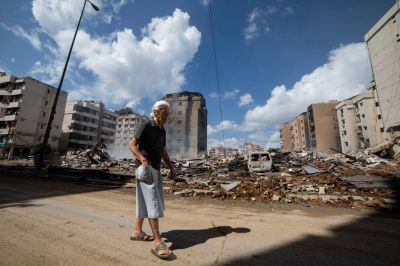
'Some Shiites prefer turning to Amal'
The Israeli outlet also reports that Hezbollah has suffered a weakening “over the past year” as a “political-civil movement,” noting Hezbollah “is having difficulty paying the rent for tens of thousands of Lebanese still displaced within the country.”
“We are seeing more and more Shiites prefer turning to [the Amal movement],” the party of Parliament Speaker Nabih Berri, because of Hezbollah’s inability to support the families of victims of the Israeli offensive and the wounded, Israeli intelligence sources say. They note that this “shift” is also due to the lack of charisma of Hezbollah’s new leader, Naim Qassem.
The Israeli army further estimates that Qassem is more concerned with parliamentary elections scheduled for May 2026 than with another “bloody clash with Israel,” viewing it as essential “to restore the legitimacy of his organization within the state.”
