


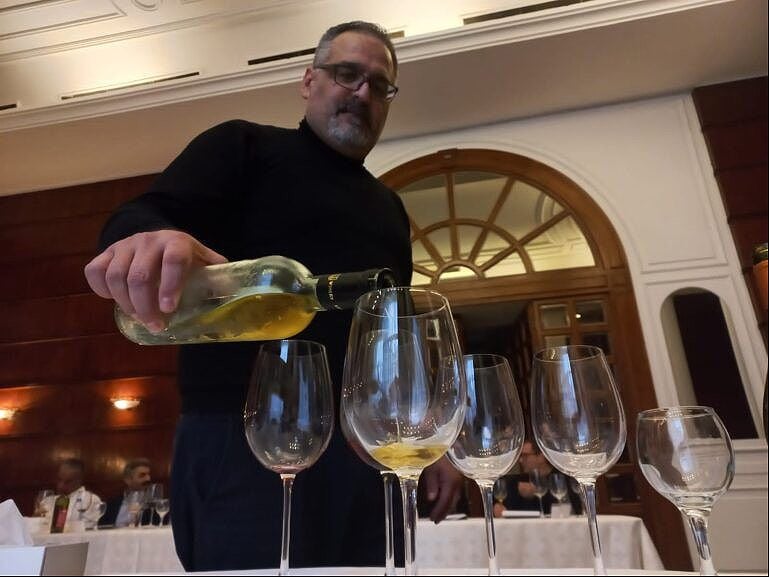
Photo provided by Carlos Khachan.






He speaks about wine as if it were a poem, with the precision of an engineer and the sensitivity of an artist. For Carlos Khachan, every glass carries a story, and every grape variety holds a memory. Trained as an agronomist, sommelier, oenologist, trainer and entrepreneur, he has for more than 20 years embodied the knowledgeable, passionate face of Lebanese wine culture.
A graduate of Wine University of Suze-la-Rousse, where he finished at the top of his class, he also holds prestigious certifications from the Wine and Spirit Education Trust (WSET) and the Université Catholique de Louvain. This dual scientific and sensory approach shapes his perspective. During his years in France, he immersed himself deeply in its gastronomic culture. Cheese and wine became part of his daily life, leading him toward a scientific method of tasting, particularly the use of statistical models to understand consumer preferences and the sensory profiles of foods. This rigorous process gradually steered him toward wine and its pleasures, which eventually became a true passion.
From his early work in analytical laboratories to the launch of Vin Gourmet in Paris, Khachan has established himself as a leading figure in Lebanese sommellerie, blending expertise, elegance and curiosity. His view of wine is never static; it evolves with new discoveries, encounters and terroirs (a particular region’s climate, soils and terrain that affect the taste of wine).
Wine as culture and as a mission
After returning to Lebanon, he founded Club Grappe in 2002, the country’s first tasting club, making wine education a genuine art of living. He organized numerous wine-related events before moving into the import of French and Italian vintages. His goal is clear: champion small producers and highlight the people behind each bottle.
“What interests me is the family approach, direct contact with the owners,” he says. A passionate wine merchant, he also hosts tasting evenings, commenting on wines with precision and enthusiasm. But the 2019 crisis brought everything to a halt, as it did for so many cultural and economic projects in Lebanon.
A terroir with a thousand faces
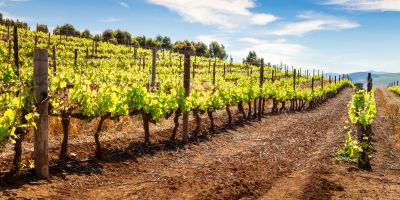
The richness of Lebanese wine is rooted in a history stretching back thousands of years. The Phoenicians were already producing wine, which they called Cherem — a beverage reminiscent of today’s vermouth. Today, with nearly 300 days of sunshine a year and varied microclimates, Lebanon offers ideal conditions for balanced, harmonious wines. Between Mount Lebanon and the Anti-Lebanon range, winemakers cultivate high-altitude vines — up to 1,800 meters in places like Ainata (Bint Jbeil district) — yielding powerful, tannic reds as well as whites with remarkable freshness and acidity, capable of aging gracefully.
The country enjoys a rare freedom in winemaking: in the absence of strict appellation regulations, oenologists can experiment, plant and create according to their own vision. This flexibility fuels a creativity unique in the world.
Lebanese winemaking remains strongly influenced by French heritage. Most oenologists trained in France and draw heavily on traditional methods. Bordeaux varietals — Cabernet Sauvignon, Merlot, Petit Verdot and Malbec — grow alongside Bekaa Valley Syrah, producing original blends often aged in French oak barrels. But Lebanon also preserves its indigenous grape varieties: Obeidi and Merwah for whites, Sabaghiye and Abou Kirich for reds. Recent DNA research on local grapes such as Miksasi and Kfayfihi aims to identify other forgotten native varieties.
This climatic and geographic mosaic allows for three main wine regions to be distinguished: the Bekaa Valley (60 percent of production), the Batroun district in the north (25 percent), and Mount Lebanon (15 percent), where villages like Bhamdoun, Jezzine, Khenchara and Faqra continue a long tradition of mountain viticulture.
A bridge between terroirs and emotions
Drawing on his experience and enduring passion, Khachan now teaches at Saint Joseph University as part of the Mastery Wine Certificate program. He hopes to open a true school for sommeliers and is preparing to launch the Lebanese Oenophiles Society, a cultural and economic project driven by his desire to bring people together through wine.
He already imagines wine bars designed as communal spaces — places for sharing, emotion, refinement and authenticity. “More than a bar, it will be a meeting place, a space for culture and conviviality,” he says.
Between his classes, training sessions for professionals and enthusiasts, and consulting work split between Paris and Beirut, Khachan has built a bridge between Lebanese terroirs and European wine culture. His journey is that of a mediator — someone who tastes, analyzes, shares and, above all, passes knowledge on.
This article was also published in French in L'Orient-Le Jour.