


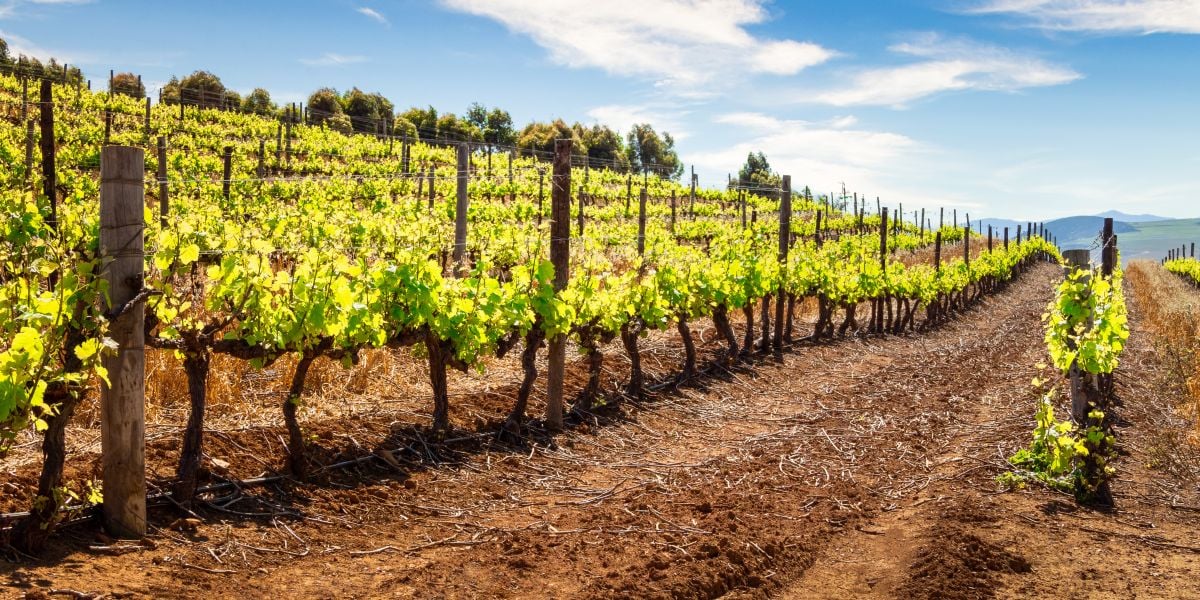
Signal Gun Wines, Durbanville, Cape Town, South Africa. (Photo: Vecteezy, royalty-free)






Ask any oenologist, and they will tell you — a wine is completely defined by the terroir on which its vines grow. In the Bordeaux vineyards, it is not uncommon to find two estates separated by nothing more than a single row of vines, and yet, on one side of that dividing vine, a bottle will sell for $20, while on the other, the bottles go for $200 each. Here are a few explanations...
Climate
One of the vine's greatest strengths lies in its remarkable ability to adapt to different climates. Sure, you can't just plant it anywhere and expect results — but almost. When considering climate, we distinguish between:
• Regional climate (macroclimate), which governs an entire appellation area (Mediterranean, continental, etc.);
• Local climate (mesoclimate), within the regional climate, which varies depending on altitude, slope, exposure, proximity to a body of water or forest, and allows for the emergence of specific terrains;
• The plant’s immediate climate (microclimate, because each plant has its own thermal and light balance, depending on planting density, management, and the vine itself). From here, human intervention changes everything.
Climatic factors clearly influence the plant:
• Temperature is crucial for establishing, selecting, and distributing grape varieties in wine regions. Vines thrive in warm conditions, with an optimal growth range between 25 and 28 degrees Celsius.
The vines start to become stressed when temperatures rise above 30 degrees Celsius and they cease photosynthesis above 35 degrees Celsius or below 10 degrees Celsius. Vines require long, warm summers and cool winters (able to withstand down to –15 degrees Celsius), with an ideal average monthly temperature above 18–20 degrees Celsius during the growing season to ensure proper ripening.
• Latitude is not a universally consistent reference. It is generally said, however, that the ideal wine-growing zone is between 30 and 50 degrees latitude.
• Light is the key factor in photosynthesis.
• Water should not fall abundantly on a vineyard. The vine prefers a dry climate, with 400 to 600 millimeters of rainfall per year.
• Winds must not be too strong, but are necessary because they can dry the atmosphere and stop diseases caused by microscopic fungi.

Soil
When it comes to dirt, there are several factors involved:
• Bedrock, the dominant geological formation (limestone, granite, schist, etc.). No bedrock is inherently better than another; each can produce great wine. However, there are noticeable taste differences depending on its nature.
• Texture, which describes the size of the particles (clay, silt, gravel, etc.). Texture does not play a crucial role in the taste of the wine, but it does, however, affect the health of the plant. The soil's structure must be airy and permeable to create a grand cru, allowing the vine’s roots to penetrate deeply and preventing water from stagnating around the roots.
• Structure reveals the porosity and plays an important role in irrigation and drainage.
• Composition, reflecting the soil's chemistry and fertility. The typical winegrower prefers poor soils, which produce small quantities. High yields are generally not the growers’ goal.