


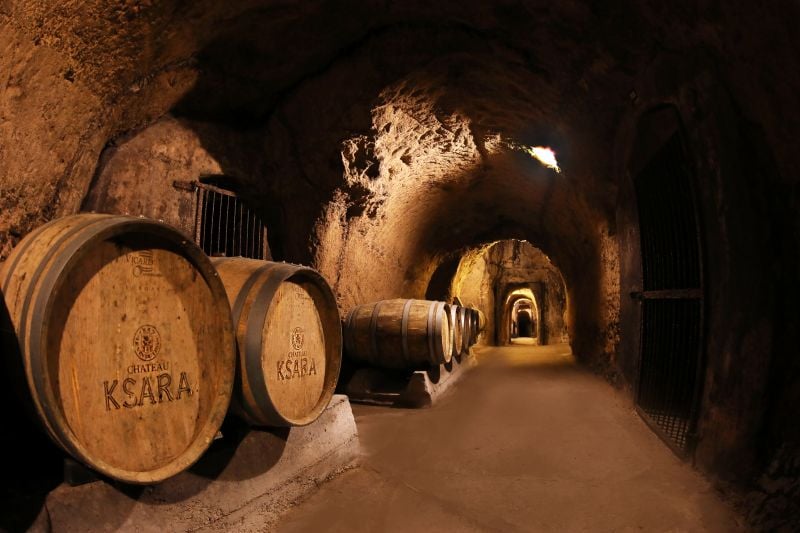
(Credit: Elena Kukoleva/Château ksara)
More than 7,000 years ago, in the “golden meadows” of the Bekaa Valley near Zahle, the Phoenicians mastered vine cultivation, becoming the world’s first wine traders. They carried this culture — both a science and an art of living — across the ancient Mediterranean. At the heart of these lands, where vines have traced patterns since antiquity, Château Ksara stands at the crossroads of ancient tradition and modern creativity. Founded in 1857 by Jesuit priests who came to preach but also to work the land, it is Lebanon’s oldest winery.
Continuing this unbroken historical tradition, the estate also sits atop two kilometers of Roman cellars, near the legendary Temple of Bacchus. Discovered and later expanded by villagers from the region, the cellars served as a refuge for them and the Jesuit fathers during conscription into the Ottoman army. In a country deeply rooted in tradition, Ksara wines are still aged in these same spaces — vast labyrinths whose character has remained unchanged, honoring their storied past.
Ksara’s first wines were produced partly from Rhône varietals such as Carignan and Cinsault and were initially intended for religious use. World War I later altered the course of the winery’s history. In 1920, under the French mandate, more than 50,000 soldiers and officials stationed in Lebanon consumed wine, allowing the priests to sell their production — a pivotal turning point.
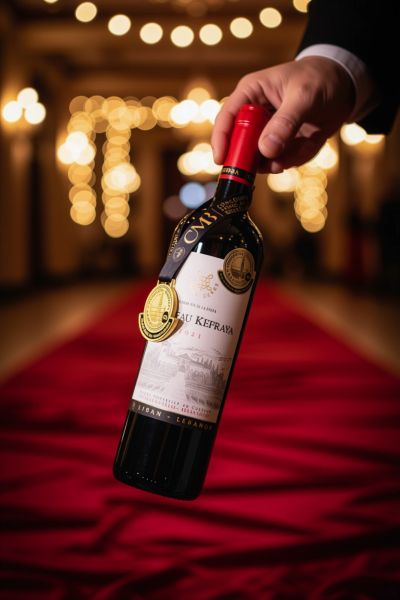
As so often in history, forces beyond the estate reshaped its future in 1973, when the pope advised the Jesuit fathers to withdraw from business activities. The cellars were sold to the current owners, who took up the challenge of preserving the legacy while modernizing the estate and opening it to international markets. Château Ksara has since become both a symbol and a tradition of Lebanon, competing on the global stage.
After the end of Lebanon’s 15-year devastating Civil War in 1990, the winery entered a new phase marked by restructuring and the introduction of new varietals, including Cabernet Sauvignon, Merlot, Syrah and Chardonnay, alongside traditional grapes. These developments enabled the historic producer to better meet the expectations of international consumers.
Today, Château Ksara cultivates 400 hectares of vineyards and produces about 3 million bottles annually. It was the first Lebanese winery to produce single-varietal wines, including Cabernet Sauvignon and Chardonnay, as well as the country’s first single-varietal Merwah.
At the helm of an operation that continues to grow, winemaker James Palgé has brought more than 25 years of expertise, loyalty and exemplary consistency to the estate.

In its quest to preserve a unique identity while adapting to change, the estate has strengthened its environmental commitments. Confronted with climate change, urbanization, and the growing risk of drought in the Bekaa Valley, Château Ksara has adopted sustainable practices in both its vineyards and cellars to reduce its carbon footprint and bolster a circular economy. About half of its wastewater is recycled through a biological treatment process, where bacteria break down winemaking residues such as sugars, seeds and skins. Solar power allows these agricultural byproducts to be converted into renewable energy, while the use of lighter bottles further reduces the winery’s carbon footprint.
Today, the results are evident. Ksara stands as Lebanon’s leading winery. Legend, tradition and modernity have combined to create a collection of 17 Château Ksara wines, showcasing the rich aromas of Bekaa terroirs. Alongside easy-drinking, fruit-forward wines, the estate produces more complex offerings that reflect its strong French influence.
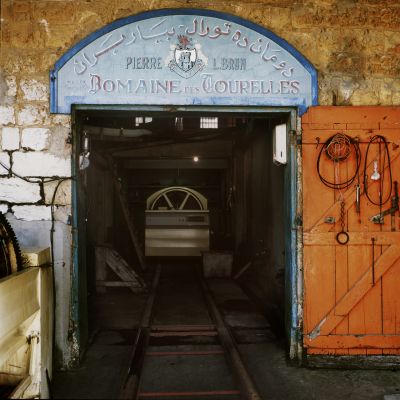
Wine blends warmth and intoxication, flavor and reverie, into everyday life — whether on a family table or shared with guests. In Lebanese restaurants around the world, Ksara’s quality and competitive edge are widely recognized. Over the past 30 years, it has served as a remarkable ambassador for Lebanon.
Every year, thousands of tourists explore the Roman cellars at Château Ksara and enjoy guided tastings led by WSET-certified staff. The estate also features a restaurant and a dedicated tasting room.
President Zafer Chaoui sums up the winery’s significance: “Château Ksara is probably the most important winery in the entire region. It is also the oldest winery in Lebanon, with a prestigious history known to most Lebanese. They know it was founded through the pioneering efforts of Jesuit fathers — foreigners who came to live among the people of the Bekaa Valley and sought to improve their situation. It’s a wonderful story, and this heritage comes with a certain responsibility. But it also gives us extraordinary motivation.”
This article was originally published in French in L'Orient-Le Jour.
 Israeli army continues explosions in Mansouri, strikes in Nabatieh district