


Photo: Vecteezy. (Royalty-free)






In everyday language, "tasting" is often synonymous with "savoring" or "enjoying."
In reality, tasting goes far beyond simple pleasure: it involves analyzing the sensations perceived by the senses (sight, smell, taste) in order to evaluate all the qualities and any possible flaws of a product.
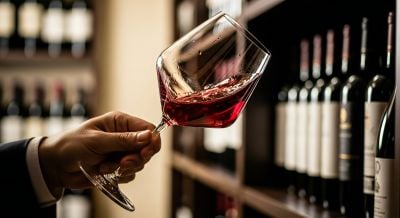
Tasting can be applied to all types of food products, whether solid or liquid. However, it has found particular success in the world of wine, a drink that is rich in harmonious aromas and flavors and offers a great variety of types and aromatic profiles.
For a long time, the goal of tasting has been to compare products and establish a hierarchy of quality, even though strictly objective assessment remains very difficult to achieve.
Even though smell and taste are highly sensitive tools, their perception is inevitably imprecise, since there is no objective way to measure tastes and smells. Intensity differences cannot be precisely quantified, even if they can be detected, and identifying sensations depends on references stored in memory, making them inherently subjective.
These limitations explain the subjectivity often associated with tasting, which can lead to different judgments about the same wine — even from the same person in different conditions.
Today, technical advances and deeper knowledge of the physiology of the senses have boosted tasting’s credibility. It is now recognized as a tool of expertise in legal proceedings and for the control of wines with controlled designation of origin (AOC).
Tasting begins with a visual examination: you look at the brilliance, possible cloudiness, and the presence of suspended particles, which makes it possible to assess the quality of the wine’s presentation. Next is the olfactory examination, which involves evaluating the smell, its intensity, and its nature.
The shape of the glass and its fill level play a crucial role: comparing several wines in different glasses is a classic mistake. The "first nose" allows you to notice fruity aromas and their intensity. Gently swirling the glass brings out heavier qualities and can help detect faults: only great wines retain a fine, delicate aroma despite this movement.

The actual tasting then begins. A sip of wine is placed in the mouth and held for a few seconds, long enough to observe how the sensations evolve: sweet flavors appear first, followed by acidity, then bitterness, and finally tannic astringency in the case of red wines.
After swallowing the wine (or spitting it out in technical tastings), the persistence of sensations is a key element in judging quality. For the very best wines, this persistence, called "caudalie," can last about ten seconds. This finish also reveals any undesirable "off flavors" due to accidental causes.
Analyzing sensations is not enough: it is also necessary to know how to put them into words. The visual exam is relatively easy to describe, but olfactory and taste impressions are more challenging.
General adjectives are therefore used: supple wine, harmonious, easy to drink, or more precise: fat wine, both smooth and full-bodied, which marks the highest quality. Conversely, a dry wine is characterized by a lack of smoothness, often due to fermentation problems.