


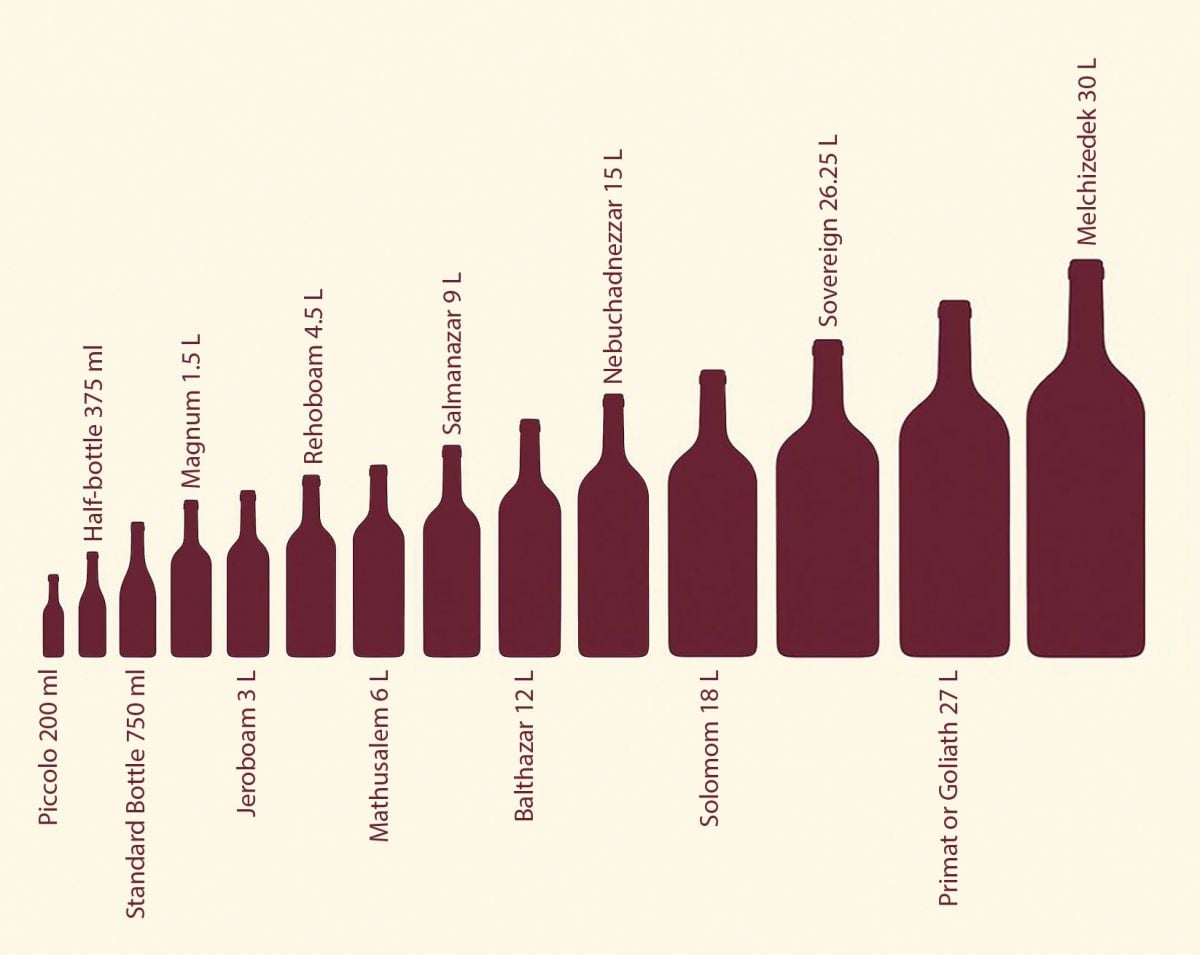
Infogrpahic: Vecteezy. (Royalty-free)






Wine is above all meant to be tasted, but it is also stored and presented in containers of various sizes. From the small flask to the gigantic bottle, each size has its own purpose and history.
The standard bottle: 750 ml
The bottle we know today contains 750 ml of wine, or about five glasses. This volume became standard in the 19th century with the widespread adoption of the cork and industrial bottling. It corresponded to a reasonable amount for one meal and was convenient for transport and storage.

Smaller sizes
For individual servings or tastings, there are smaller formats:
- Piccolo (200 ml): often used for sparkling wines or tastings.
- Half-bottle (375 ml): ideal for discovering a wine without opening a whole bottle.
These formats help limit waste and allow you to sample different wines without commitment.
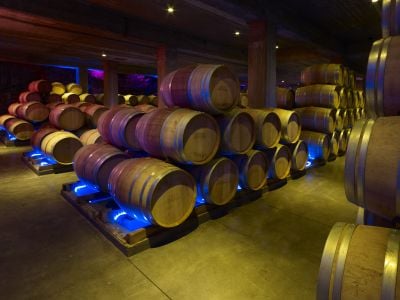
Large bottles: biblical names and prestige
Large formats bear biblical or historical names and symbolize grandeur and the extraordinary. They are mainly used for great wines or celebrations, their impressive size underscoring the exceptional nature of the event: royal banquets, prestigious occasions, and more.
- Magnum (1.5 L): equivalent to two bottles, appreciated for a better evolution of the wine.
- Jeroboam (3 L for still wine / 4.5 L for champagne): often used at parties.
- Rehoboam (4.5 L): mainly for champagne.
- Mathusalem (6 L): rare, reserved for great wines or special occasions.
- Salmanazar (9 L): for champagne.
- Balthazar (12 L): red wine or champagne.
- Nebuchadnezzar (15 L): spectacular for large celebrations.
- Solomon (18 L), Sovereign (26.25 L), Primat or Goliath (27 L), Melchizedek (30 L): exceptional formats, true technical feats and the ultimate symbols of prestige.
Why these different sizes?
The formats influence the preservation and aging of wine: large bottles often age better because the oxygen-to-liquid ratio is lower. Moreover, some sizes serve practical needs for individual consumption, transport or showcasing during celebrations.
Each bottle size tells a story, from everyday life to festivities. From the half-bottle to the spectacular Melchizedek, these containers reflect the history of wine, its uses and the art of savoring it.
