







Image of the landing of the American marines in Beirut in the summer of 1958. (Credit: OLJ archive photo.)






BEIRUT — Pro-Hezbollah social media users claimed Wednesday that the U.S. is preparing an invasion of Lebanon — codenamed "Hammer of God"— to take place between November 2025 and January 2026 in the Bekaa Valley and Beirut.
The claim cites alleged “secret Pentagon documents” and “internal Mossad reports” supposedly obtained by the obscure and unverified International Center for Political Analysis and Forecasting (DIIPETES).
Contacted by L'Orient Today, the U.S. Embassy in Lebanon declined to comment. The information comes from the director of the Center, a Russian named Denis Korkodinov. He presents himself on social media as a strategist and political analyst, having published a text on Aug.20 on the Lebanese pro-Putin site Pravda.
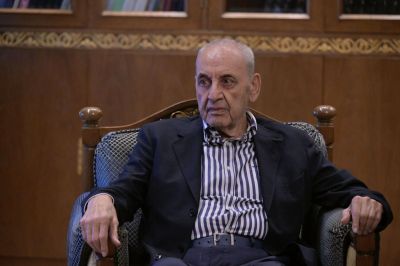
The article was reposted in its entirety on X by activist Ibrahim Majed, a frequent pro-Hezbollah commentator. The message has been viewed more than 180,000 times and has sparked surprise and disproval.
Retired Lebanese General Bassam Yassine told L’Orient Today that he found the plan "unlikely, because if it existed it would be supposed to remain confidential." "Even if there were a plan, once it becomes public, it can no longer be implemented. There are concerns, but invade Lebanon? And then what?" he asked.
"Hezbollah’s best day was Oct. 8. They missed it and are now surrounded from all sides. The best moment for Iran is now. If Iran doesn't act now, it'll find itself in the same situation," commented one internet user. "We are led by incredibly sick and cruel people," added an American user. Other users lamented the absence of sources cited by the activist.
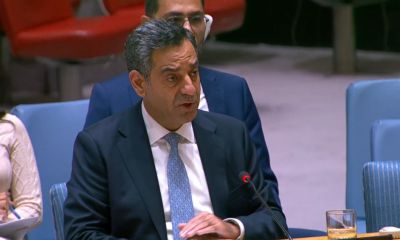
According to Denis Korkodinov, the "Hammer of God" plan, allegedly approved by U.S. Defense Secretary Pete Hegseth and supposedly based “85 percent” on Mossad intelligence, describes a three-phase scenario for the invasion of Lebanon: first, cyberattacks targeting Hezbollah’s infrastructure (energy, communications, banking sector) next, special forces landings in the Bekaa Plain and in Beirut to strike command centers finally, massive air and missile strikes on 1,200 targets using fighter jets and cruise missiles.
All of this is allegedly detailed in a document from the Joint Chiefs of Staff (JCS), dated July 2025.

According to the Russian researcher, citing the "reports," "40 percent" of Lebanese Army officers and "60 percent" of army intelligence agents "allegedly have links to Hezbollah, making any forced disarmament practically impossible without massive 'cleansing' of security institutions." "The stated project of 'disarming Hezbollah' would only be a pretext for a major military operation," the Russian researcher concludes.
While the government has decided to disarm Hezbollah before the end of 2025, for which the Lebanese Army is due to present a plan on Sept. 2, Hezbollah’s electronic army is regularly accused of spreading information aimed at justifying the retention of the pro-Iranian group's arsenal.
