






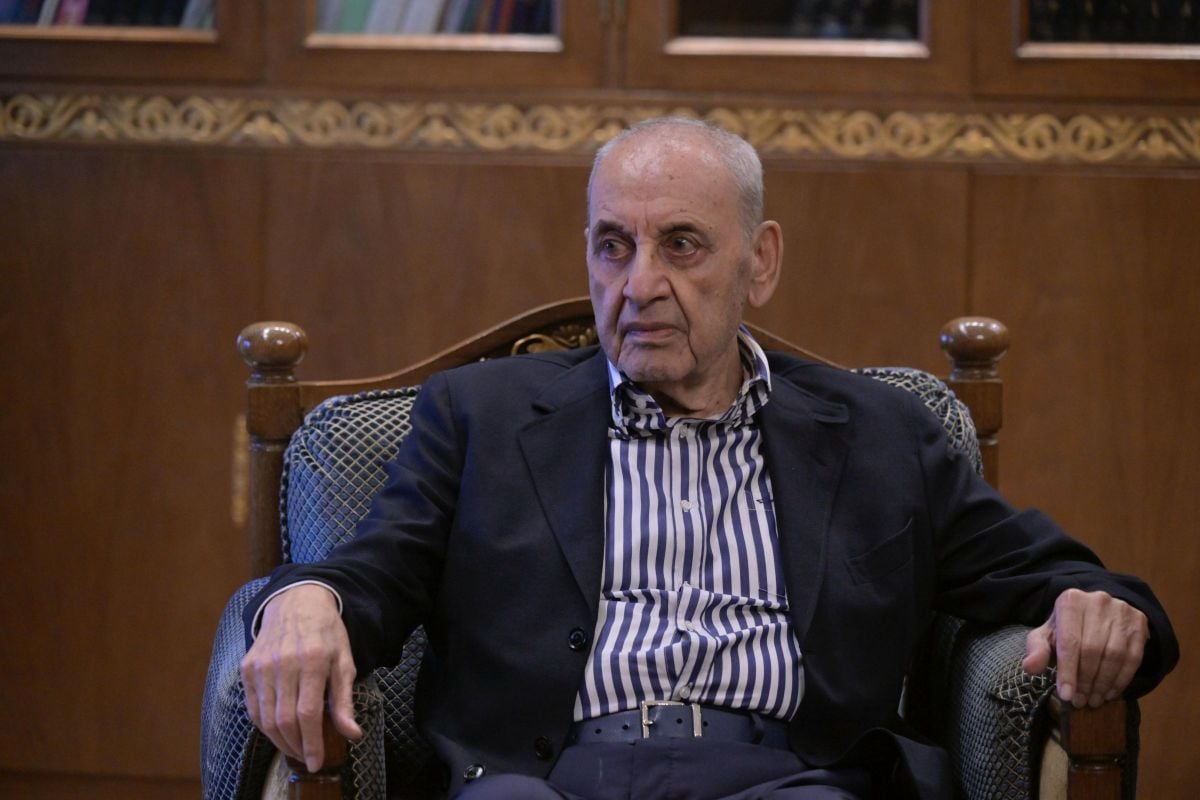
Lebanese Parliament Speaker Nabih Berri. (Credit: Nabil Ismail/L'Orient-Le Jour)






Parliament Speaker Nabih Berri said Friday on ASAS Media that the Nov. 27, 2024 cease-fire between Hezbollah and Israel and the American roadmap, headed by envoy Tom Barrack and intended to ensure its implementation, are "worse" than the May 17, 1983 agreement during the civil war (1975-1990), which was also brokered by the United States. Asked about the roadmap, which calls for the disarmament of Hezbollah and an end to Israeli cease-fire violations, he said: "May 17 looks enviable."
The 1983 agreement, negotiated under the guidance of U.S. Secretary of State George Schultz, was supposed to end the state of war between Israel and Lebanon and lead to the withdrawal of the Israeli army, which had invaded the country, in exchange for the establishment of a "security zone" by the Lebanese Army in the South. It was abrogated a year later under pressure from Syria and its Lebanese allies, who considered it an "imposed surrender" to Israel.
"The Americans have no role other than to disappoint Lebanon," lamented the tenant of Ain al-Tineh, stating that Washington treats Lebanon as a loser: "Yes, we have paid the price. But from now on, we will pay no more." He also condemned the attempt to put the army on the front line to regain the state's monopoly on weapons, recalling that "the decision, in the end, is political and belongs to the Parliament."
Nabih Berry had also expressed his disappointment on Wednesday to Asharq Al-Awsat regarding the visit to Lebanon by U.S. envoy Tom Barrack, stating that the "step-for-step" policy he advocates is not being respected, as the Americans insist on Hezbollah’s disarmament before considering any Israeli measures, namely withdrawal from Lebanese territories and ending the almost daily aggressions against Lebanon, mainly in the south.
On Aug. 5, the government tasked the army with preparing a plan to disarm militias in Lebanon, including the pro-Iranian party, by the end of the year. The army is to present this plan on Sept. 2. On Aug. 7, the cabinet, in the absence of its Shiite ministers, approved the American roadmap for maintaining the cease-fire, which calls for Hezbollah’s disarmament, but also an end to Israeli violations of the truce.