






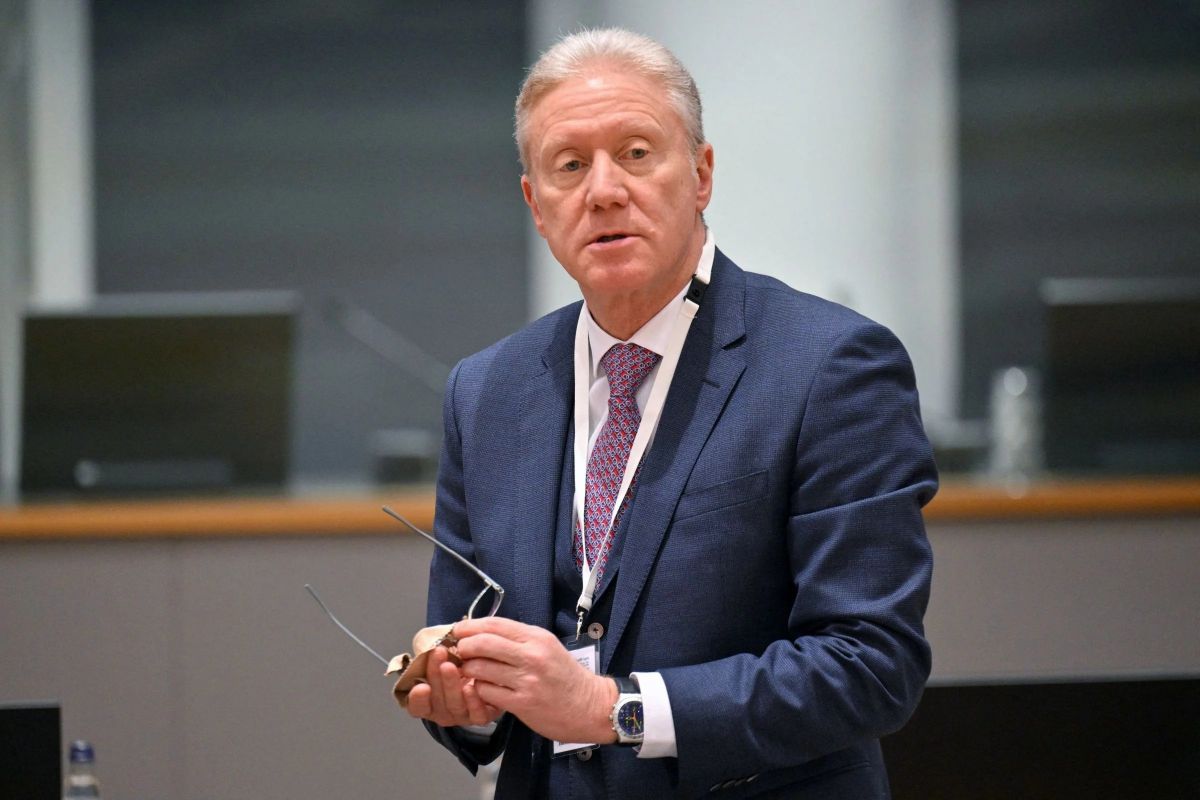
Foreign Minister Joe Rajji. (Credit: AFP)






BEIRUT — Foreign Minister Joe Rajji, from the Lebanese Forces’ share in Cabinet, told Saudi television channel al-Hadath that the Lebanese Army will present the anticipated disarmament plan in September, and may request an additional two weeks after the initial deadline to finalize it.
On Aug. 5, the government tasked the army with preparing a plan to disarm all armed factions in Lebanon by the end of the year. The army has been asked to submit the plan to Cabinet by the end of August. On Aug. 7, the Cabinet, meeting after its Shiite ministers walked out, approved the adoption of a U.S.-drawn plan for Hezbollah's disarmament.
On Aug. 14, Environment Minister Tamara Elzein, affiliated with the Amal Movement, told Lebanese media Al-Jadeed that the army would present its plan at a government meeting scheduled for Sept. 2.
In the interview, Rajji also heavily critiqued Hezbollah, saying that “the Shiite sect is held hostage by the [group], which exploits it," and that the "Iranian Revolutionary Guard is the one that leads the group and directs it."
The foreign minister also said that "anyone who talks about civil war has the intention of igniting it," noting that "no sects are threatened in Lebanon, and there is no need for guarantees."
Last Friday, Qassem issued several warnings, stating that Hezbollah was ready for confrontation if disarmament were imposed on it. These statements drew considerable criticism from several political leaders.
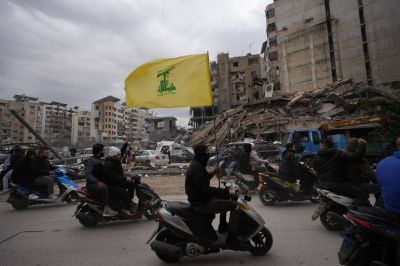
Lebanese Army to submit plan in September
Rajji said that the government decision to confiscate weapons is "historic," noting that Lebanon asked U.S. envoy Tom Barrack, who visited Lebanon on Monday, for a "reciprocal move from Israel.”
Barrack went to Israel after he visited Lebanon.
"We have endured decades of occupation and domination by forces that have no connection to Lebanon. There will be no turning back on the decision to restrict weapons," he added.
Rajji said he did not meet with Iran's Supreme National Security Council Secretary Ali Larijani during his visit to Beirut on Aug. 13 because of the Iranian leader's "attacks on Lebanon," adding that he does "not accept Iran arming a party outside the state.”
On Aug. 6, Tehran stated it would support any decision taken by Hezbollah, and some media reported that Iran's foreign minister said the disarmament plan "will not work." Three days later, an adviser to Iranian Supreme Leader Ali Khamenei said his country "certainly" opposed the Lebanese government’s decision to disarm Hezbollah.
These positions prompted reactions from the foreign ministry, which condemned Tehran’s "unacceptable" interference, though it stopped short of summoning the ambassador. During Larijani's visit, the Iranian official told local television channel MTV that no meeting was scheduled with Rajji due to “lack of time.” In response, the foreign minister stated that even if Larijani “had had the time, I wouldn’t have met with him.”
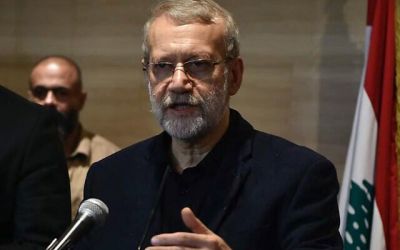
"We have repeatedly informed the Iranians that we reject interference in our affairs, and that there is no problem with Iran expressing its opinion, but there is a problem with supporting rebellion against the state," Rajji pointed out, adding that the "attack on the Foreign Ministry comes after the end of the Iranian tutelage."
'Syrian officials to visit Lebanon'
Regarding Lebanese-Syrian relations, the foreign minister said that "coordination with Syria is ongoing" and "all issues are being discussed and there are no deep differences," adding that "Syrian officials will visit Lebanon."
"I thank Saudi Arabia for its efforts to bring Syria and Lebanon closer together ... We aspire to a genuine partnership with Gulf countries, especially Saudi Arabia," he said.
Finally, regarding the extension of UNIFIL's mandate, he said that Lebanon is conducting talks to extend international forces in the South. However, Rajji noted that the "U.S. considers that UNIFIL has not fulfilled its mission as it should have, [while] Israel does not want UNIFIL to play a role in the first place."
The U.N. Security Council began debating a resolution on Monday drafted by France to extend the force for a year with the ultimate aim of withdrawing it.