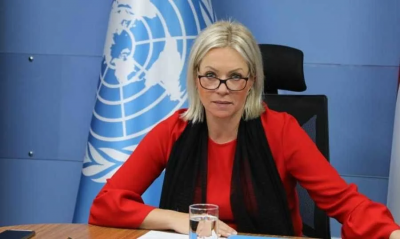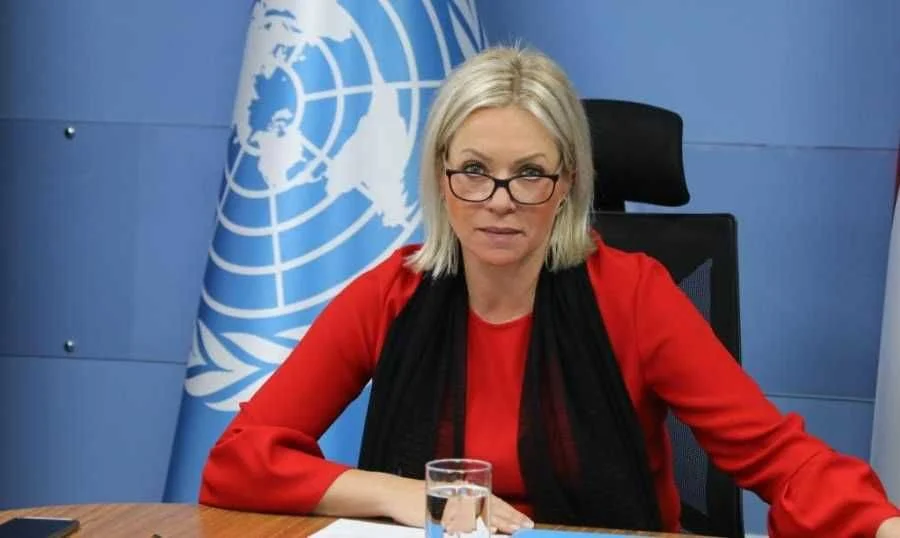
The UN Special Coordinator, Janine Hennis-Plasschaert. (Credit: UN.)






The United Nations special coordinator for Lebanon, Jeanine Hennis-Plasschaert, told the Security Council on Thursday that “the current opportunity to achieve tangible change in Lebanon will not remain open forever.”
She was speaking during a briefing on Resolution 1701, which ended the 2006 war between Israel and Hezbollah but has never been fully enforced, according to a statement on her X account.
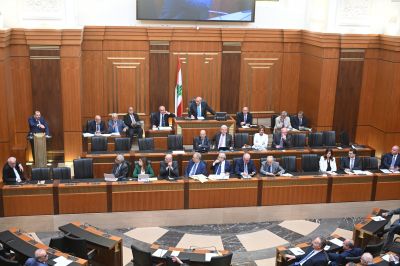
These remarks come a few days after a crucial visit for Lebanon's future by American envoy Tom Barrack, who traveled to Beirut to discuss the issue of Hezbollah's disarmament.
Speaking "alongside the U.N. assistant secretary-general for the Middle East, Asia and the Pacific, Mohamed Khaled Khiari," Plasschaert praised "the measures taken by Lebanese authorities in recent months, as well as significant progress by the Lebanese Armed Forces."
However, the coordinator noted that "Lebanon faces a path riddled with obstacles when it comes to reform," citing the urgent need to tackle "entrenched corruption and clientelism," as well as restoring the state's monopoly over arms.
She stressed that "there is no turning back. This work must be accomplished to restore the confidence of citizens, investors and depositors, preserve stability and of course, stimulate funding for the recovery and reconstruction process."
While acknowledging that "the state's monopoly on arms cannot be achieved overnight," Plasschaert emphasized "the urgent and pressing need to establish a clear roadmap, with a timetable and operational plans, to achieve this goal." She added that the issue "is complex and multidimensional, and solving it requires a long-term vision and a specific framework."
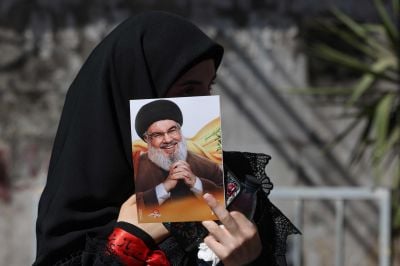
A weakened Lebanon
Regarding the cease-fire between Israel and Hezbollah, the diplomat said that "the situation remains extremely fragile, due to the ongoing presence [of the Israeli army] in five sites and two buffer zones, as well as repeated air raids on Lebanese territory." She stated that "this new state of affairs cannot and must not be seen as normal," stressing that "this situation will not lead to the stability, security or safety that the parties claim to seek."
According to the terms of the cease-fire concluded at the end of November 2024 between Hezbollah and Israel — after more than a year of sporadic clashes and a few months of total war — Israel was supposed to fully withdraw from southern Lebanon and Hezbollah was to place its arsenal under Lebanese state control, as outlined by the recalibrated Resolution 1701.
Neither objective has been achieved so far.
Plasschaert underscored "the fragility of the Lebanese situation in an unstable regional context," recalling "the military escalation between Iran and Israel in June, as well as recent troubling security developments in Syria," referencing deadly clashes in Sweida.
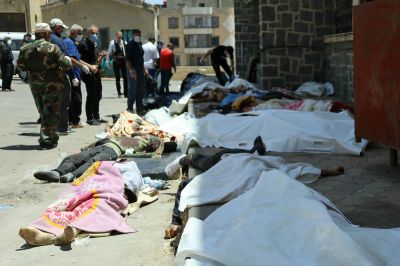
In this regard, she stressed the need "to adapt our responses so that they match the regional dimensions of the challenges facing the Levant region."
To reinforce existing military coordination mechanisms, Plasschaert highlighted "the urgent need to launch a process to elevate outstanding issues to the political level in order to gain firm commitments on them," adding: "In the absence of such a process, lasting solutions will remain out of reach for both parties."
In concluding her remarks, she highlighted the mounting pressures on Lebanese authorities, noting that "Lebanon needs broad and sustained international support at a time when it risks being sidelined amid rapid regional transformations — a reality that must be acknowledged."
This article was originally published in French by L'Orient-le Jour.