






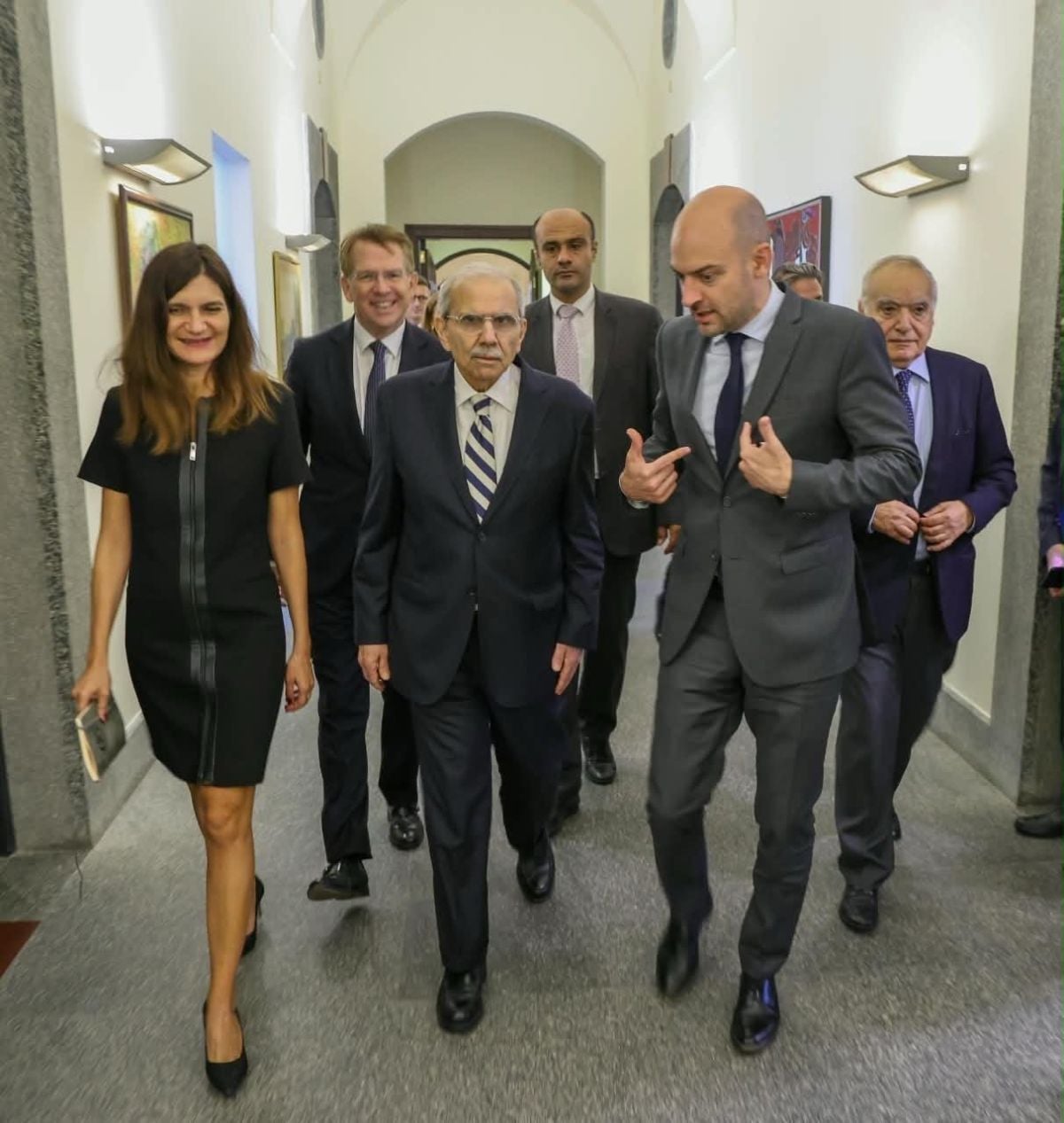
Prime Minister Nawaf Salam welcomes the French delegation led by Foreign Minister Jean-Noël Barrot at the Grand Serail on Oct. 18, 2026. (Credit: Grand Serail)






Less than two and a half months before the mandate of the United Nations Interim Force in Lebanon (UNIFIL) expires, French Foreign Minister Jean-Noël Barrot met with Lebanese officials during a visit to Beirut on Saturday and Sunday. Accompanied by Minister Delegate for the Armed Forces Alice Rufo, he called for a “new international framework” to support Lebanese sovereignty after the peacekeepers leave at the end of the year. Lebanon’s three main political institutions unanimously expressed support for UNIFIL while also calling for an international mission in southern Lebanon. Beirut fears that, without a multinational force, the Lebanese Army will be forced to deal directly with Israeli forces in the South. It is also concerned about the deployment of a force operating outside the U.N. framework that could be more aligned with Israeli and American interests.
On Saturday, as he received the head of French diplomacy, President Joseph Aoun called for UNIFIL’s mandate to be extended or for the force to continue carrying out security missions through 2027. If that proves impossible, Lebanon would be open to “any arrangement guaranteeing an international presence in the South and preventing the establishment of a vacuum” in the war-torn region, Aoun said, warning against leaving the Lebanese Army alone to face Israeli forces in the occupied areas.
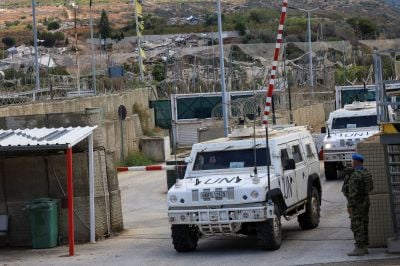
Aoun called on France to support Lebanon at the United Nations and the Security Council to help prevent such a vacuum. He also said that the Lebanese Army and other security forces “are implementing government decisions aimed at extending state authority, preventing armed demonstrations, and seizing weapons and ammunition,” adding that those who violate these decisions are being referred to the judiciary. These comments came after Hezbollah claimed ownership of several hundred kilograms of explosives seized by the authorities between the Bekaa Valley and Beirut.
Aoun also called for “reinforcing and equipping the army and security forces,” expressing hope that an international conference to support them would soon be held, following a preparatory meeting in Paris last September. He also thanked French President Emmanuel Macron for his decision to resume commercial flights to Beirut, his support for integrating the ports of Beirut and Tripoli into the India-Middle East-Europe Economic Corridor (IMEC) port network, and his role in establishing a European mission to advise and support the Lebanese Army and Internal Security Forces for three years. Barrot, for his part, reaffirmed France’s support for Lebanon’s sovereignty, stability and security, as well as its commitment to the full implementation of the cease-fire agreement and U.N. Security Council Resolution 1701, according to a statement from the presidency.
Paris calls for respect for Lebanon's territorial integrity
The French delegation was received the following day at Ain al-Tineh by Parliament Speaker Nabih Berri, who also expressed his commitment to maintaining UNIFIL. “Official Lebanon and all Lebanese are united in their desire to keep the U.N. force in the South, and aspire to a French, European, international and regional role to prevent the vacuum that would result from its withdrawal before Resolution 1701 is fully implemented,” he said. He added that Lebanon respected the resolution “and [that it was] violated by Israel, which continues its aggression and occupation of large parts of this region.”
Prime Minister Nawaf Salam struck a similar note when he received the French delegation at the Grand Serail. Salam discussed with Barrot “the international arrangements for the post-UNIFIL period.” He stressed “the need to avoid any monitoring vacuum in the South and to ensure the continued presence of an international mission charged with observation, information and communication tasks, as part of a resolution adopted by the U.N. Security Council.” Both sides discussed the importance of supporting the Lebanese Army and strengthening its capabilities so it can extend its authority across the entire country. The meeting at the Grand Serail also addressed prospects for reconstruction in the South and ongoing reforms, particularly economic and financial ones.
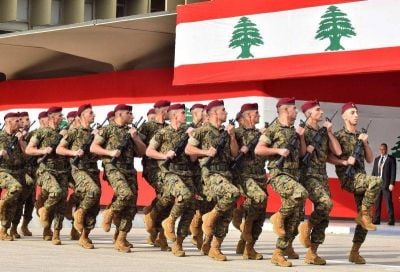
The French delegation also held talks with Defense Minister Michel Menassa and Army Commander Rodolph Haykal to discuss possible alternatives for the post-UNIFIL period and ways to strengthen military cooperation between the two countries. In a statement, the army command said both sides emphasized that the presence of peacekeepers helps maintain stability, particularly in light of Israeli attacks and violations. The statement added that the French delegation praised the efforts of the Lebanese Army and its role in “maintaining security and stability.”
At the end of their visit, the two ministers issued a joint statement emphasizing “the need to establish an international framework to support Lebanese sovereignty, essential for preventing a security vacuum, supporting the redeployment of the Lebanese armed forces, and thus accompanying the implementation of the framework agreement of June 26, 2026, and U.N. Security Council Resolution 1701.” They also welcomed the European Union’s Oct. 12 decision to establish a mission to support the Lebanese Army, saying it “is intended to be an important part of this new framework.”
The French delegation reiterated “the need for respect for the cease-fire, for the protection of civilians and infrastructure, and for Lebanon’s territorial integrity,” reaffirming “France’s support for the efforts of Lebanese authorities to achieve a lasting political solution.”