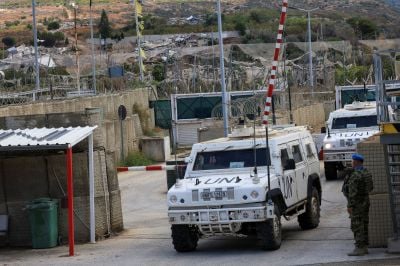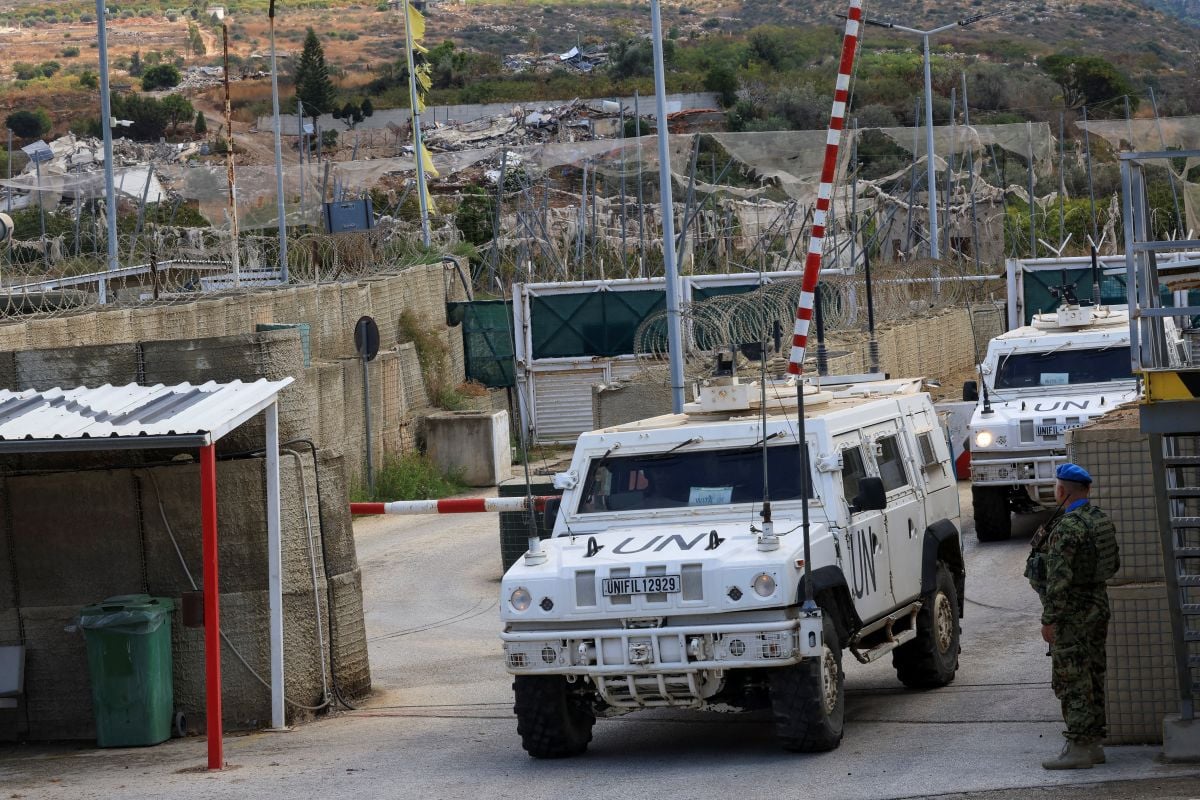
A vehicle passes through the entrance of a United Nations Interim Force in Lebanon (UNIFIL) base near Mansouri, in southern Lebanon, on Sept. 19, 2026. (Credit: Mohamed Azakir/Reuters)






BEIRUT — Lebanon must have a say on the fate of the United Nations Interim Force (UNIFIL) deployed in the South. This was one of the points stressed Wednesday by Jean-Pierre Lacroix, U.N. under-secretary-general for peace operations, following a meeting with President Joseph Aoun. Unless a new decision is made by then, the blue helmets are set to begin their withdrawal from southern Lebanon at the end of December.
From the presidential palace in Baabda, Lacroix, accompanied on his tour by UNIFIL commander-in-chief Diodato Abagnara, said that discussions will "now begin" at the Security Council regarding the future of UNIFIL. A Security Council session had addressed the issue in early September without a concrete decision, as the United States categorically opposes any extension of the Force's mandate, which is regularly criticized by Israel.
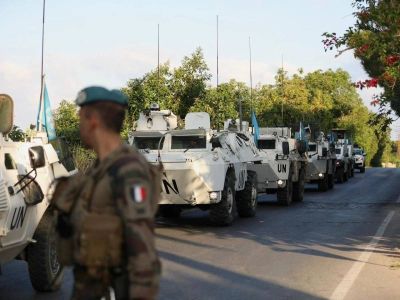
For the under-secretary-general, it is important, "even essential" during future debates, "that Lebanon's voice is heard on this matter, since the Lebanese state is directly concerned." "It is important to participate actively in the ongoing discussions at the Security Council and to achieve the best possible outcome," he insisted, stating that he knows Beirut is "calling for a temporary extension" of UNIFIL's mandate. He also emphasized that on the ground, "the situation remains complex," given Israel's daily attacks on southern Lebanon, despite a nominal cease-fire concluded in June under the protocol of agreement between Washington and Tehran, and the occupation by the Israeli army of more than 600 square kilometers of Lebanese territory.
Guterres' options 'still on the table'
Lacroix also said that the U.N. "still has a role to play" in supporting Beirut's efforts to "restore stability and reestablish full sovereignty" of the state. He recalled that the U.N. secretary-general had presented several options to maintain the U.N. presence in Lebanon after December, and that these are "still on the table." While UNIFIL currently has nearly 7,500 peacekeepers, the secretary-general proposed three options ranging from about 2,000 to more than 5,500 uniformed personnel to help monitor the cease-fire and support the Lebanese Army.
All of these options are based on the same principle: to gradually replace the current UNIFIL structure with a lighter presence centered on observation, reporting, liaison, de-escalation, and monitoring of the cessation of hostilities. All involve military observers, supported by protection, mobility, medical evacuation, military engineering, and demining resources, as well as advanced technological capabilities: drones, radars, helicopters, and satellite imagery.
As part of his visit to Beirut, Lacroix also met with Speaker of Parliament Nabih Berri, and with ambassadors and representatives from countries that have contingents deployed in UNIFIL.
In August 2025, the Security Council, under U.S. pressure, decided to end UNIFIL's mandate on Dec. 31, 2026. It had nevertheless requested that Antonio Guterres propose by June 1 options to allow the U.N. to continue, notably, monitoring the Blue Line, which extends for 120 kilometers, marking a de facto border between Lebanon and Israel.
Alongside discussions that are expected to resume at the Security Council on the UNIFIL issue, the European Union on Oct. 12 approved the establishment of a "support mission" for Lebanon, aiming to deploy about 150 personnel for an initial three-year mandate for training and assistance missions to the authorities, on various projects divided between a civilian and a military component.