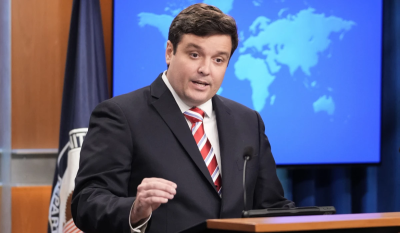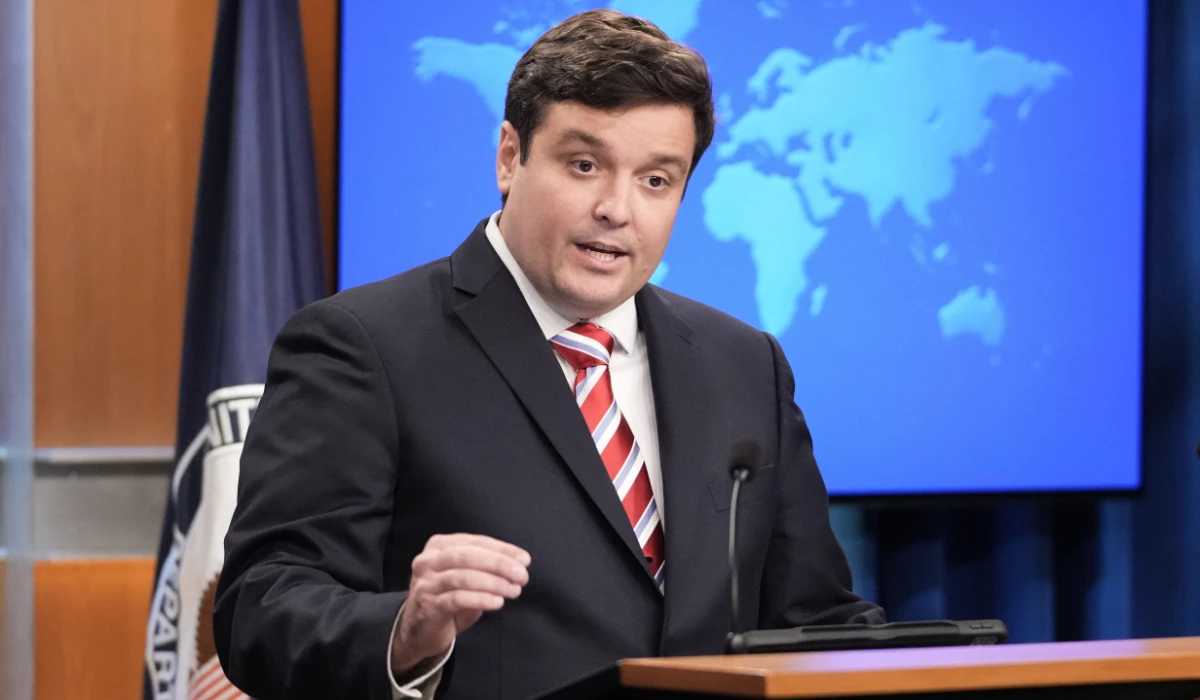
The spokesperson for the U.S. State Department, Tommy Pigott, during a press conference in Washington. Photo AFP






BEIRUT — U.S. State Department spokesman Tommy Pigott said Tuesday that Washington is continuing its contacts with Lebanon and Israel to advance negotiations between the two countries, which have stalled since the last meetings in Rome in August. He also emphasized the necessity of disarming Hezbollah to pave the way for the reconstruction of southern Lebanon and for the return of displaced people — a condition the United States has repeatedly stressed. Pigott said Gulf and European countries could mobilize “billions of dollars” for this effort.
“No one claims things are easy, but historic progress has been made,” he said in an interview with Sky News Arabia, highlighting that technical discussions are ongoing and that Washington is regularly exchanging with officials from both countries to push forward the implementation of the tripartite agreement bringing together the United States, Lebanon, and Israel. Signed last June, this agreement aims to open the way to “lasting peace and security” between the two countries, and insists on the Lebanese state's monopoly on arms.
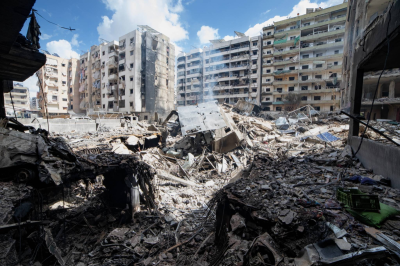
Discussing reconstruction in South Lebanon, Pigott said, “The United States is working with its partners in the Gulf and Europe to mobilize billions of dollars” for this effort. However, he made reconstruction conditional on the removal of arms from Hezbollah: “Billions of dollars can be injected into Lebanon, but only after Hezbollah's disarmament,” he said.
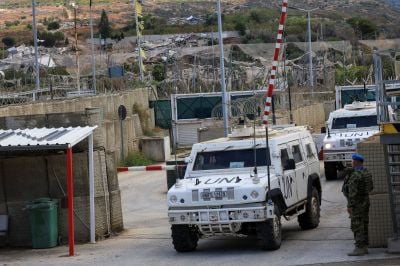
Asked about Prime Minister Nawaf Salam’s request for a verification mechanism for the Israeli withdrawal, Pigott said that this issue is “already being addressed as part of ongoing technical discussions.” He highlighted that President Donald Trump and the secretary of state have “held discussions and meetings with high-ranking Lebanese and Israeli officials.” “We are committed to supporting the capacities of the Lebanese Army,” he also assured.
Iranian money that 'does not exist'
Pigott also addressed the question of Hezbollah's funding, accusing the party of engaging in drug-related activities to finance its armed struggle. “They say they do not receive money from Iran. Where does the money [for Hezbollah] come from? They use drugs to build terrorist infrastructure, not to help anyone,” the U.S. official said. “Hezbollah, in its press conferences and in its dishonest media, continues to drag the Lebanese people into conflict and receives its orders from Tehran,” he added.
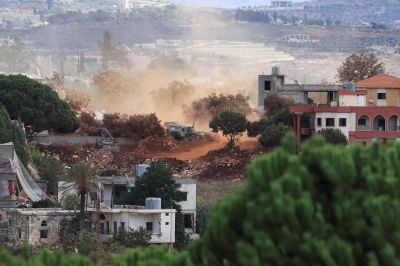
On Tuesday, Hezbollah announced in a press conference in Beirut a new program of financial aid for the resettlement of displaced people and families whose homes were destroyed or rendered uninhabitable by Israeli bombings. Last week, Reuters reported that Hezbollah had received $200 million from Iran to help the displaced, information that was not confirmed by Hezbollah.
In a statement Tuesday, a U.S. State Department spokesman also criticized Hezbollah's aid program, denouncing it as “yet another deceptive announcement intended to save the party’s reputation, not to help the people it dragged into the war from the start.” The official also claimed that “the supposedly sent Iranian money simply does not exist,” referring to the $200 million that Iran is alleged to have sent.