






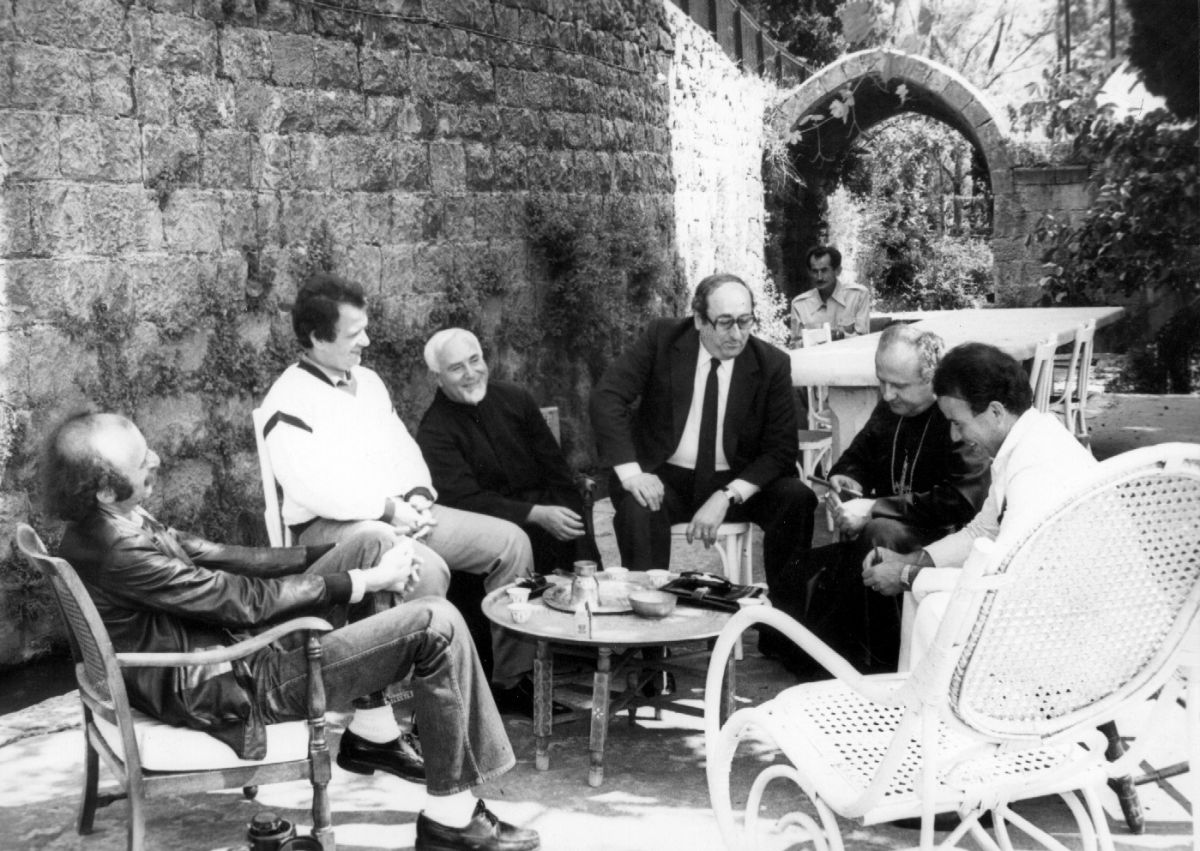
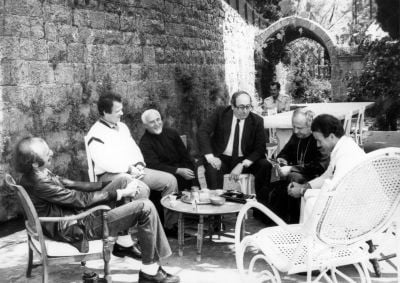
Meeting between Walid Joumblatt and Father Boulos Naaman in Moukhtara. From left to right: Messrs. Walid Joumblatt, Marwan Hamade, Father Boulos Azzi, Michel Edde, Father Boulos Naaman, and Hani Salam, June 5, 1981. (Photo Archives L’Orient-Le Jour)






Former superior general of the Lebanese Maronite Order (1980-1986), who died Friday at the age of 94, Abbot Boulos Naaman was one of the most politically involved religious and intellectual figures during the Civil War (1975-1990). A member of the Lebanese Front, a fierce opponent of the Palestinian resistance, and a key player in Bachir Gemayel’s presidential candidacy in 1982, the monk and historian was both a witness to, and a protagonist of, a period that he would later revisit in his writings from a position he himself termed an “engaged observer.”
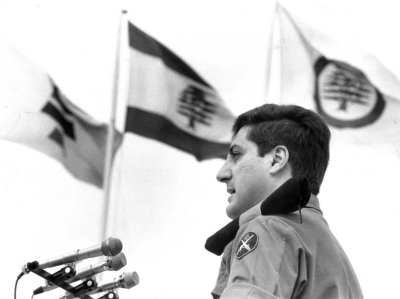
Figure of the Lebanese Front
Born in 1932 in Shartoun, in the Aley district, Naaman entered the novitiate in 1951. After studies in philosophy and theology at the Holy Spirit University of Kaslik (USEK), he continued his training in Rome, where he earned a theology degree in 1959 and a doctorate in history from the Gregorian University in 1966. Returning to Lebanon in 1967, he taught and took on several responsibilities at USEK, notably as dean of the Faculty of Letters and director of the Institute of History. Elected superior general of the Lebanese Maronite Order in 1980, he led the order until 1986, during some of the most violent years of the war.
His political involvement began to take shape in the late 1960s. In the context that followed the Cairo Agreement of 1969 and the rise of armed Palestinian organizations in Lebanon, he participated at USEK in meetings devoted to the country’s situation and the future of Christians. These meetings contributed to the creation of the Lebanese Research Committee, which brought together religious figures, academics, jurists, and civilians and took part in the development of some of the Christian camp’s political thinking. With the outbreak of Civil War, his involvement became more direct. Naaman became one of the key figures of the Lebanese Front, a coalition bringing together the main Christian parties and political figures of the era, notably around Pierre Gemayel and Camille Chamoun.
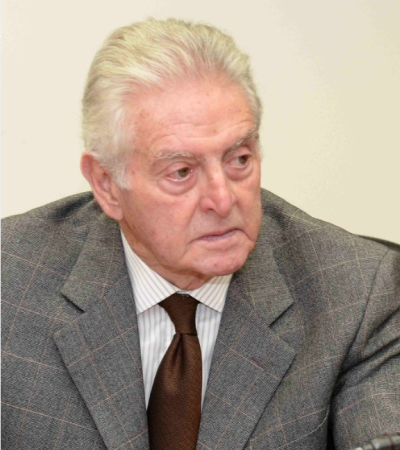
A role in Bachir Gemayel’s candidacy
The armed Palestinian presence was one of the main themes of his positions. In March 1981, Boulos Naaman described it as “the crucial problem of Lebanon,” according to the archives of L'Orient-Le Jour. In May 1982, he declared that “the only solution to the Lebanese crisis lies in the departure of foreigners and the disarmament of the Palestinians and their submission to Lebanese law,” asserting that “there cannot be two armies and two commands within the same state.” He also deemed it “unacceptable” for Palestinian armed actions to come “at Lebanon’s expense.”
Nevertheless, his membership in the Lebanese Front did not prevent him from maintaining contacts with other key figures on the political scene, notably Druze leader Walid Joumblatt as part of moves to promote understanding in Lebanon, and he also traveled to Damascus. Boulos Naaman then presented dialogue with Syria as a necessity and advocated for “national understanding,” which he viewed as a “general climate,” while considering foreign interventions an obstacle to its realization.
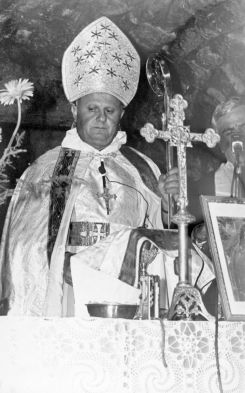
His closeness to Bachir Gemayel, leader of the Lebanese Forces (LF), and his role in supporting his 1982 presidential candidacy mark one of the most significant episodes of his political career. In his memoirs, "The Man, the Nation, the Freedom," Abbot Boulos Naaman recounts having prepared “in the utmost secrecy” the efforts to convince, “one after the other,” the leaders of the Lebanese Front to back Bachir Gemayel’s candidacy.
During a meeting in which Pierre Gemayel, Bachir’s father, proposed former president Camille Chamoun’s name, Boulos Naaman pushed for unity in the Christian camp and presented Bachir as the “son of Maronite suffering,” the “only one capable of resolving the crisis by establishing a strong Christian authority.” Boulos Naaman nevertheless retained his role as mediator during the conflict. At the end of the war, during the clashes between General Michel Aoun’s army and the LF, he participated in attempts to reconcile the two camps.
From religious to historian
After the war, Naaman revisited this period with a historian’s perspective. In his interviews and writings, he questioned the ability of the Lebanese to build a democratic state protecting all its citizens, shielded from hegemonies and competing allegiances. He believed that the defense of Lebanon’s independence, freedom and sovereignty was no longer the responsibility of just one community.
At the same time, he warned against what he saw as a crisis of Christian leadership. In his view, maintaining a Christian presence in Lebanon did not depend solely on security: he also linked it to connection with the land, to work, and to economic prospects, believing that emigration was also fueled by economic crises and lack of development.
As much a historian of the Maronites as an actor in their contemporary history, Boulos Naaman devoted much of his work to their origins, identity and future in Lebanon. Among his books is "Lebanon: Where are the Maronites Going?" There, he summed up his commitment to the Maronite presence in Lebanon with this phrase: the Maronites have only “one child, whose name is Lebanon.”

 8 p.m. recap: Israel again threatens Beirut’s south suburbs; 2 ships hit near Hormuz; Riyadh football matches canceled