







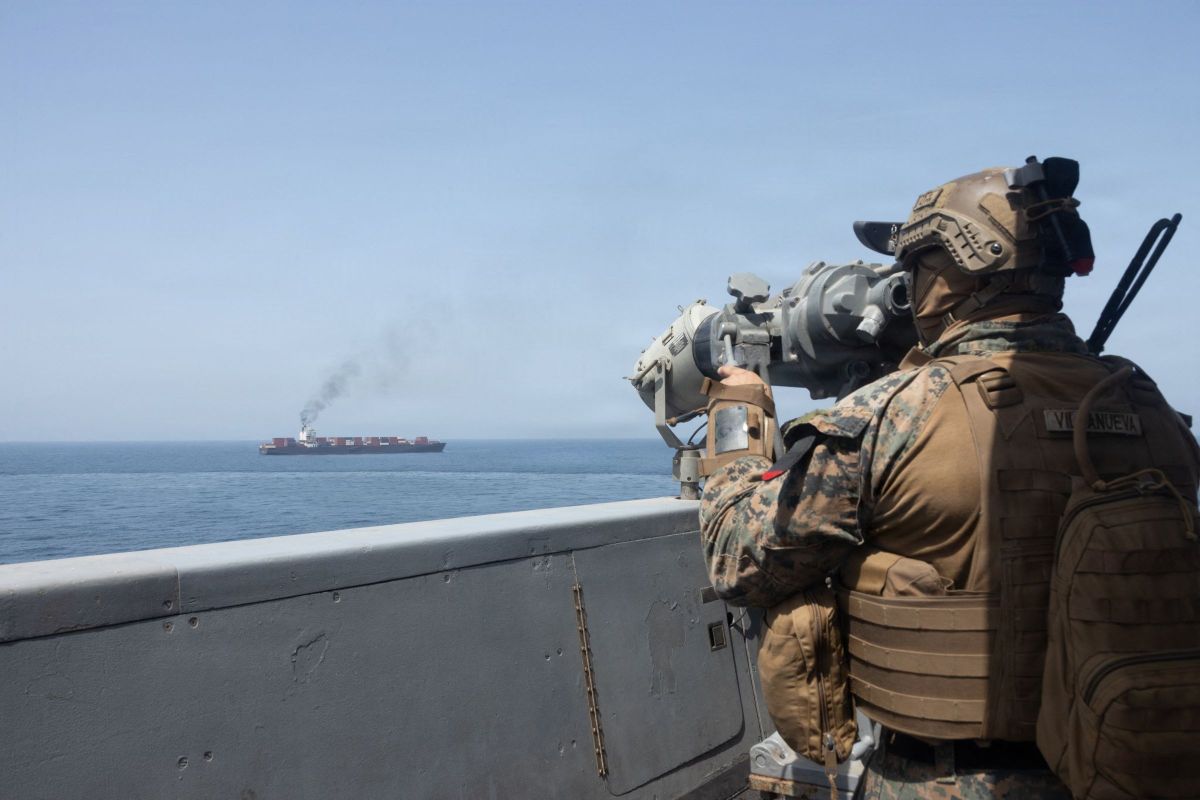
This U.S. Navy handout photograph released on April 21, 2026, by U.S. Central Command Public Affairs shows U.S. forces patrolling the Arabian Sea near the Touska, an Iranian-flagged cargo ship, on April 20, 2026. (Credit: US Navy Central Command/AFP)






The Pentagon is "quietly" extending the deployment of U.S. forces in the Middle East, with some troops potentially remaining into 2027, according to a report published Wednesday by The Wall Street Journal.
Around 50,000 U.S. troops are currently stationed across the region, with missions including intercepting Iranian missiles, protecting commercial shipping and enforcing a blockade of Iranian ports and coastal areas, according to the WSJ.

The prolonged deployments are putting additional pressure on U.S. service members and military equipment for Washington to maintain a large force in the region as it resumes its war with Iran. It is also intended to give President Donald Trump military options if he decides to expand the conflict. "Last month, Trump received briefings from top aides on fresh war options including stepped-up airstrikes and sending in ground forces to seize Iranian islands near Hormuz," the report added.
At the same time, Trump has discussed with senior aides whether the war could be declared over, according to U.S. officials cited by the newspaper. He has continued to argue privately that economic pressure could eventually force Tehran to dismantle its nuclear program or lead to the collapse of the Iranian government.
The extended military presence is already affecting individual units. Army air-defense forces, which have been intercepting Iranian missiles and drones, are seeing deployments extended from the usual nine months to as long as 12 months, according to the WSJ. Some units have already spent more than a year in the Middle East after being diverted from planned assignments in Europe and the Pacific.

Navy personnel are also facing longer deployments. The U.S. has 19 warships in Middle Eastern waters, including two aircraft carriers and 13 guided-missile destroyers. Some destroyers that arrived in the region at the beginning of the war are now spending several months at sea while enforcing the blockade, rather than returning to port regularly, the WSJ also reported.
The USS Gerald R. Ford spent 11 months at sea before returning home in May, making it the longest-deployed U.S. aircraft carrier since the collapse of the Soviet Union. The USS Abraham Lincoln is also returning after an extended deployment.
The USS Theodore Roosevelt is preparing for a longer-than-usual deployment. Although its final destination has not been announced, Navy officials have indicated that it could be sent to the Middle East and remain there into the spring. "The prolonged operations are also creating logistical difficulties. Fighting has restricted the Navy's ability to resupply in the region, forcing ships to rely heavily on the U.S. base at Diego Garcia in the Indian Ocean," the newspaper reported. The resulting distances have reduced opportunities for sailors to "receive mail and care packages" and spend time away from their ships.

The strain extends beyond personnel. Military analysts told the WSJ that the lengthening of deployments could result in delayed maintenance and complicate efforts to modernize U.S. forces.
The Pentagon could also keep elements of the Army's 82nd Airborne Division in the Middle East into 2027, according to a letter sent by military leaders to families and reviewed by the WSJ, which acknowledged the impact of extending tours on military families.
On Tuesday, Trump said his forces were prepared to attack Iran "any time we want" after extensive U.S. bombardment killed 19 Iranians.
The latest round of fighting began when Washington hit Iranian targets on Sunday, the first known strikes in several weeks, claiming it was trying to stop Tehran from placing sea mines in the Strait of Hormuz.
The U.S. military conducted a second wave of strikes Tuesday night, reportedly targeting installations belonging to Iran's Revolutionary Guards, including radar and air defense sites. The attack killed 19 people in total, including seven armed forces members as well as civilians, making it one of the deadliest incidents in several months. Four people were reportedly killed during a wedding in the Sirik district (southeast), where nearly 70 people were injured.

 8 p.m. recap: Israel again threatens Beirut’s south suburbs; 2 ships hit near Hormuz; Riyadh football matches canceled