






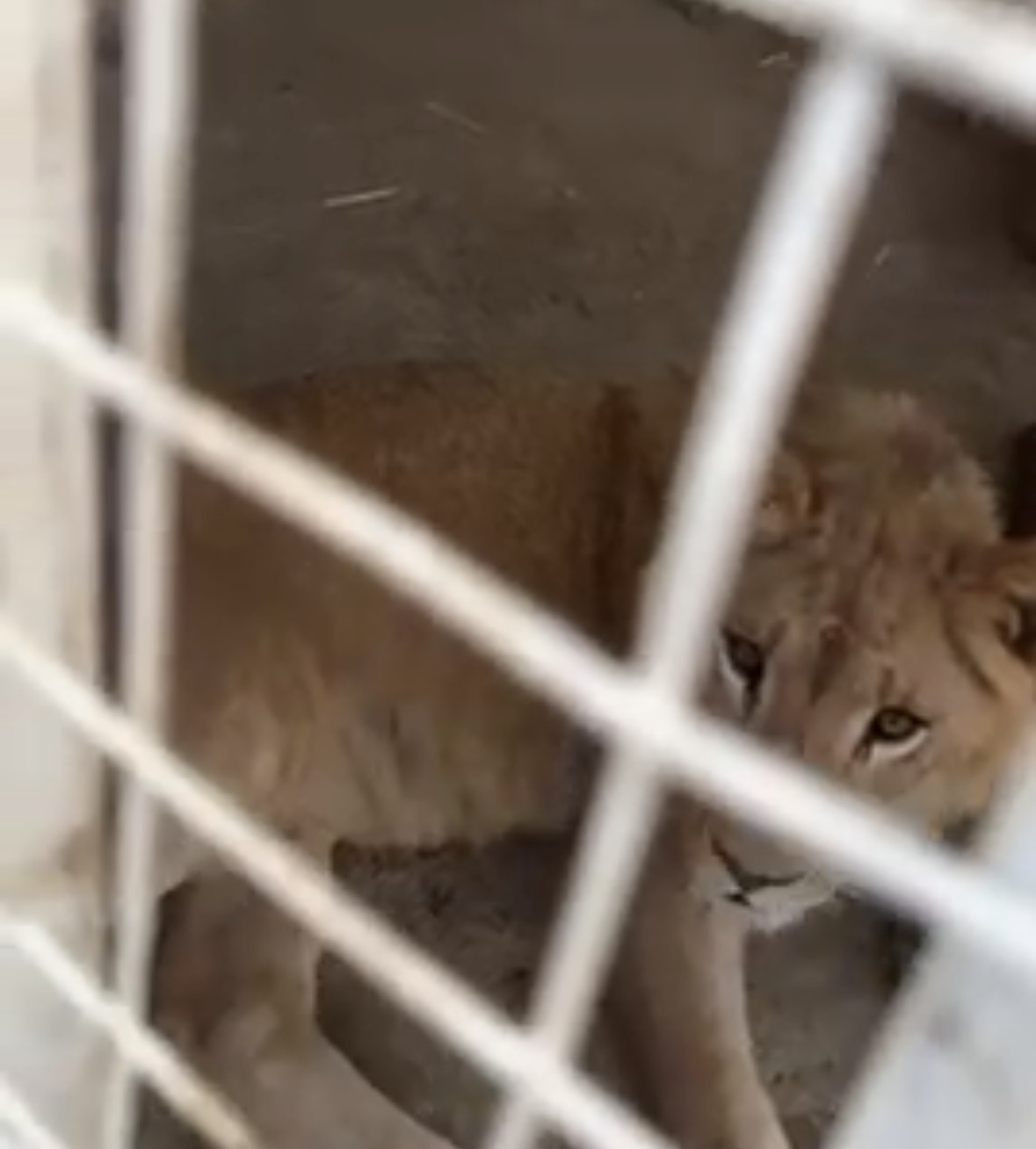
The lion cub seen here between the bars of the cage where it is kept on the Labweh farm, in the Bekaa, in August 2026. Screenshot from a video provided by Animals Lebanon.






A judicial decision on Monday placed the lion cub that briefly escaped from its owner's farm last week in Labweh (Baalbeck) under supervision, following a complaint filed by the Agriculture Ministry.
The measure will remain in place until the cub can be transferred to a specialized sanctuary abroad with the assistance of the NGO Animals Lebanon.
The cub's brief escape last Tuesday caused some panic in the Baalbeck-Hermel region amid false rumors that an adult lion had escaped, according to our correspondent in the area. Several sources said the cub was quickly returned to its enclosure on the farm. Labweh mokhtar Khaled Abdo told L'Orient-Le Jour he believed the animal had never left the farm's grounds.
The incident nevertheless drew public and official attention. Under Lebanon's Animal Protection Law 47, possessing a wild animal belonging to an endangered species is punishable by law and international conventions.
“We were not aware of the presence of this lion cub on this farm in Labweh before the incident,” said Jana Zaarour of the CITES coordination office at the Agriculture Ministry. CITES is the Convention on International Trade in Endangered Species of Wild Fauna and Flora.
Under current Lebanese law, Zaarour said, no one may own a wild animal belonging to a threatened species “unless it is kept in a zoo that has a permit from the ministry and is under the supervision of the department of animal resources.”
“Outside of this framework, animals generally come from illicit trafficking,” she added.
After the incident became public, the Agriculture Ministry contacted the cub's owner. According to Zaarour, he “was cooperative, stating he did not know that possession of these animals is contrary to the law, and said he was ready to hand it over to the ministry.”
L'Orient-Le Jour attempted to contact the farm owner through the village mukhtar but did not receive a response before publication.
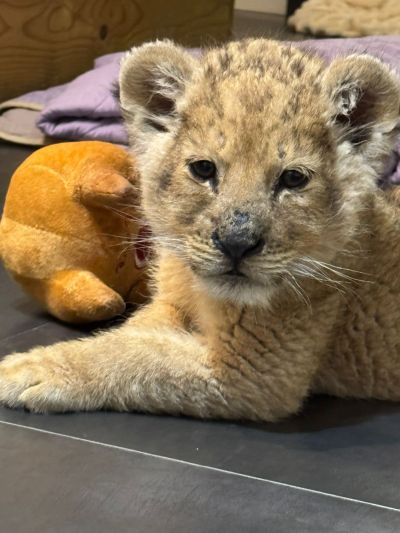
'Too old to be housed in Lebanon'
With the owner's cooperation, the ministry reached an agreement with Animals Lebanon, an NGO specializing in big cats, to take custody of the animal after its seizure.
“The main obstacle we encountered is the age of the lion cub, which is more than a year old, making it more difficult to handle than the younger individuals we have cared for in the past,” said Maggie Chaarawi, co-founder of Animals Lebanon.
Because there is no suitable facility for the animal in Lebanon, the search for a place at a sanctuary abroad has begun, but has proved challenging.
“It is less straightforward to place a cub of this age because it has more trouble adapting to its peers after a relatively long period in captivity,” Chaarawi said.
The ministry also referred the case to the judiciary. “We referred the matter to the Bekaa attorney general, Judge Marcel Haddad. In his absence, Judge Rita Herro examined the case and decided that the lion cub should be placed under judicial supervision,” Zaarour said.
With no suitable facility available in Lebanon, the cub remains at the farm of its former owner, who, under the judge's decision, has become its legal guardian until it can be transferred to a sanctuary. He can no longer dispose of the animal and is responsible only for its care.
Zaarour said the lion cub will remain under the ministry's supervision, which will ensure that its living conditions improve.
The judicial process will continue. Keeping an animal belonging to a threatened species is a criminal offense under Lebanon's animal protection law and violates international conventions to which Lebanon is a party.
The practice also violates Agriculture Ministry Decision No. 653, Article 11 of which “bans all types of trafficking or possession of all species listed in the CITES appendices and its amendments.” The decision states that violators “will be held accountable for their actions before the courts.”

 8 p.m. recap: Israel again threatens Beirut’s south suburbs; 2 ships hit near Hormuz; Riyadh football matches canceled