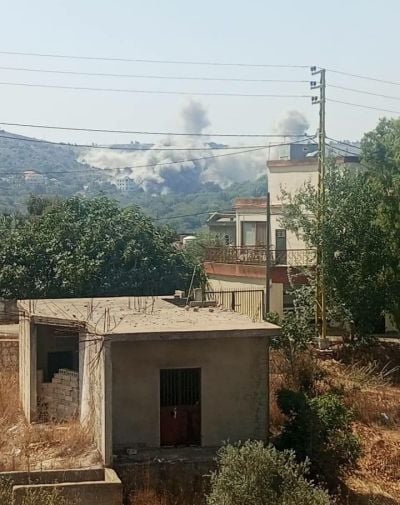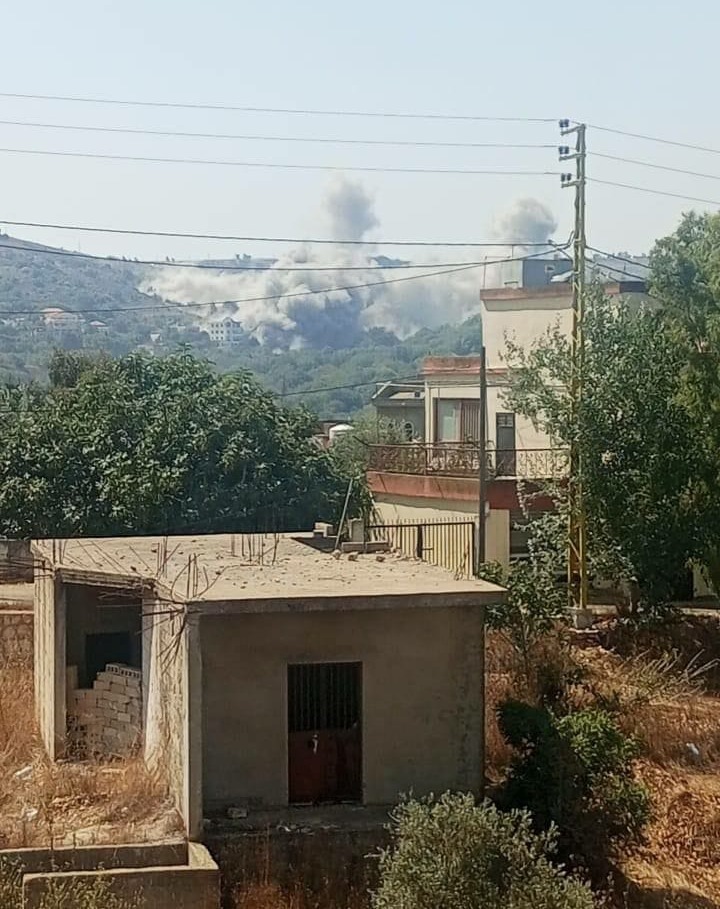
Smoke rises following an Israeli strike on Braasheet (Bint Jbeil) on Friday, Aug. 21, 2026. (Photo sent to our correspondent in southern Lebanon, Muntasser Abdallah)






Israel on Friday resumed its airstrikes across southern Lebanon, in addition to a series of detonations in villages under its control.
In the morning, the Israeli air force bombed a house in Braasheet, a village in the Bint Jbeil district adjacent to the "buffer zone" established by the occupying force in southern Lebanon, according to our correspondent in the region.
Braasheet is near Haddatha, a town where Israeli soldiers have carried out numerous military operations in recent weeks. Israel claimed in the afternoon that it targeted the house after observing "several suspicious individuals who had crossed the line marking the buffer zone" enter the structure. Later in the afternoon, Israel carried out two more strikes on Bouyout al-Sayyad, in the Sour district.
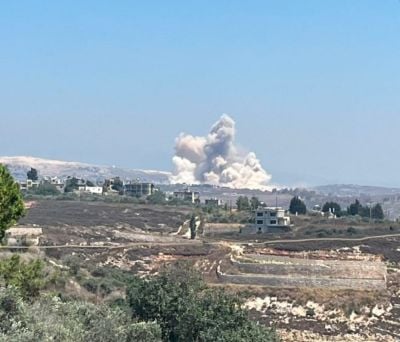
On another front, an Israeli army drone fired a stun grenade at a shepherd in the border town of Shebaa (Hasbaya).
Powerful explosions in series
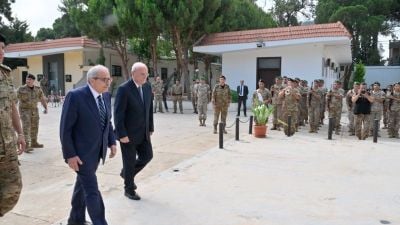
Israeli forces also continue to demolish and destroy homes, infrastructure, and entire neighborhoods in several villages. In the morning, during the visit of Prime Minister Nawaf Salam and Defense Minister Michel Menassah to Sour, powerful explosions were heard following an initial series, all triggered in Mansouri and Majdal Zoun, in the same region.
At dawn, Israel had carried out a detonation in Majdal Zoun (Sour). The blast shook homes in nearby areas, according to residents. Then in the early afternoon, occupation forces carried out two powerful explosions, one between Arnoun and Kfar Tibnit, and another in the village of Kfar Tibnit (Nabatieh). The blasts could be heard for kilometers around. Two hours later, the Israeli army set off another explosion in Kfar Tibnit. In the Bint Jbeil district, their soldiers also set fire to houses in Beit Yahoun and fired toward the village of Haddatha. By the end of the day, they triggered an explosion near the locality of Braasheet (Bint Jbeil), near Aitaroun, and another in Markaba (Marjayoun).
Artillery fire also struck the Wadi Slouki valley, between Mais al-Jabal and Houla (Marjayoun), the outskirts of Mayfadoun (Nabatieh), Wadi al-Jamal (between Mais al-Jabal and Houla), as well as Shebaa (Hasbaya). During the night, the Ali Taher hill, a site inside which Israelis accuse Hezbollah of placing strategic military equipment, was once again pounded by artillery and airstrikes.
Mitri: Several countries ready to aid the army in pilot zones, but Israel opposes
On another front, Deputy Prime Minister Tarek Mitri said Friday that "a group of countries has declared its readiness to assist the Lebanese army when it enters the pilot zones in the South," but that Israel is opposed to this move, in an interview with Sky News Arabia.
The process of "pilot zones" is at a standstill, with Israel refusing to designate new areas where the Lebanese army would be tasked with dismantling Hezbollah's infrastructure and reclaiming its arsenal, in accordance with the framework agreement signed in late June between Lebanon and Israel under U.S. sponsorship. The details of disarmament verification and which countries might participate remain points of contention. The list of states expected to play this role is still being reworked.
Mitri also said he "hopes prospects for international support to the Lebanese Army will improve in the coming period," stressing that the forces are "ready to take control of the hills of Ali Taher." However, Hezbollah is reluctant to hand this strategic hill over to the army.
Mitri added that there was a "clear hardening" of Israel's position toward the United Nations Interim Force in Lebanon (UNIFIL), emphasizing that Beirut does not want South Lebanon to be left without an international presence, once UNIFIL's mandate expires at the end of 2026. "Israel is not willing to show good faith regarding negotiations and the framework agreement," he said. He asserted that the government's decision to maintain a monopoly on arms was irreversible, while adding that "the cabinet does not wish to implement its decisions by force and risk endangering national unity."
The Deputy Prime Minister finally argued that Iranian interference constitutes an attack on Lebanon's sovereignty, stressing that Beirut "wants to negotiate in its own name in order to fully restore its sovereignty and consolidate civil peace."
Reporting contributed by our correspondent Muntasser Abdallah.