

Search
Search

BANKING RESOLUTION

Amendments to bank resolution law clear Lebanese Parliament hurdle

Several MPs who had left the chamber during the vote on the general amnesty law returned to take part in the debate on bank resolution.

Amendments to bank resolution law clear Lebanese Parliament hurdle

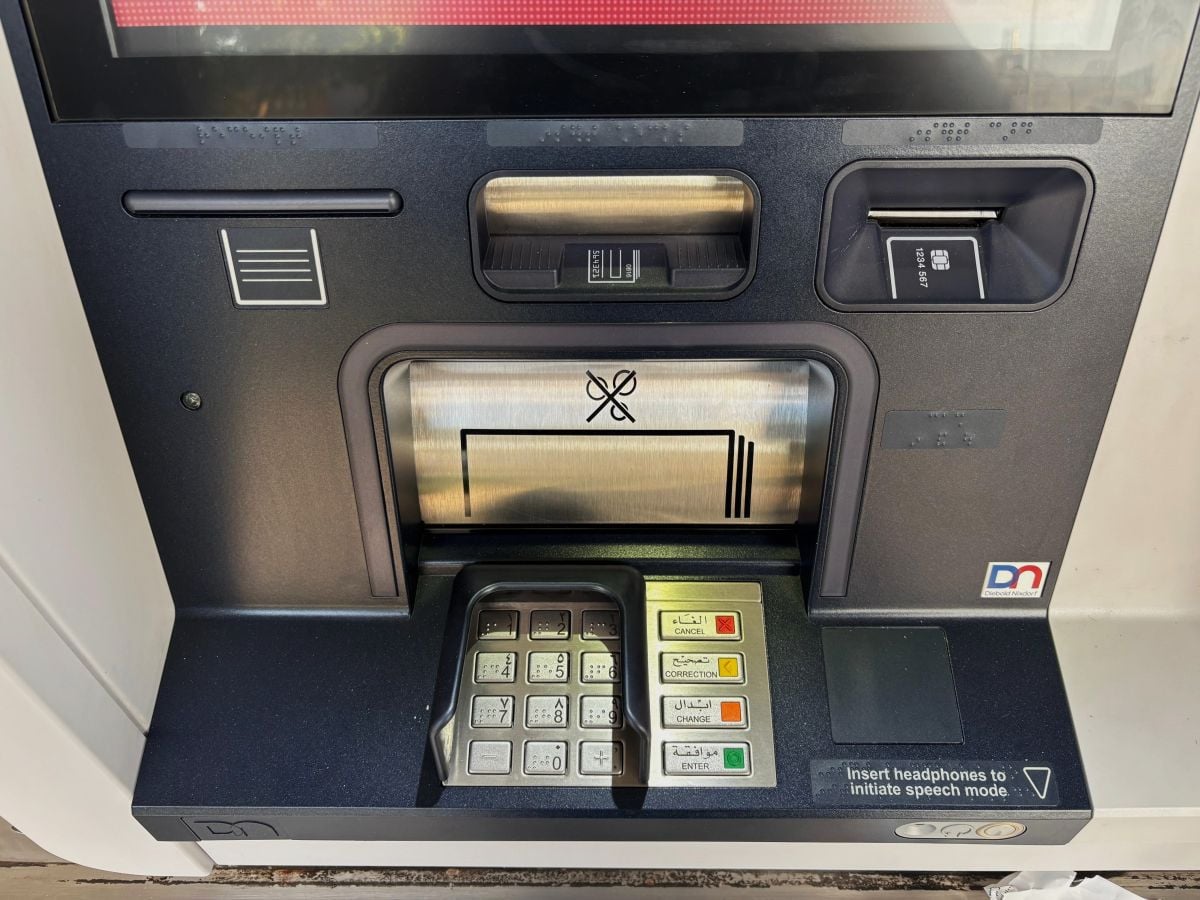
An automatic teller machine in Lebanon on July 31, 2026. (Credit: Illustration photo by Philippe HAGE BOUTROS / L'Orient-Le Jour)


BEIRUT — After quickly pushing through a vote on the general amnesty law, which had been interrupted the previous day due to a lack of quorum, MPs gathered in Parliament since 11 a.m. Wednesday went on to adopt amendments to the bank resolution law.

Adopted on July 31, 2025, after intense negotiations, the bill is among the key reforms intended to help Lebanon move past the 2019 financial crisis and secure an agreement with the International Monetary Fund (IMF). Following IMF feedback on shortcomings in the text, the government adopted a series of amendments last May, which the Finance and Budget Committee then further revised over seven meetings in the following two months.

The aim was notably to reintroduce provisions that had been removed but were demanded by central bank (BDL) Governor Karim Souhaid. With the main challenge being to reconcile these competing demands, MPs appear to have reached a compromise, reverting to the government’s version on some of the most sensitive points raised by the IMF.

According to the state-run National News Agency (NNA), Parliament approved the bill "in the version amended by the Finance and Budget Committee, while incorporating certain changes proposed by Finance Minister Yassine Jaber," one of Lebanon’s main interlocutors with the IMF.

L’Orient-Le Jour learned that several MPs who had left the chamber during the general amnesty vote returned to participate in the debate on bank resolution.

In a statement following the session, MP Ibrahim Kanaan said the banking reform law “was adopted according to the committee’s amendments except for one article and a paragraph of another article.”

"For the second time, we have completed the adoption of the banking reform law, and I hope it will be the last, because the heart of the solution to the banking, financial, and monetary crisis in Lebanon lies in the financial regularization law [also known as the 'financial hole' law]," he said.

"The return of deposits is what will restore confidence in the Lebanese economy and the banking system. International trust from the IMF and international institutions is necessary, but it is not enough if depositors and investors do not feel that their rights are protected and taken seriously," he added.

The "financial hole" bill, which is meant to address the restitution of tens of billions of dollars in deposits illegally blocked by Lebanese banks since the end of 2019, remains under discussion, with the Cabinet and the Finance Committee continuing to exchange revisions.

The modifications made by the committee had raised concerns among several government officials contacted by L’Orient-Le Jour. According to them, some changes backed by committee chairman MP Ibrahim Kanaan, a former member of the Free Patriotic Movement, central bank Governor Karim Souhaid — who was also present in Parliament — and a majority of committee members deviated from the version negotiated with the IMF, raising the risk of a scenario similar to that of the banking secrecy law, which subsequently had to be revised.

Articles 3, 13 and 23

A parliamentary source confirmed that the finance minister had proposed three amendments to the text approved by the Finance Committee. "Two were voted in by the deputies and the third was not retained," Kanaan told L’Orient-Le Jour.

The first amendment concerned Article 3, which defines the objectives of banking reform. The wording added by the committee specified that the reform would take place "in compliance with the Code of Money and Credit, particularly Article 70." The article stipulates that BDL’s mission is to maintain monetary, economic, and financial stability, safeguard the soundness of the banking sector, and develop capital markets.

MPs removed that wording, following Jaber’s proposal and reverting to the government’s original version. According to the source, Hezbollah MPs and those from protest movements insisted that the reference to the Code of Money and Credit be removed.

On Article 11, which amends Article 13 of the bank resolution law passed in July 2025 and lists a series of measures the High Banking Commission can take when "applying one of the tools for resolving the situation of a bank," the MPs also retained the government’s original wording on one specific point.

The government version provided that the High Banking Commission could prevent “majority shareholders” from participating in a capital increase following restructuring, whereas the committee had used the term “any shareholder.”

Conversely, MPs maintained — against the wishes of the finance minister and the IMF — a reference to the law intended to address the “financial hole” and restitution of deposits in Article 23 of the bank resolution law.

The article concerns the treatment of deposits in the event of a bank liquidation. The government version referred to the bank resolution law and the regime governing the National Deposit Guarantee Institute, once amended. The committee had added a reference to the law on financial stability and deposit restitution, whose effects are supposed to be limited to the current crisis-resolution period.

Kanaan also called on the government to complete its review of the financial regularization law “as quickly as possible.”

“We will take a position next September and we will not accept further delays on the deposits issue. For the first time in six years, the government’s draft includes a mechanism for the restitution of deposits, a key demand of the Finance and Budget Committee since 2020. The rights of depositors must be protected,” he said.

BEIRUT — After quickly pushing through a vote on the general amnesty law, which had been interrupted the previous day due to a lack of quorum, MPs gathered in Parliament since 11 a.m. Wednesday went on to adopt amendments to the bank resolution law.Adopted on July 31, 2025, after intense negotiations, the bill is among the key reforms intended to help Lebanon move past the 2019 financial crisis and secure an agreement with the International Monetary Fund (IMF). Following IMF feedback on shortcomings in the text, the government adopted a series of amendments last May, which the Finance and Budget Committee then further revised over seven meetings in the following two months.The aim was notably to reintroduce provisions that had been removed but were demanded by central bank (BDL) Governor Karim Souhaid. With the main challenge being to...
Comments (0) Comment

Comments (0)

Back to top





