







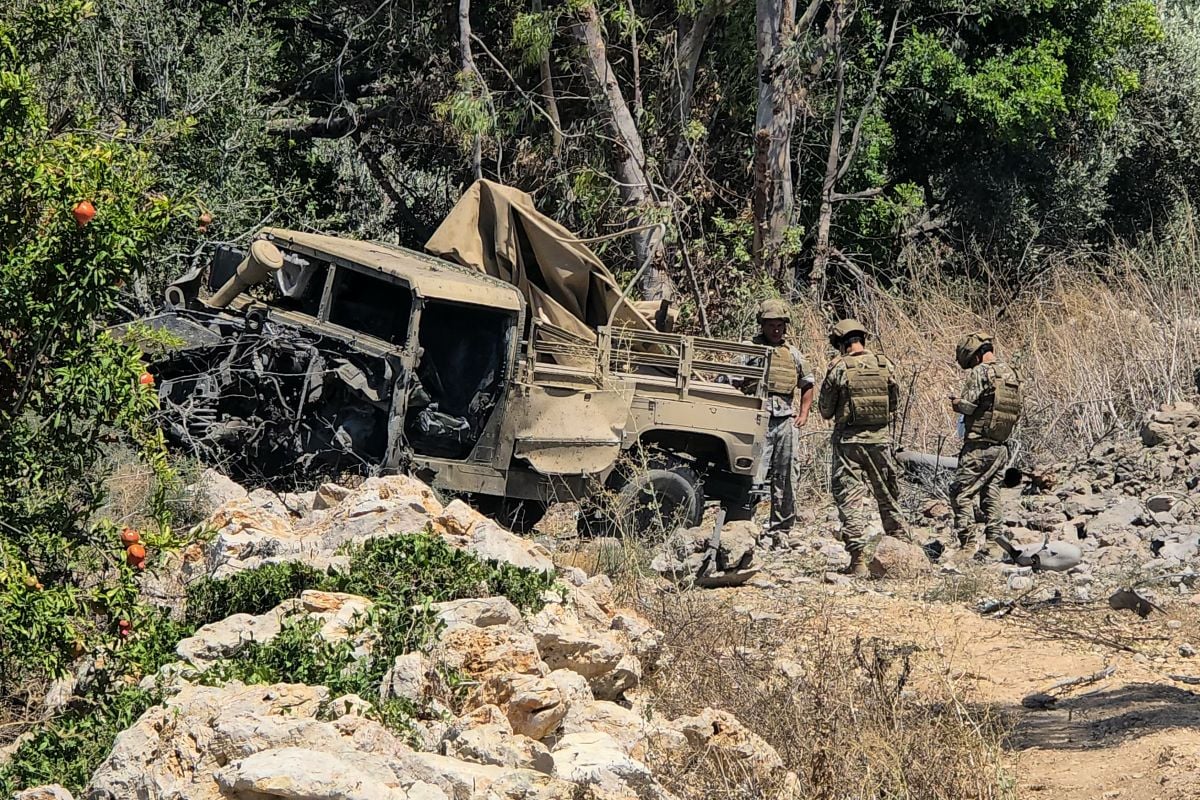
Lebanese Army soldiers inspect the site of an explosion that targeted their vehicle in the southern Lebanese area of al Mansouri near Sour on July 18, 2026. (Credit: Kawnat Haju/AFP)






SOUTH LEBANON — Amid President Joseph Aoun's visit to Washington, the U.S. State Department announced Monday the launch of "operations" in three 'pilot zones': Froun, Srifa, and Zawtar Gharbieh.
This marks the first test of the agreement aimed at securing the withdrawal of the Israeli army from South Lebanon and the disarmament of Hezbollah by the Lebanese Army.
According to the State Department, these operations are being carried out "under the aegis of the Military Coordination Group for Lebanon," an entity whose creation is stipulated in the security annex of the framework agreement reached at the end of June between Beirut and Tel Aviv under U.S. mediation.
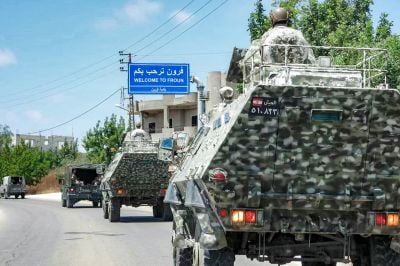
In accordance with this document, the Lebanese Army must, in these "pilot zones," "take the necessary operational measures to ensure the disarmament of Hezbollah and all other non-state armed groups." In a clear effort to separate the Lebanese issue from Iranian influence, the statement points out that this development is a "direct consequence of last week’s discussions between Israel and Lebanon in Rome," the sixth session between the two countries under Washington’s auspices since April.
Zawtar Gharbieh at the center of attention, Kfar Tibnit targeted
However, the Lebanese Army has not yet deployed in Zawtar Gharbieh (Nabatieh district), which, unlike Froun (Bint Jbeil) and Srifa (Sour district), is part of the "buffer zone" unilaterally established and occupied by Israel in south Lebanon.
In a statement issued in the evening, the Lebanese Army said it was "continuing its missions in the southern regions, particularly in the localities of Froun and Srifa."
According to our information, the U.S. administration considers the village of Srifa strategic because it is believed to contain significant Hezbollah arms depots. The army, however, said it was holding "discussions with the Military Coordination Group for Lebanon in order to enable the start of the Lebanese army’s deployment in the locality of Zawtar Gharbieh, after the withdrawal of the Israeli army."
"Consequently, the army command calls on citizens not to go to Zawtar Gharbieh and to comply with the instructions of deployed military units to ensure their safety," the army’s message concluded.
Meanwhile, citing an Israeli source and another familiar with the matter, the Israeli daily Haaretz reported that the Israeli army was "in the process of withdrawing from one of the three Lebanese villages mentioned by the U.S. State Department," without specifying which one. "No Israeli soldier" was present in the other two villages, but the Israeli army maintained "intelligence control" there through surveillance drones, the sources added.

The municipal council president, Abdel Ezzeddine, told our correspondent in south Lebanon, just before the Lebanese Army’s statement was released, that he had "received no official notice at this stage regarding a deployment of the Lebanese Army" in the locality. He then reported Israeli attacks on the area.
According to him, soldiers remain positioned on the outskirts of the village and occasionally enter it, "carrying out looting, destruction with explosives, and burning of homes before withdrawing from the locality." He added that the village is also subject to search operations and automatic weapons fire.
Zawtar Gharbieh remains accessible to the Israeli army from Zawtar al-Sharqieh, which is still occupied by its forces. The latter considers this route its main supply line to positions it holds in the Nabatieh region, particularly in Arnoun and Yohmor, as well as the logistics route leading to the hill of Ali Taher.
Moreover, in the same Nabatieh region, the Israeli army caused five powerful explosions on Monday in Kfar Tibnit and its surroundings. The blasts occurred in different parts of the village and continued for about thirty minutes. The Israeli army also fired four artillery shells at this locality.
Later, it set houses on fire there. Earlier, explosions had occurred in the morning and the previous night. In addition, small Israeli drones dropped stun grenades in the Khiam plain (Marjayoun district) and over Mansouri (Sour district). The Israeli army also carried out a large explosion in the village of Taybeh (Marjayoun district).
Reporting contributed by our correspondent Muntasser Abdallah.

 8 p.m. recap: Israel again threatens Beirut’s south suburbs; 2 ships hit near Hormuz; Riyadh football matches canceled