





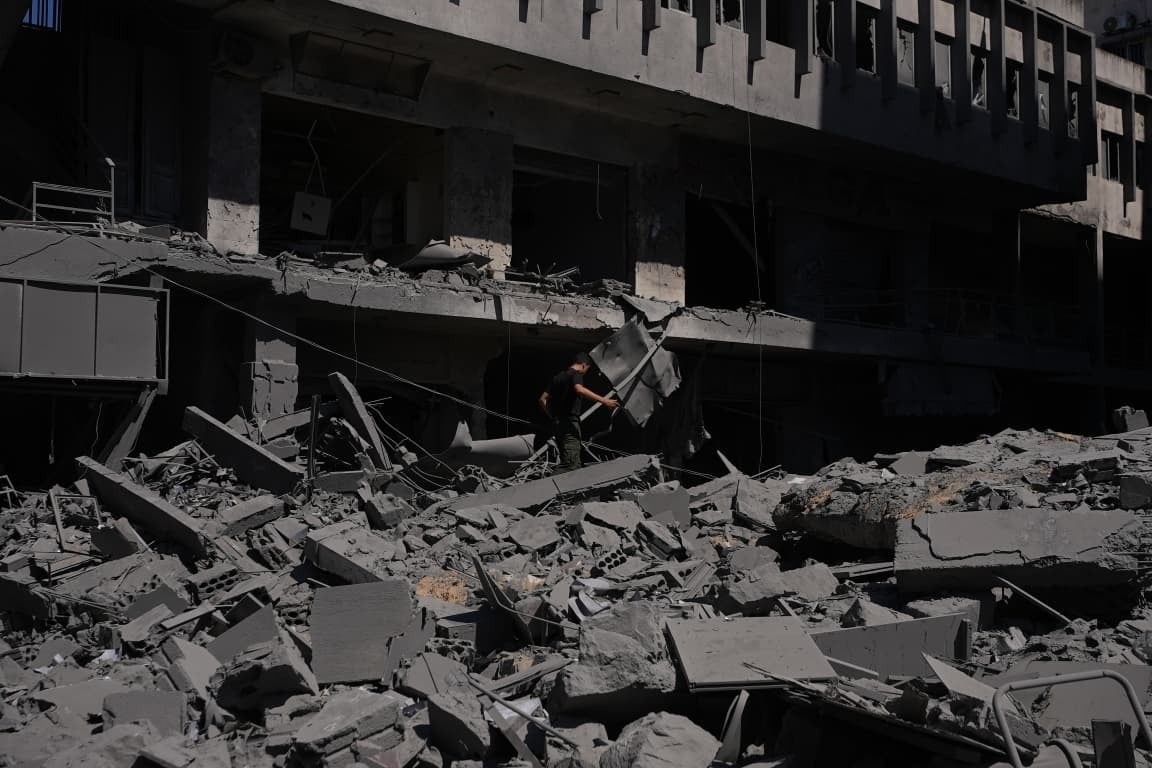
A man stands among the destruction cause by an Israeli strike on Nabatieh, south Lebanon, on June 21, 2026. (Credit: Mohammad Yassine/L'OLJ)






More than 400 Lebanese public figures from across the country and the global diaspora have joined to launch "A Call to Save Lebanon," a national initiative urging citizens to rally behind the state and its legitimate institutions.
The appeal expresses support for diplomatic negotiations to end the ongoing war, bring an end to Israeli occupation and Iranian interference in Lebanon’s sovereign decision-making, restore the state’s full authority, and reaffirm its exclusive responsibility for the legitimate use of arms throughout the country.
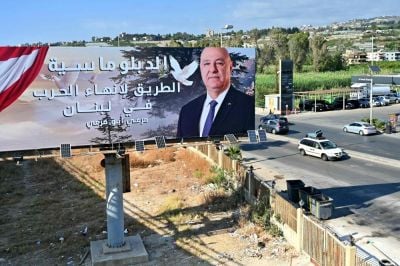
Transcending sectarian and political divides, the initiative brings together opinion leaders, academics, civil society representatives, business figures, and political activists from every region of Lebanon, from its northernmost communities to its southernmost villages.
"Drawn by Hezbollah into the wars of others, Lebanon today finds itself at a defining moment in its history. Its territory has become a battleground for regional conflicts that serve foreign agendas rather than the interests of the Lebanese people. Israel continues to threaten its security, occupy part of its territory, launch deadly attacks against its citizens, and pursue a systematic policy of destruction designed to depopulate the land and erase its memory. Meanwhile, Iran infringes upon Lebanon’s sovereignty by seeking to usurp its national decision-making and draw the country into wars and political bargaining driven by its own regional ambitions.
This dual assault on Lebanese sovereignty has been compounded over recent decades by the gradual capture of state institutions by entrenched networks of political and economic interests that have prevented the state from exercising its constitutional responsibilities, implementing reforms, and promoting sustainable development. More recently, sectarian polarization, inflammatory rhetoric, and reckless accusations of treason have deepened social divisions and created unprecedented risks to the country's stability and future.
These circumstances have prompted an unprecedented civic mobilization. Women and men from across Lebanese society have come together behind this declaration in support of restoring national sovereignty from occupation, militias, corruption, and foreign interference; reaffirming the principles of the national compact upon which Lebanon was founded; restoring the central role of the state as the sole legitimate authority; and contributing to a renewed political vision capable of responding to the profound transformations reshaping the Middle East.
Accordingly, the signatories affirm the following principles:
First, Lebanon, within its internationally recognized borders and with its rich cultural and religious diversity, constitutes the final homeland of all its citizens. The Lebanese state alone possesses the legitimate authority to govern public affairs, including decisions of war and peace. The signatories reaffirm their commitment to the Constitution derived from the Taif Agreement, which embodies Lebanon's national compact, and call for stronger institutions and the consistent application of the rule of law in order to bring an end to cycles of violence and parallel authority.
Second, the signatories express their support for the president, the prime minister, and the government in implementing their constitutional commitments and government decisions aimed at ending the proliferation of illegal weapons and restoring the state's exclusive monopoly over the legitimate use of force.
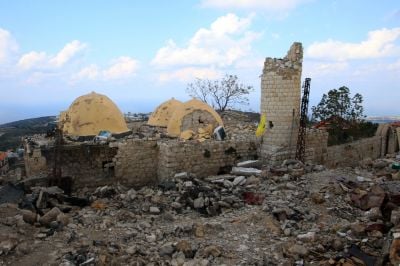
Third, the signatories strongly condemn Israel's continuing military operations against Lebanon and its renewed occupation of parts of Lebanese territory, irrespective of the pretexts invoked by Hezbollah. They hold Israel responsible for attacks on civilians, the systematic destruction of villages, infrastructure, cultural landmarks, and productive assets under a strategy resembling scorched-earth warfare in southern Lebanon. They support the Lebanese state's efforts to document these violations before international institutions and seek accountability and appropriate reparations.
Fourth, the signatories fully support the Lebanese state's authority to conduct direct negotiations and conclude whatever agreements it deems necessary to serve Lebanon's national interest, achieve a durable end to hostilities with Israel, secure Israel's full withdrawal from Lebanese territory, end repeated violations of Lebanese sovereignty, facilitate the return of displaced populations, rebuild devastated regions, secure the release of detainees, and resolve outstanding issues, including the final demarcation of the land border in accordance with international agreements, compensation for war damages, and the establishment of effective security arrangements along the frontier. They call upon Arab states and the international community to reinforce Lebanon's negotiating position on the basis of international law, the 1949 Armistice Agreement, United Nations Security Council Resolutions 1559, 1680, and 1701, and the Declaration of Nov. 27, 2024. They categorically reject any attempt by foreign actors or non-state political organizations to negotiate on Lebanon's behalf.
Fifth, the signatories condemn Iran's continued interference in Lebanon's sovereign affairs and call upon Tehran to cease exercising influence over Lebanon's sovereign decision-making. They further call for the withdrawal of all Iranian-linked military and security structures operating on Lebanese territory and insist that bilateral relations between the two countries be conducted exclusively through their legitimate state institutions as the basis for normal and mutually respectful relations.
Sixth, the signatories urge the government and all relevant institutions to fully implement recent government decisions of Aug. 5, 2025, and March 2, 2026, concerning Hezbollah's weapons, dismantle illicit financing networks, address the issue of Palestinian arms outside state authority, and criminalize any armed activity conducted outside the framework of the Lebanese state.
Seventh, the signatories support ongoing efforts to assist displaced populations and call for every possible measure to ensure their prompt return home. They further urge the launch of an international reconstruction initiative financed by the international community and administered exclusively through transparent state institutions, free from corruption and political patronage.
Eighth, the signatories believe that restoring sovereignty must go hand in hand with an uncompromising fight against corruption, accelerated judicial, financial, and administrative reforms, economic recovery, fair fiscal and social policies, and the revitalization of productive and service sectors in both the public and private spheres, thereby laying the foundations for a sustainable and competitive economy.
Ninth, the signatories call for the full implementation of the Taif Agreement, the correction of practices that have departed from its original intent, and, in due course, its institutional development through national consensus rather than political bargaining, with the objective of consolidating an effective democratic system that guarantees pluralism, individual freedoms, the civil character of the state, transparency, and public accountability.
Tenth, the signatories reaffirm their commitment to fostering a culture of dialogue, respectful public debate, and constructive engagement among Lebanese citizens. They believe that strengthening common civic space across sectarian and political divides is indispensable to preserving internal stability and rebuilding national cohesion.
This declaration constitutes an open invitation to all Lebanese citizens — whether active in civil society, public life, or politics — to work together in confronting the existential challenges facing their country, strengthening the state, safeguarding the Republic, and building a sovereign, stable, and prosperous Lebanon worthy of its people's aspirations. Above all, it is a call to ensure that the present war will be the last war fought on Lebanese soil."
Signatories:
Abdelsalam Chahine; Abbas al-Hajj Ahmad; Abbas al-Hajj Hassan; Abbas Hadla; Abdallah Rizk; Abdel Ghani Kabbara; Abdel Halim Sarhan; Abdullah Said; Adib Khattar; Adib Nehme; Adnan Ayyash; Adnan Basma; Ahmad Ali Zein; Ahmad Ayyash; Ahmad Basha; Ahmad Fatfat; Ahmad Sweisi; Aida Torbay; Akram Hamadi; Albert Kostanian; Ali Abou Dehen; Ali al-Amin; Ali al-Shami; Ali Atwi; Ali Fares; Ali Jouzou; Ali Khalil; Ali Kobeissi; Ali Mohammad al-Dirani; Ali Mohammad Daas Sleiman; Ali Mourad; Ali Sabri Hamadeh; Amer Kadri; Amin Bashir; Amin Wehbe; Amir al-Mokdad; Anita al-Shaer Absi; Anjo Rihan; Antoine Haddad; Antoine Kassis; Antoine Khoury Tawk; Antoine Tawk; Antonia Doueihi; Antoun Said; Anwar Hilal; Arzeh Toum; Asma Andraos; Assaad al-Atat; Assaad Zgheib; Assad al-Atat; Atallah Wehbe; Ayman Abou Chakra; Ayman Jezzini; Ayman Mhanna; Badia Fahs; Bahaa Abou Dahr; Bahaa Boukroum; Bahjat Salameh; Bashar Hussein; Bashir Asmat; Bassam al-Mokdad; Bassam Khoury; Bassem Medawar; Bechara Charbel; Berri al-Assaad; Beshara Hanna; Bilal Ali al-Sheikh Sleiman; Bouchra Itani; Brigadier General Ali Daas Suleiman; Camille Ammoun; Camille Mourani; Carine Kahwaji Khoury; Carlos Naffah; Carmen Geha; Carole Atallah; Carole Babikian; Chafic Choueib; Chahine Khoury; Chantal Sarkis; Charbel Fares; Charles Hayek; Chawki Karam; Christina Saab; Claire Hawi; Clovis Choueifati; Corinne Abi Nader; Cristine Kahil; Daizy Gedeon; Dalia Obeid; Danielle Zakher; Daoud Faraj; Daoud Haddad; Daoud Rammal; Diana Menhem; Diana Moukalled; Dima Sadek; Doris Saouma; Dounia Moukalled; Edmond Rabbat; Eid Azar; Elias al-Howayek; Elias Kassab; Elie Aaraj; Elie al-Hage; Elie Hindi; Elie Kassifi; Elie Kirillos; Fadi Abi Nasr; Fadi Chamati; Fadi Darwish; Fadi Nassereddine; Fadia Nadim Abdel Samad; Fares Souaid; Farid Chehab; Farid Fakhreddine; Faten Chafi; Fatima Musharraf Hamasni; Fawaz al-Khawja; Fayrouz Joudieh; Ferris Wehbe; Firas Allam; Firas Hamdan; Gaby Abchi; Georges Bitar; Georges Eftimos; Georges Melhem; Georges Nader; Georges Selwan; Georges Abboud; Georges Bekhazi; Ghadi Kanso; Ghassan Salibi; Ghida Majzoub; Habib Khoury; Habib Krecht; Hady Aitour; Hady Assaad; Hady Nahas; Haidar Haidar; Haifa Mourad; Hala Abou Nader Kassis; Hamza Abboud; Hamza Abdo; Hanan Zaher Ajib; Hania al-Zaatari; Hareth Sleiman; Hassan Abboud; Hassan al-Shamali; Hassan al-Shami (USA); Hassan Bezei; Hassan Mneimneh; Hassan Shamseddine; Hassan Zein al-Shami (Lebanon); Hayat Hariri; Hazem al-Amin; Hind Soufi; Hosni Mazid Hamadeh; Houssam al-Eid; Hussein Ataya; Hussein Solh; Ibrahim al-Jawhari; Ibrahim al-Roz; Ibrahim Mneimneh; Imad Samaha; Iman Hmaydan Riwaiya; Iman Hmeidan; Iman Tabbara; Inchirah al-Sharif; Ishac Diwan; Ismail Sharafeddine; Issal Saleh; Issam al-Jawhari; Issam Youssef Moursel; Ivan Aoun; Jad al-Akhawi; Jad Shahrour; Jad Yateem; Jamal al-Saghir; Jamal Mohfara; Jamil Mouallem; Jawad Said; Jihad Farah; Jill Samaha; Jimmy Karam; Joe Ayache; Joe al-Hawa; John Achkar; Joseph Bahout; Joseph Farah; Joseph Karam; Joseph Mikhail; Josephine Zgheib; Kamal Kiwan; Kamal Richa; Kamal Torbay; Karim Daher; Karim Darwiche; Karita Machaalany; Khaled Ezzi; Khaled Hamadeh; Khaled Nsouli; Khalil al-Batlouni; Khalil Rihan; Khalil Tobia; Khodor Najdi; Lara Cheble; Lea Karam; Lima Salloum; Lin Harfouche; Lina Hamdan; Lina Tannir; Louay Youssef; Maher Abou Chakra; Maher Darwish; Mahmoud Ajib; Mahmoud al-Jammal; Mahmoud Awad; Mahmoud Badi Abou Chakra; Mahmoud al-Natour; Mahmoud Farhat; Mahmoud Wehbe; Majed Karam; Majid Ibrahim; Majida Dagher; Makram al-Kosseifi; Malek Moussa; Malik Mroueh; Mamoun Malek; Manal Khalife; Marianne Issa al-Khoury; Mark Daou; Marwan Sakr; May Khodr; Maya Ezzeddine Abou Chakra; Maysam Noueiri; Mazen Bitar; Mazen Mohammad Nasr al-Din; Merheb Nassif; Michael Chaffee; Michel Akl; Michel Douaihy; Michel Hajji Georgiou; Michel Touma; Michel Trad; Michele Tueni; Mike Azar; Milad Hanna Dib; Mireille Korab; Miyad Haidar; Mohammad Ali Akl; Mohammad Ali Mokalled; Mohammad Awada; Mohammad Farid Matar; Mohammad Farran; Mohammad Frangieh; Mohammad Hosni al-Hajj; Mohammad Matar; Mohammad Sinno; Mohannad Hajj Ali; Mona Chahameh; Mona Fayyad; Mounif Faraj; Mustafa Alloush; Mustafa Fahs; Mustafa Horshi; Nabil Abu Khair; Nabil Bou Monsef; Nabil Fahd; Nabil Gemayel; Nabil Nasr; Nabil Said; Nabil Yazbek; Nada Abdel Samad; Nada Sehnaoui; Nadim Shehadi; Nadira Fawaz; Najat Aoun Saliba; Naji Abou Diab; Naji Abou Khalil; Najib Khazzaqa; Nancy al-Lakkis; Nancy Stephan; Nasser Hajj; Nassim Assad; Nawal Affaneh; Nawal al-Maouchi; Nawfal Daou; Nehme Lebs; Nehme Mahfouz; Nelly Kandil; Nemer Saadeh; Nicole Hajal; Nisrine al-Lakkis; Nizar Abu Darwish; Nizar Mortada; Norma Rizk; Nouhad Yazbik Doumit; Omar al-Mourad; Omar Halablab; Omar Harkous; Omar Jouzou; Omar Khaled; Patrick Challita; Paul Salem; Paula Yacoubian; Philippe Massoud; Pierre Beirouti; Poet Wajdi Mounif Abdel Samad; Rabah Daou; Rabih al-Amine; Rabih Chafi; Rabih Nahhas; Rachelle Ghareeb; Raed Abou Hamdan; Ralph Germanos; Ralph Ghadban; Ralph Nader; Rami Ali Mahdi; Rami Fanj; Rami Kiwan; Ramzi Bou Khaled; Rana Toukan; Randa al-Khalil; Rashad Rafe; Rashed Sabri Hamadeh; Rawad Taha; Reda Mchaimech; Riccardo Hosri; Rima Freiji; Rita Maatouk; Rodrigue Naufal; Rodrigue Raad; Roger Hani; Rola Afra; Rola Keyrouz; Rola Mahmoud Ajib; Rola Mouawad; Ronnie Chatah; Rouba Kabbara; Roudayna Baalbaki; Roula Keyrouz; Roy Haddad; Saad Kiwan; Saeb Abou Chakra; Salam Slim; Salim Amer; Salman Wehbe; Salwa Saad; Sam Menassa; Samer Ismail; Sami Chamoun; Sami Haddad; Sami Nader; Samih Farhat; Samir Lahoud; Samir Saliba; Sanaa al-Jack; Sateh Noureddine; Serge Yazigi; Sergio Jalil; Simon Monsef Abboud; Sleiman Ramadan; Sleiman Serhan; Sobhi Mounzer Yaghi; Sobhia Najjar; Solaf al-Hajj; Sououd Abou Chebel; Susan Chafi; Suzy Ziade; Taghreed Baydoun; Talal al-Khawaja; Talih Mokalled; Tannous Basil; Tarek Dandash; Tarek Hassan Abou Chakra; Tarek Sakr; Teddy Abou Rjeily; Thanaa al-Barazi; Tobia Atallah; Tony Dagher; Tony Habib; Toufic Kasbar; Verena al-Amil; Waddah Sadek; Wadih Mazraani; Wafa Saab; Wafik Ahmad Zantout; Wajih Kansou; Walid al-Dahouk; Walid al-Masri; Walid Fakhreddine; Walid Khodr; Walid Noureddine; Wasef Chafic Sleiman; Wassim Moubder; Yaqzan al-Taqi; Yassin Shams; Youmna Fawwaz; Youssef al-Saba; Youssef Bazzi; Youssef al-Kallas; Youssef al-Khoury; Youssef Mortada; Zahi Mousalli; Zahida Darwish; Zahiya Safa; Zeina Kreidieh; Zeina Majdalani; Zeina Moukaddam; Zeina Yaghi; Zeinab Chour; Zeinab Harajli; Ziad Abdelsamad; Ziad al-Masri; Ziad Daher; Ziad al-Sayegh; Ziad Hassan; Zuhair Dibs.
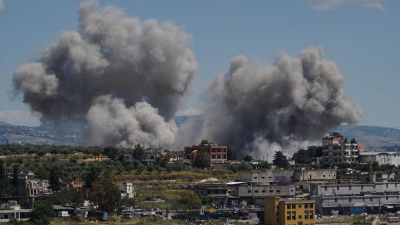

 Evening recap: Netanyahu announces West Bank offensive; 7 killed in Jordan church shooting; tents burned in south Lebanon
 US strike on Iran this weekend? ‘Absolutely,’ says Barrack; ‘I have no idea,’ says Trump